Gwangju, Our Love by Kim Yong-taek

Translated by Chae-Pyong Song and Anne Rashid

Gwangju, Our Love by Kim Yong-taek (1948- )

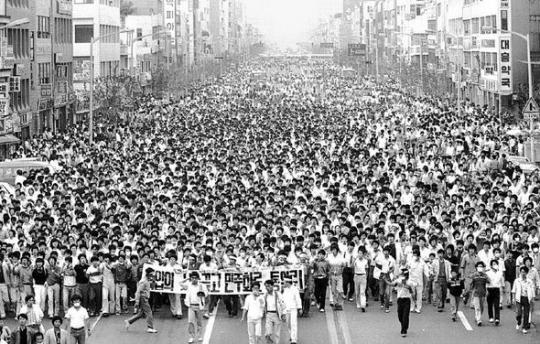
Gwangju, our love,
that does not freeze
even during dictatorship’s biting winter,
where snow does not accumulate
though it is dumped like bullets–
here living water gushes with steam.

우리 사랑 광주/ 김용택

엄동 같은 독재에도 얼지 않고
총알처럼 눈 퍼부어도
눈 쌓이지 않는
생수 솟는 김나는 샘
우리 사랑 광주.

Kim Yong-taek (1948- ) was born in Imsil, Jeollabuk-do. With lyrical (often regional) vernacular, he has written many poems about undamaged agricultural communities and the profound beauty of nature. His poetry collections include The Sumjin River, A Clear Day, Sister, The Day Is Getting Dark, The Flower Letter I Miss, Times Like A River, That Woman’s House, and Your Daring Love. He also published essay collections such as A Small Village,What’s Longed for Exists behind the Mountain, A Story of the Sumjin River, and Follow the Sumjin River and Watch. He was awarded the Kim Soo-young Literary Award (1986) and the Sowol Poetry Award (1997). He currently teaches at Woonam Elementary School.

The South I Long for by Kwak Je-gu

Translated by Chae-Pyong Song and Anne Rashid

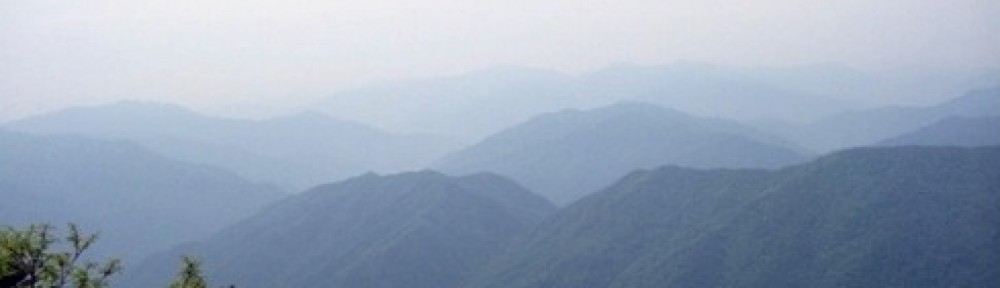
Photography by Kim Kyung-hwan (Youngchui Mountain, Yeosu)

The South I Long for by Kwak Je-gu (1954- )

Where is the place?
If you look, you will find the place azaleas bloom like tears
at a corner of the foot of the mountain.
If you call toward it,
putting together your big jointed hands
it answers with clouds mixed with tears–
the place where blood-filled tears gather again.
When you look back to the land you miss
which in deepening darkness lies alone, becoming sorrowful,
today who is calling it, thirsting for deep love?
Young poet, do you know
everywhere in this land
you can see clearly with open eyes:
in the autumn melody when the autumn wind blows,
in the spring melody when the spring wind blows,
in the quiet sound of the rising tide,
the undying, sorrowful powers of this land
that are like corn, green peppers,
and winter larva in snow,
come into bloom on our collapsed hearts.

그리운 남쪽/ 곽재구

그곳은 어디인가
바라보면 산모퉁이
눈물처럼 진달래꽃 피어나던 곳은
우리가 매듭 굵은 손을 모아
여어이 여어이 부르면
여어이 여어이 눈물 섞인 구름으로
피맺힌 울음들이 되살아나는 그곳은
돌아보면 날 저물어 어둠이 깊어
홀로 누워 슬픔이 되는 그리운 땅에
오늘은 누가 정 깊은
저 뜨거운 목마름을 던지는지
아느냐 젊은 시인이여
눈뜨고 훤히 보이는 백일의
이 땅의 어디에도
가을바람 불면 가을바람 소리로
봄바람 일면 푸른 봄바람 소리로
강냉이 풋고추
눈 속의 겨울 애벌레와도 같은
죽지 않는 이 땅의 서러운 힘들이
저 숨죽인 그리움의 밀물소리로
우리 쓰러진 가슴 위에 피어나고 있음을

Kwak Je-gu (곽재구) was born in Gwangju in 1954. He studied Korean literature at Chonnam National University. He made his literary debut as a poet with “At Sapyung Station,” which won the Spring literary award organized by the Joongang Daily in 1982. From 1981 to 1987, he worked as a member of “May Poetry,” a group of creative writers deeply inspired by the Gwangju Uprising in 1980. His poetry collections include At Sapyung StationJeonjang-po ArirngKorean LoversA Song of Seoul and The Clear Current. He currently teaches creative writing at Suncheon National University. In 1996, he received the Dongseo Literary Award.

The May of My Heart by Kwak Je-gu

Translated by Chae-Pyong Song and Anne Rashid

The May of My Heart by Kwak Je-gu (1954- )

I longed to open a green umbrella hanging
with a pink ribbon wrapped around it.
Standing in the spring wind blowing in,
I longed to collect flowers along the bank
and flowers of my heart,
and spray them toward the glowing sky of the South.
I longed to shout a poem that makes one burst into tears
toward the grass surging strongly
from the wound of a rocky mountain.
For that which was burned to bones and
for that which collapsed and then became more beautiful,
I longed to pin a few short flowers
onto the heart of the naked land after the snow melted.
And then I longed to become a star.
I longed to become the starlight of the eastern sky
which has a warm heart,
a star that descends on the dew-drenched, dawn grass
and with the incomprehensive fragrance of the sky
puts to sleep the sorrows of this land.
Ah, what should I do, my love?
On this May day in my heart,
only the azaleas hanging with black ribbons around their stalks
maniacally burn the spring mountains and streams.

내 마음의 오월/ 곽재구

분홍  리본이 달린
초록빛 우산 하나 펼쳐 주고 싶었다
불어오는 봄바람 속에 서서
강둑 위의 꽃들과
내 마음의 꽃들을 함께 모아
불빛이 타는 남녘 하늘에 뿌려 주고 싶었다
돌산 응어리에 거칠게 솟아난 풀들을 향하여
미치게 눈물 나는 시 한 구절 외쳐 주고 싶었다
불타서 뼈로 남은 것들과
쓰러져서 더욱 아름다운 것들을 위하여
헐벗은 땅 눈 녹은 가슴에
키 작은 풀꽃 몇 송이 꽂아 주고 싶었다
그리고 이제는 별이 되고 싶었다
이슬 적신 새벽 풀밭에 내려와
알 수 없는 하늘의 향기로 이 땅의 슬픔들을 잠재우는
가슴 뜨거운 동녘 하늘의 별빛이 되고 싶었다
아아 그러나 어찌하랴 사랑이여
내 마음의 오월 그 하룻날은
꽃대궁에 검정 리본을 매단 진달래만
미친 듯 봄 산천을 불태우고 있음을

Kwak Je-gu (곽재구) was born in Gwangju in 1954. He studied Korean literature at Chonnam National University. He made his literary debut as a poet with “At Sapyung Station,” which won the Spring literary award organized by the Joongang Daily in 1982. From 1981 to 1987, he worked as a member of “May Poetry,” a group of creative writers deeply inspired by the Gwangju Uprising in 1980. His poetry collections include At Sapyung StationJeonjang-po ArirngKorean LoversA Song of Seoul and The Clear Current. He currently teaches creative writing at Suncheon National University. In 1996, he received the Dongseo Literary Award.


The Rice Ball of Tears by Koh Jung-hee

Translated by Chae-Pyong Song and Anne Rashid

The Rice Ball of Tears by Koh Jung-hee (1948-1991)

The rice ball on which even the angel of death shed tears,
the rice ball over which sisters and brothers sobbed:
have you eaten the rice ball of Gwangju?
The rice ball that makes a fire pillar rise up after you eat it,
the rice ball that makes the Youngsan River roll up and down
when you share it:
have you eaten the rice ball of freedom?
The rice ball mixed with Mother’s blood tears
at the floor of the Hakdong Market
and at the Yangdong Market,
the rice ball seasoned with the sisters’ wailing
at Hwajungdong, on Hwasun Neorit Hill,
on Kumnam Street, and at Sansoodong:
have you eaten the rice ball of sanctuary?
Have you eaten the rice ball of community?
Oh, love, love, love,
the apocalyptic river water of May,
the people who will run to Gwangju, toward Gwangju
until we climb up Mudeung Mountain, Lake Chunji of Baekdu Mountain,
climbing over Lake Baekrock of Halla Mountain,
wash the snow and the rice in the deep blue lakes of Baekrock and Chunji
that will feed more than sixty million people
and share the rice ball of reunification,
the rice ball of equality,
the rice ball of humanity,
let us flare up as rice and firewood
at the home where dim evening smoke rises at dusk.

눈물의 주먹밥/고정희

저승 사자들도 눈물 흘린 주먹밥
형제자매 뜨겁게 오열하던 주먹밥
광주의 주먹밥 먹어보았나
삼키면 불기둥 일어서는 주먹밥
나누면 영산강이 굽이치는 주먹밥
자유의 주먹밥 먹어보았나
학동 시장바닥에서
양동 복개상가에서
어머니의 피눈물로 버무린 주먹밥
화정동에서 화순 너릿재에서
금남로에서 산수동에서
자매들의 통곡으로 간을 맞춘 주먹밥
해방구의 주먹밥 먹어보았나
공동체의 주먹밥 먹어보았나
사랑이여 사랑이여 사랑이여
오월의 종말론적 강물이여
무등산에 백두 천지연 올라
백두 천지연에서 한라 백록담 올라
백록담과 천지연 그 시퍼런 물에
육천만 먹고 남을 쌀 씻고 눈 씻어
통일의 주먹밥 나누는 그날까지
평등의 주먹밥
인류의 주먹밥 나누는 그날까지
광주로 광주로 달려갈 겨레여,
해거름녘 저녁연기 아련한 고장
우리 쌀과 장작불로 타오르고 타오르자

Koh Jung-hee (1948 – 1991) was born in Haenam, Jeollanam-do, and studied at Hanshin University. A passionate feminist, she often offered sharp criticism on modern Korean society, whether it was political oppression or gender inequality. In June, 1991, she died, swept up by a torrential rain, while climbing up the Snake Valley of Jiri Mountain, a mountain she loved a great deal and wrote about often. Known for resistance poetry, particularly based upon the Gwangju Uprising, as well as for lyric poems, she derived many of her poetic inspirations from Gwangju and Jeolla-do (often known as Nam-do). In her lifetime she published at least ten collections of poetry and received the Korean Literature Award in 1983.


Don’t Sing of May as a Blade of Grass that Withers in Wind by Kim Nam-ju

Translated by Chae-Pyong Song and Anne Rashid

Don’t Sing of May as a Blade of Grass that Withers in Wind
by Kim Nam-ju (1946-1994)

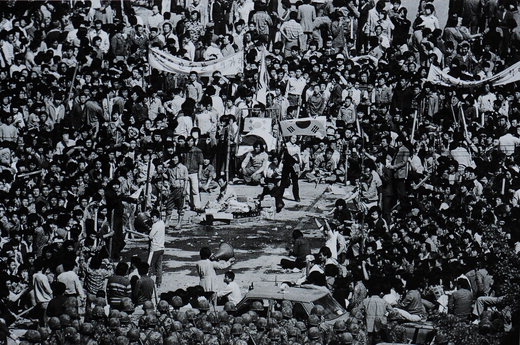
Don’t sing of May as a blade of grass that withers in wind.
May didn’t come lyrically like wind,
nor did it lie lyrically like a blade of grass.

May came with a beast’s blood-stained claws.
May came with the teeth of crazy dogs hungry for blood.
May came with the soldier’s bayonet cutting the pregnant mother’s womb.
May came gorging on the children’s eyes that popped out like bullets.
May came with American tanks that trampled down the breath of freedom.

Don’t sing of May as a blade of grass that withers in wind.
May didn’t come lyrically like wind,
nor did it lie lyrically like a blade of grass.

May rose with the wailing of an angry lion.
May rose with the blood-stained hair of the slaughtered young woman.
May rose with the last scream that destroyed men shout.
It was the Freedom’s suicidal attack that jumped into the forest of guns and swords.
It was the hammer heated in the fire at the ironworks.
It was the kitchen knives of the boys who rushed out of the restaurants.
It was the rice ball rolled by the innocent lips of barmaids.
It was the dynamite where all the human emotion toward injustice
congealed in love and exploded in hatred.

Don’t sing of May as a blade of grass that withers in wind.
Wind is not fitting poetic language for the beast’s claws.
Don’t sing of May as a blade of grass that withers in wind.
Grass blades are not fitting poetic images for the blood battle resisting massacre.
There is no room for the lyrical to stand
in between the bloody massacre and the armed resistance.
Nor does it deserve a place–
not in Gwangju streets in May of 1980!

바람에 지는 풀잎으로 오월을 노래하지 말아라/ 김남주

바람에 지는 풀잎으로 오월을 노래하지 말아라
오월은 바람처럼 그렇게 서정적으로 오지도 않았고
오월은 풀잎처럼 그렇게 서정적으로 눕지도 않았다

오월은 왔다 피묻은 야수의 발톱과 함께
오월은 왔다 피에 주린 미친개의 이빨과 함께
오월은 왔다 아이 밴 어머니의 배를 가르는 대검의 병사와 함께
오월은 왔다 총알처럼 튀어나온 아이들의 눈동자를 파먹고
오월은 왔다 자유의 숨통을 깔아뭉개는 미제 탱크와 함께 왔다

노래하지 말아라 오월을 바람에 지는 풀잎으로
오월은 바람처럼 그렇게 서정적으로 오지도 않았고
오월은 풀잎처럼 그렇게 서정적으로 눕지도 않았다

오월은 일어섰다 분노한 사자의 울부짖음과 함께
오월은 일어섰다 살해된 처녀의 피묻은 머리카락과 함께
오월은 일어섰다 파괴된 인간이 내지르는 최후의 절규와 함께
그것은 총칼의 숲에 뛰어든 자유의 육탄이었다
그것은 불에 달군 철공소의 망치였고
그것은 식당에서 뛰쳐나온 뽀이들의 식칼이었고
그것은 술집의 아가씨들의 순결의 입술로 뭉친 주먹밥이었고
그것은 불의의 대상을 향한 인간의 모든 감정이
사랑으로 응어리져 증오로 터진 다이너마이트의 폭발이었다

노래하지 말아라 오월을 바람에 지는 풀잎으로
바람은 야수의 발톱에는 어울리지 않는 시의 어법이다
노래하지 말아라 오월을 바람에 일어서는 풀잎으로
풀잎은 학살에 저항하는 피의 전투에는 어울리지 않는 시의 어법이다
피의 학살과 무기의 저항 그 사이에는
서정이 들어설 자리가 없다 자격도 없다
적어도 적어도 광주 1980년 오월의 거리에는!

Kim Nam-ju (1946-1994) was born in Haenam, Jeollanam-do and studied English at Chonnam National University. He is known as one of the major resistance poets in South Korea, leading the people’s movement in the 1970s and 80s that ultimately toppled the dictatorship in Korea. Because of his activism, he was imprisoned twice, for more than ten years in total. In prison where paper and pencil were not allowed, he wrote many poems on milk cartons with the nail he made by grinding a toothbrush. These poems were later published in two collected volumes of his prison poetry, The Sunlight on the Prison Bar. His poetry bears witness to the tyranny of dictatorship and the hardships of the oppressed. He published such poetry collections as Requiem, My Sword My Blood, One Fatherland, The Weapon of Love and In This Lovely World. He received the Yun Sang-won Literary Award in 1993 and the National Literary Award in 1994. His poems have also been memorialized by Korean activist, rock singer An Chi-hwan in his album entitled Remember.


A Spring Day by Kim Yong-taek

Translated by Chae-Pyong Song and Anne Rashid

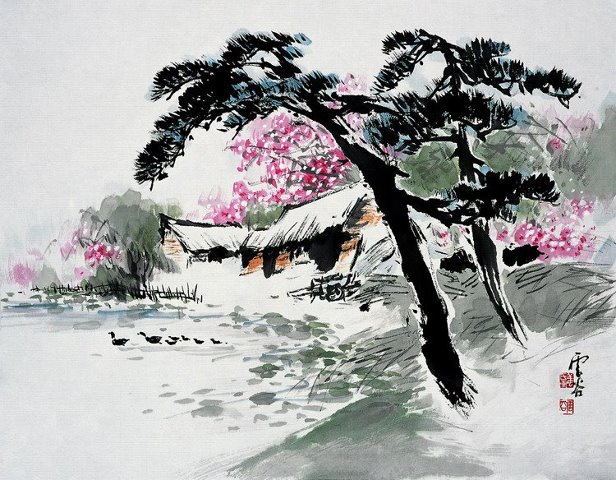
Painted by Kang Jang-won

A Spring Day by Kim Yong-taek

If you are looking for me,
and all you find is a hoe covered with soil
in the kitchen garden,

just know that I have gone
to admire plum blossoms,
following the spring water of the Sumjin River,
holding a lovely woman’s hand.

봄날/김용택

나 찾다가
텃밭에
흙 묻은 호미만 있거든

예쁜 여자랑 손잡고
섬진강 봄물을 따라서
매화꽃 보러 간 줄 알그라.

Kim Yong-taek (1948- ) was born in Imsil, Jeollabuk-do. With lyrical (often regional) vernacular, he has written many poems about undamaged agricultural communities and the profound beauty of nature. His poetry collections include The Sumjin River,A Clear Day, Sister, The Day Is Getting Dark, The Flower Letter I Miss, Times Like A River, That Woman’s House, and Your Daring Love. He also published essay collections such as A Small Village,What’s Longed for Exists behind the Mountain, A Story of the Sumjin River, and Follow the Sumjin River and Watch. He was awarded the Kim Soo-young Literary Award (1986) and the Sowol Poetry Award (1997). He currently teaches at Woonam Elementary School.

He was in the Dark Cloud by Ra Hee-duk

Translated by Chae-Pyong Song and Anne Rashid

Mudeung Mountain, Photography by Seo Young-seok

He was in the Dark Cloud by Ra Hee-duk

I couldn’t see him,
so I couldn’t see the burn on his chest either

From the eastern window, I see Mudeung far away,
his dark green eyes look slack yet serene
but afraid of looking into the crater of  my memory,
I couldn’t come near him, not even once.
His eyes that witnessed such ghastly death:
how could they look so peaceful?
How could his wounded chest look so green?
But today he sat inside a dark cloud.

Though I couldn’t see him,
I woke to the sound of breathing nearby.

When I returned every night to the village tucked under his arm
and slept like a wounded animal,
he would walk down step by step
and watch over my giddy sleepy head.
I have seen him many times, yet it’s as if I didn’t see him.

As the dark cloud lifted,
I saw his back walking up.

Mudeung slowly, who returned to Mudeung–
though I couldn’t see his burn mark in the green,
my hand was stained by his wound.
I woke up tucked under his arm.

그는 먹구름속에 들어 계셨다 / 나희덕

그가 보이지 않으니
가슴의 火傷 또한 보이지 않았다

동쪽 창으로 멀리 보이는 無等,
갈매빛 눈매는 성글고 그윽하였으나
그 기억의 분화구를 들여다보기가 두려워
한 번도 가까이 가지 못했다
너무도 큰 죽음을 보아버린 눈동자가
저리도 평화로울 수가 있다니,
진물 흐르는 가슴이 저리도 푸르다니,
그러나 오늘은 그가 먹구름 속에 들어 계셨다

그가 보이지 않았지만
아주 가까이 숨소리에 잠이 깨었다

밤마다 그의 겨드랑이께 숨은 마을로 돌아와
상처입은 짐승처럼 잠이 들면
그는 조금씩 걸어 내려와
어지러운 내 잠머리를 지키다 가곤 했으니
그를 보지 않은 듯 나는 너무 많이 보아온 것이다

먹구름이 걷히자
천천히 걸어 올라가는 그의 등이 보였다

無等에게로 돌아가는 無等,
녹음 속의 화상은 보이지 않았지만
내 손에는 거기서 흘러내린 진물이 묻어 있었다
그의 겨드랑이께에서 깨어났다

 (Originally published in the Gwangju News, April 2012)

Ra Hee-duk (나희덕) was born in 1966 in Nonsan, Chungcheongnam-do. She received her Ph.D. in Korean literature from Yonsei University in 2006. She has published six books of poetry: To the Root (1991), The Word Dyed the Leaves (1994), The Place is Not Far (1997), That It Gets Dark (2001), A Disappeared Palm (2004), and Wild Apples (2009). She also published one collection of essays, A Half-filled Water Bucket (1999), and a volume of literary criticism, Where Does Purple Come From? (2003). Among her many literary awards are the Kim Suyoung Literature Award (1998), Modern Literature Award (2003) and the Sowol Poetry Award (2007). Growing up in orphanages, because her father was an administrator at an orphanage, she developed her strong sympathy for the less fortunate others. She currently teaches creative writing at Chosun University in Gwangju.
Passing by Happy Rehabilitation Center and the Hungry Bridge by Ra Hee-duk

Translated by Chae-Pyong Song and Anne Rashid


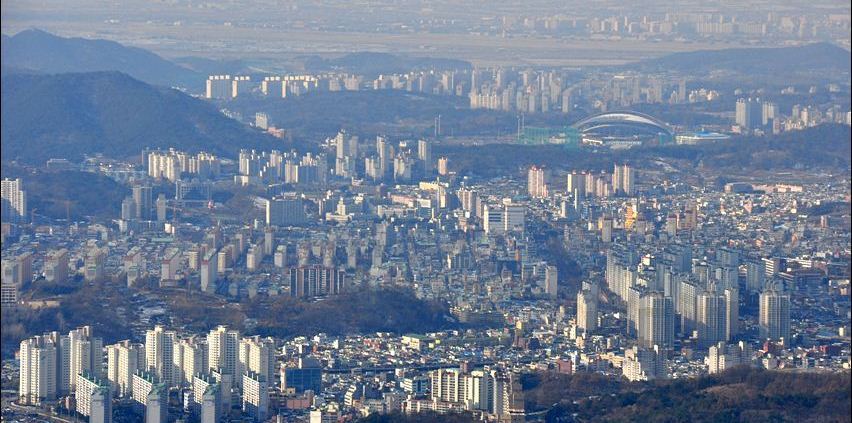
Hakdong District, Gwangju, Korea

Passing by Happy Rehabilitation Center and the Hungry Bridge by Ra Hee-duk

Once or twice a day
I pass over the Hungry Bridge via the Happy Rehabilitation Center.
On the way to and from the house,
even when I am not happy at all,
or even when I am not hungry,
I have to pass these places.
At the center’s main entrance
there is an unusually high speed bump,
so even if I drive slowly my whole body still shakes.
When I pass among
the children with their faces distorted or legs limping
and a mother with a faint smile waiting across the street,
a thought arises
that living with a normal body is itself a kind of speeding,
but my car is already passing over the Hungry Bridge.
The bridge was named so because of its sunken middle,
and along the river banks low ceilings line up one after another.
Pumpkin vines on the shabby walls
and ivy on the bridge’s sides cross the world in low crawlings.
I pass the Changuk rice-cake shop across the Hungry Bridge.
The shop’s mill often has its mouth closed.

Happy Rehabilitation, Hungry Rice-cake–
crossing over a high or low bump of my heart,
the engine suddenly makes a clunking sound
as if to say that the road I travel to and from the house
should always pass through the language of contradiction.

행복재활원 지나 배고픈다리 지나/ 나희덕

하루에 한 번 혹은 두 번
행복재활원 지나 배고픈다리를 지난다
집에서 나와 집으로 가는 길
전혀 행복하지 않을 때도
배고프지 않을 때도 그곳을 지나야 한다
행복재활원 정문 앞에는
유난히 높은 과속지방턱이 있어
아무리 천천히 지나도 온몸이 흔들린다
얼굴이 일그러지거나 다리를 저는 아이들,
길 건너 마중 나온 엄마가 희미하게 웃고 있을 때
그 사이를 지나노라면 정상적인 몸으로
사는 일 자체가 일종의 과속이라는 생각이 들지만
차는 어느새 배고픈다리를 건너고 있다
가운데가 푹 꺼져 있어 붙여진 이름이라 하는데
천변을 끼고 낮은 지붕들이 늘어서 있다
누추한 담벼락에는 호박덩굴이,
다리 옆구리에는 담쟁이가 낮은 포복으로 세상을 건너고
배고픈다리 건너 창억떡집,
떡집의 제분기는 입을 다물고 있을 때가 많다

행복한재활, 배고픈창억,
그 높거나 낮은 마음의 턱을 넘으며
엔진은 갑자기 그르릉 소리를 낸다
집에서 나와 집으로 가는 길이란
늘 그 모순형용을 지나야 한다고 말하는 것처럼

Ra Hee-duk (나희덕) was born in 1966 in Nonsan, Chungcheongnam-do. She received her Ph.D. in Korean literature from Yonsei University in 2006. She has published six books of poetry: To the Root (1991), The Word Dyed the Leaves (1994), The Place is Not Far (1997), That It Gets Dark (2001), A Disappeared Palm (2004), and Wild Apples (2009). She also published one collection of essays, A Half-filled Water Bucket (1999), and a volume of literary criticism, Where Does Purple Come From? (2003). Among her many literary awards are the Kim Suyoung Literature Award (1998), Modern Literature Award (2003) and the Sowol Poetry Award (2007). Growing up in orphanages, because her father was an administrator at an orphanage, she developed her strong sympathy for the less fortunate others. She currently teaches creative writing at Chosun University in Gwangju.
In the Island’s Sunlight by Ra Hee-duk


Translated by Chae-Pyong Song and Anne Rashid

Sorokdo Island, Jeollanam-do, Korea

In the Island’s Sunlight by Ra Hee-duk

The sunlight of the island resembling a young deer was warm.
One can reach the island in five minutes by boat from Port Nokdong,
but you can only get to this place
after crossing unfathomable waves of the heart.
On the near yet far island,
the wounded deer lived.
Apparently inside the island’s sunlight
the sounds you could not hear anywhere else melted away.
But I can’t say I understood the light.
Just now, coming out of the autopsy room
the pouring sunlight seemed to shout something.
Boys who stand in a circle holding the net with their fingerless hands
produce a few fluttering fish.
The man who jumped into the sea, relied upon a raft.
The old lady knitted flowers with only three fingers left.
The sobbing  mother  had to meet her children only with her eyes,
without ever holding their hands, separated across a street.
The pine trees stood in the place where eighty four lives were burnt.
All lived as if they didn’t exist at all, not at all.
Didn’t they weep across the sea, overwhelmed only with their pain?
Under the sunlight, hot like a roar,
a crab with red legs was crawling.
The shadow of a forest where a lost crab hid–
the trees pruned by these rotting hands were beautiful.
The laughing sound of a young woman walking
with a wheelchair, carried her mother missing two legs.
I couldn’t enter into either the sunlight or the shadow.

그 섬의 햇빛 속에는/ 나희덕

어린 사슴을 닮았다는 섬의 햇빛은 따가웠다.
녹동항에서 배로 오 분이면 닿을 수 있는 섬이지만
수심을 알 수 없는 마음의 물결을 건너야만
이를 수 있는 곳, 그 가깝고도 먼 섬에
상처 입은 사슴들이 살고 있었다.
그 섬의 햇빛 속에는
다른 데서 들리지 않던 소리들이 녹아 있는 것 같았다.
그러나 그 햇빛을 이해했다고는 말할 수 없다.
시체를 해부했던 검시실을 막 나왔을 때
쏟아지는 햇빛이 무어라 외치는 것처럼 들렸을 뿐이다.
몽당손으로 그물을 잡고 둘러선 소년들이
파닥이는 물고기 몇 마리를 소출로 내놓은 모습도,
뗏목 하나에 의지해 바다로 뛰어들었던 남자도,
세 개밖에 남지 않은 손가락으로 꽃수를 놓던 노파도,
길 양쪽으로 갈라선 채 손 한번 잡지 못하고
눈으로만 피붙이를 만나야 했던 어미의 흐느낌도,
여든네 명의 목숨을 불태웠던 자리에 서 있는 소나무들도,
없는 것처럼 없는 것처럼 살아오지 않았던가.
바다 저편에서 단지 제 고통에 겨워 읊조리지 않았던가.
굉음처럼 따가운 햇빛 아래
다리 붉은 게 한 마리가 기어가고 있었다.
길 잃은 게가 숨어든 숲그늘,
썩어가는 손으로 전지해놓은 나무들은 아름다웠다.
두 다리가 없는 어머니를 휠체어에 태우고
걸어가는 처녀의 웃음소리.
나는 햇빛 속으로도 그늘 속으로도 들어갈 수 없었다.

(Originally published in the Gwangju News, April 2012)

Ra Hee-duk (나희덕) was born in 1966 in Nonsan, Chungcheongnam-do. She received her Ph.D. in Korean literature from Yonsei University in 2006. She has published six books of poetry: To the Root (1991), The Word Dyed the Leaves (1994), The Place is Not Far (1997), That It Gets Dark (2001), A Disappeared Palm (2004), and Wild Apples (2009). She also published one collection of essays, A Half-filled Water Bucket (1999), and a volume of literary criticism, Where Does Purple Come From? (2003). Among her many literary awards are the Kim Suyoung Literature Award (1998), Modern Literature Award (2003) and the Sowol Poetry Award (2007). Growing up in orphanages, because her father was an administrator at an orphanage, she developed her strong sympathy for the less fortunate others. She currently teaches creative writing at Chosun University in Gwangju.

Renting a Room by Ra Hee-duk

Translated by Chae-Pyong Song and Anne Rashid

Photography by Chae-Pyong Song

Renting a Room by Ra Hee-duk

I wanted to rent a room somewhere in Damyang or Pyongchang,
to scurry in and out like a squirrel.
Every time I saw a quiet village, I peeped into it.
Passing by a house in JishilVillage,
I saw a yard with ordinary flowers blooming
between an old traditional house and a newly built annex.
Without knowing myself, I stepped into the open doors.
The ajeossi* was sharpening a scythe on the whetstone.
The ajumoni’s** kerchief was wet as if she just returned from the field.

“Uh, I would like to rent a room here.
I am looking for a space where I can come a few days a week to work.”

I carefully gestured toward the old house,
and the ajumoni responded with a smile.

“Well, the kids all left forSeoul,
an’ the house’s empty, ‘cause we live in the annex.
But our Yi’s family history is livin’ within,
so we’re still usin’ it with our hearts.”

Upon hearing these words I could see the clean floor
and the evening sunlight settling on it.
I simply turned around without further asking to rent.
Would the couple know
that I had already rented the room
when she told me their hearts still occupy that empty house?

*a common term for a middle-aged man
**a common term for a middle-aged woman

방을 얻다나 희 덕

담양이나 평창 어디쯤 방을 얻어
다람쥐처럼 드나들고 싶어서
고즈넉한 마을만 보면 들어가 기웃거렸다.
지실마을 어느 집을 지나다
오래된 한옥 한 채와 새로 지은 별채 사이로
수더분한 꽃들이 피어있는 마당을 보았다.
나도 모르게 열린 대문 안으로 들어섰는데
아저씨는 숫돌에 낫을 갈고 있었고
아주머니는 밭에서 막 돌아온 듯 머릿수건이 촉촉했다.
ㅡ 저어, 방을 한 칸 얻었으면 하는데요.
일주일동안 두어번 와서 일할 공간이 필요해서요.
나는 조심스럽게 한옥쪽을 가리켰고
아주머니는 빙그레 웃으며 이렇게 대답했다.
ㅡ 글씨, 아그들은 다 서울로 나가불고
우리는 별채서 지낸께로 안 채가 비기는 해라우.
그라제만은 우리 이씨 집안의 내력이 짓든 데라서
맴으로는 지금도 쓰고 있단 말이요.
이 말을 듣는 순간 정갈한 마루와
마루 위에 앉아계신 저녁 햇살이 눈에 들어왔다.
세 놓으라는 말도 못하고 돌아섰지만
그 부부는 알고 있을까,
빈방을 마음으로는 늘 쓰고 있다는 말 속에
내가 이미 세들어 살기 시작했다는 걸.

(Originally published in the Gwangju News, April 2012)

Ra Hee-duk (나희덕) was born in 1966 in Nonsan, Chungcheongnam-do. She received her Ph.D. in Korean literature from Yonsei University in 2006. She has published six books of poetry: To the Root (1991), The Word Dyed the Leaves (1994), The Place is Not Far (1997), That It Gets Dark (2001), A Disappeared Palm (2004), and Wild Apples (2009). She also published one collection of essays, A Half-filled Water Bucket (1999), and a volume of literary criticism, Where Does Purple Come From? (2003). Among her many literary awards are the Kim Suyoung Literature Award (1998), Modern Literature Award (2003) and the Sowol Poetry Award (2007). Growing up in orphanages, because her father was an administrator at an orphanage, she developed her strong sympathy for the less fortunate others. She currently teaches creative writing at Chosun University in Gwangju.