Rising Tide by Jung Kut-byol

Translated by Chae-Pyong Song and Anne Rashid
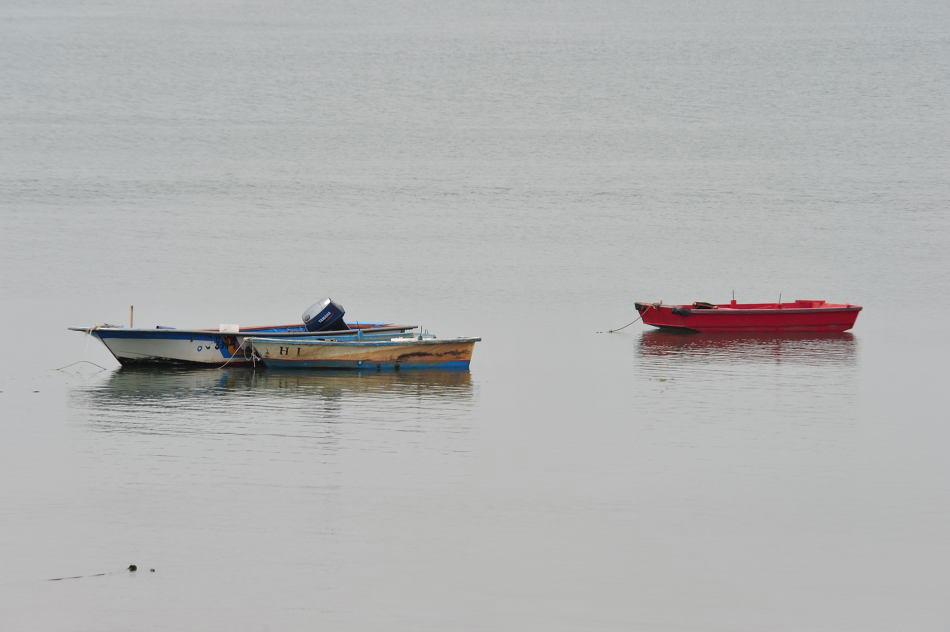
Photography by Kim Jae-gon

Rising Tide by Jung Kut-byol

At night, just barely,

two boats slide in,
lowering their anchors at the port;
two naked boats
lie side by side
touching each other’s wounds

We are safe–we are fortunate, oh,
to see the ocean calming down

밀물/ 정끝별

가까스로 저녁에서야

두 척의 배가
미끄러지듯 항구에 닻을 내린다
벗은 두 배가
나란히 누워
서로의 상처에 손을 대며

무사하구나 다행이야
응, 바다가 잠잠해서

Jung Kut-byol is a professor of Korean literature at Myungji University in Seoul, South Korea. Since 1988, she has worked as both a poet and a critic. She has published four poetry collections, My Life: A Birch Tree (1996), A White Book (2000), An Old Man’s Vitality (2005), and Suddenly (2008) and two collections of critical essays, The Poetics of Parody (1997) and The Language of Poetry Has a Thousand Tongues (2008). She has also edited an anthology titled In Anyone’s Heart, Wouldn’t a Poem Bloom? 100 Favorite Poems Recommended by 100 Korean Poets (2008).
The Benevolent Oak Tree by Jung Kut-byol

Translated by Chae-Pyong Song and Anne Rashid

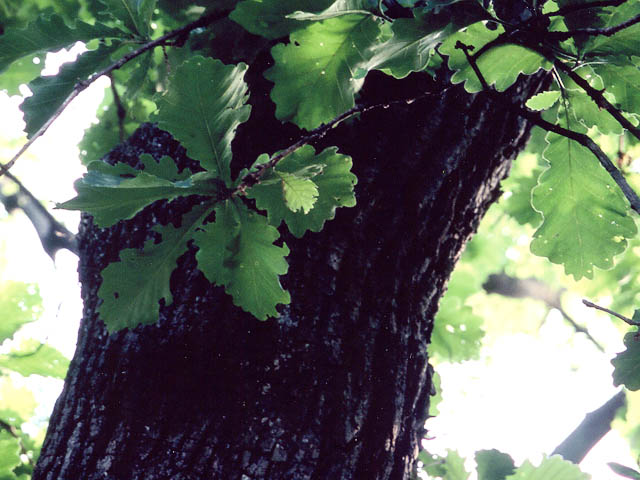
The Benevolent Oak Tree by Jung Kut-byol

Insects live inside an oak tree that is hollow–
inside it they nest, hiding their naked bodies.
In the hollow oak tree mushrooms and mosses live–
they take root there and bloom.
In the hollow oak tree woodpeckers live–
there they grind their beaks and peck insects.
In the hollow oak tree bats live–
they sleep there dangling upside down.
In the hollow oak tree owls live–
they make nests there and hatch their babies.
In the hollow oak tree badgers and foxes live–
they burrow in and make it their home.

Because of all the people living in the hollow house
listening to the hollow music
eating the hollow rice
of the hollow oak tree,
mothers, with hollow insides, withstand strong winds–
mothers, with hollow insides, withstand big famines.
They shake off big snow with their slightly drooping branches–
they rot away their whole lives–
the insides of all the mothers in the world.

속 좋은 떡갈나무/ 정끝별

속 빈 떡갈나무에는 벌레들이 산다
그 속에 벗은 몸을 숨기고 깃들인다.
속 빈 떡갈나무에는 버섯과 이끼들이 산다
그 속에 뿌리를 내리고 꽃을 피운다
속 빈 떡갈나무에는 딱따구리들이 산다
그 속에 부리를 갈고 곤충을 쪼아먹는다
속 빈 떡갈나무에는 박쥐들이 산다
그 속에 거꾸로 매달려 잠을 잔다
속 빈 떡갈나무에는 올빼미들이 산다
그 속에 둥지를 틀고 새끼를 깐다
속 빈 떡갈나무에는 오소리와 여우가 산다
그 속에 굴을 파고 집을 짓는다

속 빈 떡갈나무 한 그루의
속 빈 밥을 먹고
속 빈 노래를 듣고
속 빈 집에 들어 사는 모두 때문에
속 빈 채 큰 바람에도 떡 버티고
속 빈 채 큰 가뭄에도 썩 견디고
조금 처진 가지로 큰 눈들도 싹 털어내며
한세월 잘 썩어내는
세상 모든 어미들 속

Jung Kut-byol is a professor of Korean literature at Myungji University in Seoul, South Korea. Since 1988, she has worked as both a poet and a critic. She has published four poetry collections, My Life: A Birch Tree (1996), A White Book (2000), An Old Man’s Vitality (2005), and Suddenly (2008) and two collections of critical essays, The Poetics of Parody (1997) and The Language of Poetry Has a Thousand Tongues (2008). She has also edited an anthology titled In Anyone’s Heart, Wouldn’t a Poem Bloom? 100 Favorite Poems Recommended by 100 Korean Poets (2008).
The World’s Spine by Jung Kut-byol

Translated by Chae-Pyong Song and Anne Rashid

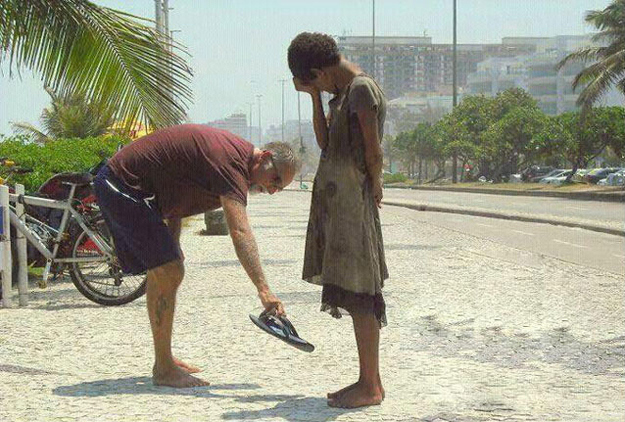
A man giving his shoes to a homeless girl in Rio de Janeiro

The World’s Spine by Jung Kut-byol

Someone gives me her bosom,
Someone supplies me money,
Someone offers me her lips,
Someone lends her shoulders to me

To provide is
to lift you up to a higher place,
stroking the end of your branches that shove in blindly,
shivering on a deserted mound;
it is to wait for you, lying down low
waking up the root end of you, who has been buried alone in the ground

Like providing water to a rice field
Like offering tears to a wound
Like serving as a bottom to a bottomless bottom–
to become holy rice
to an open mouth
that has sowed and reaped a life

rather than saying I love you

세상의 등뼈/ 정끝별

누군가는 내게 품을 대주고
누군가는 내게 돈을 대주고
누군가는 내게 입술을 대주고
누군가는 내게 어깨를 대주고

대준다는 것, 그것은
무작정 내 전부를 들이밀며
무주공산 떨고 있는 너의 가지 끝을 어루만져
더 높은 곳으로 너를 올려준다는 것
혈혈단신 땅에 묻힌 너의 뿌리 끝을 일깨우며
배를 대고 내려앉아 너를 기다려 준다는 것

논에 물을 대주듯
상처에 눈물을 대주듯
끝모를 바닥에 밑을 대주듯
한생을 뿌리고 거두어
벌린 입에
거룩한 밥이 되어 준다는 것, 그것은

사랑한다는 말 대신

Jung Kut-byol is a professor of Korean literature at Myungji University in Seoul, South Korea. Since 1988, she has worked as both a poet and a critic. She has published four poetry collections, My Life: A Birch Tree (1996), A White Book (2000), An Old Man’s Vitality (2005), and Suddenly (2008) and two collections of critical essays, The Poetics of Parody (1997) and The Language of Poetry Has a Thousand Tongues (2008). She has also edited an anthology titled In Anyone’s Heart, Wouldn’t a Poem Bloom? 100 Favorite Poems Recommended by 100 Korean Poets (2008).
My Life: a Birch Tree by Jung Kut-byol

Translated by Chae-Pyong Song and Anne Rashid

Photography by Dul Chil Re

My Life: a Birch Tree by Jung Kut-byol

Did long deep coughs
make something break out?
On the pit of my stomach a yellowish bruise has spread.

A birch tree stands along the road, as though punished.
What spread inside the tree
that made such a white color emerge?
A bony, frosted body
that sheds leaves, flowers, and all the colors of the world,
that buries within the sun, the moon, the stars, and all the lights of the world.
An entangled heart with even the veins laid bare.
The winter birch tree completes its bruise,
casting its desolate shadow on frozen ground.

I embrace a charred house of lungs–
a magpie hovers around for an eternity.

자작나무 내 인생/ 정끝별

속 깊은 기침을 오래하더니
무엇이 터졌을까
명치끝에 누르스름한 멍이 배어 나왔다

길가에 벌(罰)처럼 선 자작나무
저 속에서는 무엇이 터졌길래
저리 흰빛이 배어 나오는 걸까
잎과 꽃 세상 모든 색들 다 버리고
해 달 별 세상 모든 빛들 제 속에 묻어놓고
뼈만 솟은 저 서릿몸
신경줄까지 드러낸 저 헝큰 마음
언 땅에 비껴 깔리는 그림자 소슬히 세워가며
제 멍을 완성해 가는 겨울 자작나무

숯덩이가 된 폐가(肺家) 하나 품고 있다
까치 한 마리 오래오래 맴돌고 있다

Jung Kut-byol is a professor of Korean literature at Myungji University in Seoul, South Korea. Since 1988, she has worked as both a poet and a critic. She has published four poetry collections, My Life: A Birch Tree (1996), A White Book (2000), An Old Man’s Vitality (2005), and Suddenly (2008) and two collections of critical essays, The Poetics of Parody (1997) and The Language of Poetry Has a Thousand Tongues (2008). She has also edited an anthology titled In Anyone’s Heart, Wouldn’t a Poem Bloom? 100 Favorite Poems Recommended by 100 Korean Poets (2008).

Suncheon Bay by Shin Dal-ja

Translated by Chae-Pyong Song and Anne Rashid

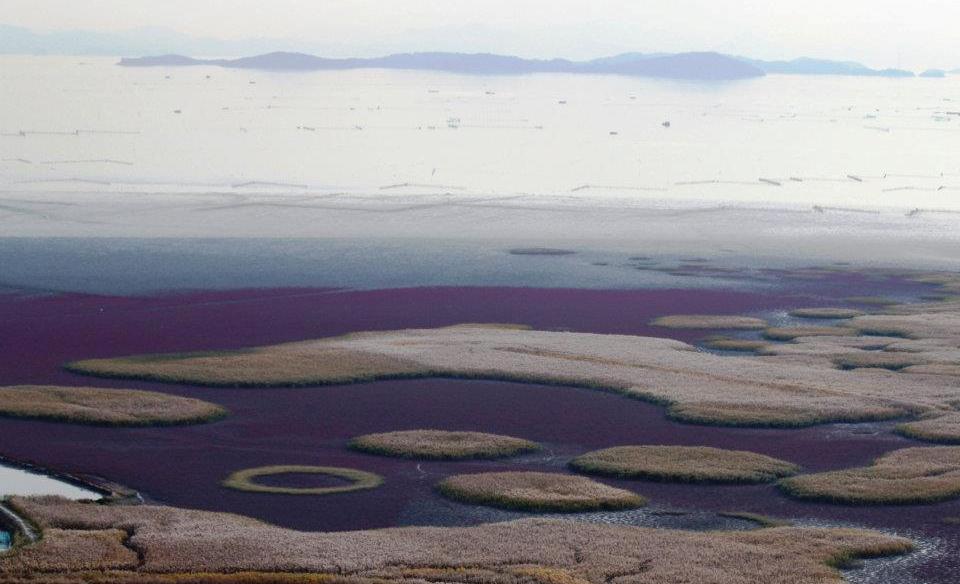
Suncheon Bay, South Korea; photography by Jung Yun-seok

Suncheon Bay by Shin Dal-ja

Have your eyes become opaque?
Let’s go to Suncheon Bay.
Has any part in your body become calcified?
Let’s go to Suncheon Bay.
Does sticky black blood come out when you spit?
Let’s go to Suncheon Bay.
At Suncheon Bay, let’s ask what living is.
When you go out toward the wetlands by Ecology Hall,
you will meet hooded-crane families.
Let’s ask them why they live there.
When you meet swans, yellow-beaked spoonbills, and black headed seagulls,
let’s ask why they resist the temptation of the warm city to spend winter there.
Let’s ask the reeds who weather the cold, brushing off their dry bodies—
reeds who lean their dry bones into one another,
as though they want to share one another’s warmth,
and swallow up toxic phlegm.
Let’s strain our ears to that moist wetland
that constricts its body densely, stretching out its black limbs as much as it can,
stepping closer with palpitations of loud quiet, clean breath of life.

순천만/ 신달자

눈앞이 슬슬 흐려지는가
순천만 가자
몸 안 어느 곳이 석회처럼 굳어지는가
순천만 가자
침을 뱉으면 끈적끈적한 검은 피가 나오는가
순천만 가자
순천만 가서 우리 살아 있는 것이 무엇인지 물어보자
순천만의 자연 생태관을 거쳐 갯벌 쪽으로 나가면
흑두루미 가족을 만나 왜 거기 사느냐고 물어보자
큰고니며 노랑부리저어새며 검은머리갈매기를 만나
왜 따뜻한 도시의 유혹을 물리치고 거기에서 겨울을 나느지
마른 몸들끼리 부딪치며 추위를 이기는 갈대들
서로 온기 나누려느지 서로 마른 뼈를 기대고
밭은기침을 삼키는 갈대들에게 물어보자
검은 사지를 있는 대로 뻗으며 촘촘히 제 몸을 조이는
저 촉촉한 습지에 귀 기울여 보자
깨끗한 생명의 숨소리가 왁자하게 고요한
울렁거림으로 다가서서

Shin Dal-ja (1943- ) was born in Geochang, Gyeongsangnam-do. She studied Korean literature at Sookmyung Women’s University. She taught creative writing at Pyongtaek University and Myungji College. Her poetry collections include Father’s Light, Passionate Love, The Long Talking Relationship, and Paper.  She also has written several collections of essays including The Poet’s Love, You Remember These Three Things, and At Forty,  I Learned the Baby-Steps of Life. Her literary awards include The Korea Literature Award, the Modern Buddhist Literature Award, and Youngrang Poetry Award.

A Pair of Shoes in the Yard by Moon Tae-jun

Translated by Chae-Pyong Song and Darcy Brandel

A Pair of Shoes in the Yard by Moon Tae-jun

I gaze at a pair of shoes in the darkening yard.
They resemble the fiddle head that Sister once dried
all day in the shade of the backyard.
The yard of weathered neck!
A powder case a woman used up
is the pair of shoes worn out
from carrying her body for a long time.
Ah, even at the end of the road
there is no transcending suffering.

뜨락 위 한 켤레 신발 / 문태준

어두워지는 뜨락 위 한 켤레 신발을 바라본다
언젠가 누이가 해종일 뒤뜰 그늘에 말리던 고사리 같다
굵은 모가지의 뜰!
다 쓴 여인네의 분첩
긴 세월 몸을 담아오느라 닳아진
한 켤레 신발이 었다
아, 길이 끝난 곳에서도 적멸은 없다

시집 – 맨발 (2004년 창비)

moontaejunphotoMoon Tae-jun (1970-) has published four collections of poetry: Chattering Backyard (2000), Bare Foot (2004), Flatfish (2006), and Shadow’s Development (2008) as well as other essays and commentary. One of the most popular poets of the younger generation, Moon uses deceptively simple poetic language with profound lyricism, commenting on the struggle of daily life. Grounded in Buddhist philosophy, his poems speak with reverence for all forms of life and emphasize the necessity of emptying oneself. Moon is a recipient of many prestigious awards, including the Dongseo Literature Award (2004),  the Midang Literature Award (2005), and the Sowol Poetry Award (2007).

The Tongue by Moon Tae-jun

Translated by Chae-Pyong Song and Darcy Brandel

The Tongue by Moon Tae-jun

Woken up at dawn
the thought of Mother who is ill
cuts me

As a child
when a speck blew into my eye,
Mother cleaned her mouth with cold water
and licked
my eyeball
my soul
with the softest flesh
with her tongue

And when I dozed on and off
while tending  the burning fire hole
in her eyes
fire flashed with worry
from the hole to the chimney

Celebrating the seventh day of the seventh month
she prayed tenderly with both hands
becoming a stone Buddha
The stone Buddha now sits
as her eyeballs

In what life
not inheriting the life from her
could I become an indifferent
fine-tooth comb for her hair?

In what life
could my tongue
wash out
her stone eyeball?

Slowly stretching out my neck to her
I cried and cried
The wet morning

moontaejunphotoMoon Tae-jun (1970-) has published four collections of poetry: Chattering Backyard (2000), Bare Foot (2004), Flatfish (2006), and Shadow’s Development (2008) as well as other essays and commentary. One of the most popular poets of the younger generation, Moon uses deceptively simple poetic language with profound lyricism, commenting on the struggle of daily life. Grounded in Buddhist philosophy, his poems speak with reverence for all forms of life and emphasize the necessity of emptying oneself. Moon is a recipient of many prestigious awards, including the Dongseo Literature Award (2004),  the Midang Literature Award (2005), and the Sowol Poetry Award (2007).

In the Space the Flower Left by Moon Tae-jun

Translated by Chae-Pyong Song and Darcy Brandel

Painted by Jung Jeong-im

In the Space the Flower Left by Moon Tae-jun

To think is to sit down on an empty chair
To sit down in an empty space the flowers left

To long is to sit down on an empty chair
To still leave it empty after sitting like red petals

moontaejunphotoMoon Tae-jun (1970-) has published four collections of poetry: Chattering Backyard (2000), Bare Foot (2004), Flatfish (2006), and Shadow’s Development (2008) as well as other essays and commentary. One of the most popular poets of the younger generation, Moon uses deceptively simple poetic language with profound lyricism, commenting on the struggle of daily life. Grounded in Buddhist philosophy, his poems speak with reverence for all forms of life and emphasize the necessity of emptying oneself. Moon is a recipient of many prestigious awards, including the Dongseo Literature Award (2004),  the Midang Literature Award (2005), and the Sowol Poetry Award (2007).

The Ibis by Moon Tae-jun

Translated by Chae-Pyong Song and Darcy Brandel

Photography by Jeong Bong-chae

The Ibis by Moon Tae-jun

Stepping in the mountain shadow on the rice paddy
the old ibis
standing still
A deep thought lingers on the old ibis’s body and passes
Like I once stared at an empty pond vacantly
Is this how loneliness lingers?
It was the evening when the mountain shadow fully wetted her ankles

moontaejunphotoMoon Tae-jun (1970-) has published four collections of poetry: Chattering Backyard (2000), Bare Foot (2004), Flatfish (2006), and Shadow’s Development (2008) as well as other essays and commentary. One of the most popular poets of the younger generation, Moon uses deceptively simple poetic language with profound lyricism, commenting on the struggle of daily life. Grounded in Buddhist philosophy, his poems speak with reverence for all forms of life and emphasize the necessity of emptying oneself. Moon is a recipient of many prestigious awards, including the Dongseo Literature Award (2004),  the Midang Literature Award (2005), and the Sowol Poetry Award (2007).

The Blooming Public Phone by Kim Kyung-ju

Translated by Chae-Pyong Song and Anne Rashid

Painted by Han Sang-don

The Blooming Public Phone by Kim Kyung-ju

After work the female factory workers open
the cold locks of their bikes they had parked together.
When large snowflakes like white rice fall outside of the window,
the female workers on the night shift at the wig factory
jump over the wall and rush to the public phone on their breaks.
They press down the snowflakes one by one with their pocketbooks.
The more uneven their teeth are, the more brightly they wave.
In spite of the wind blowing in through the gaps in makeshift walls
and the dusty light bulb, the snow heaps up.
When they press their frozen ears to the receiver
shaking off the encrustation of old numbers,
the clear signals are transmitted—
of the first love that had been cut off like a fingernail
and even of Mother’s hearing aid wrapped within a handkerchief in a drawer—
they all plunge into their hearts.
Each of these signals is stitched into their hearts.
When Chang the foreman puts chains across each alley and leaves,
the female workers take off their white cotton gloves;
their cold fingertips are puffy.
Every place where injuries occur, seams become crooked,
sleepy eyes become hazy over heaps of hair that await weaving.
All night underneath sewing machines the women call out
paper, rock, and scissors
to decide phone privileges; their calls bloom and wither,
but the radio static continues on.

(Originally published in Azalea: Journal of Korean Literature and Culture, Volume 5 [2012])

Kim Kyung-Ju was born in Gwangju in 1976. He studied philosophy at Sogang University. His poetry collections include I am a Season that Doesn’t Exist in This World, The Strange Story, and Calming the Parallactic Eyes. He was awarded the Today’s Young Artist Award and the Kim Su-young Literature Award.