A Door Opening by Ra Hee-duk

Translated by Chae-Pyong Song and Anne Rashid

A Door Opening by Ra Hee-duk

A door opened
and the snow covered the heaven and earth for several days
and a thousand doors closed,
and all the feet were stranded.
Dry grasses
have buried their cold feet in the snow
and cannot even take a step.
Even sounds are trapped.
Somewhere I faintly hear a sound.
I squat down in front of water
because only the running water hasn’t closed its door,
though its edges are frozen.
With a thousand doors closed,
only the floodgate flowing toward you remains open.
Though I attempt to catch the snowflakes,
they disappear as soon as they touch water.
The wet snow within the wet eyes–
I, too, step toward the open door.

門이 열리고 / 나희덕

한 개의 門이 열려
며칠째 눈발이 천지를 메우더니
천 개의 門이 닫히고
발들은 모두 묶이고 말았네
마른 풀대도
시린 발목을 눈에 묻고
한 걸음도 내딛지 못하네
소리들도 갇혔네
어디선가 희미하게 들리는 소리,
가장자리는 얼어가지만
흐르는 물만이 門을 닫지 않아
나는 물소리 앞에 쪼그려 앉았네
천 개의 門이 닫히고
당신에게로 흐르는 水門만이 남았네
눈송이를 낚으려 하나
물에 닿는 순간 사라져버리네
젖은 눈 속에 젖은 눈,
그 열린 門으로 나도 따라 들어가네

Ra Hee-duk (나희덕) was born in 1966 in Nonsan, Chungcheongnam-do. She received her Ph.D. in Korean literature from Yonsei University in 2006. She has published six books of poetry: To the Root (1991), The Word Dyed the Leaves (1994), The Place is Not Far (1997), That It Gets Dark (2001), A Disappeared Palm (2004), and Wild Apples (2009). She also published one collection of essays, A Half-filled Water Bucket (1999), and a volume of literary criticism, Where Does Purple Come From? (2003). Among her many literary awards are the Kim Suyoung Literature Award (1998), Modern Literature Award (2003) and the Sowol Poetry Award (2007). Growing up in orphanages, because her father was an administrator at an orphanage, she developed her strong sympathy for the less fortunate others. She currently teaches creative writing at Chosun University in Gwangju.

A Silkworm’s Room by Ra Hee-duk

Translated by Chae-Pyong Song and Darcy Brandel

A Silkworm’s Room by Ra Hee-duk

When the fluorescent light was turned off
And the incandescent light was illuminated on the low table,
Father at last became our father.

Unable to sleep, I tossed and turned,
Perhaps because the room was too small for the family in the summer night,
Perhaps because the fifteen-watt light was too bright,
Perhaps because Father’s shadow covered the whole ceiling,
Or perhaps all of the above, I cannot remember now.
When his steel pen made a scratching sound all night long
with half-open eyes I saw
the way he changed a hot bulb by wrapping it with the towel on his neck,
the way he stretched out his sleepy leg and massaged it,
the way the paper shade over the light bulb burned into black,
the way he rubbed his elbows and knuckles that had been turning into purple.
Did he know that I saw him? Did he know I wanted to escape from the room?

Father wanted to write himself, but
with his steel pen copied letters one by one.
It was only after a long while that I realized
that with the silk he drew out of the worm
he was writing a long letter to the world.

Tonight,
when all the fluorescent lights of my heart are turned off,
my family has gone to sleep, and only an incandescent light is solitarily illuminating,
when my father inside me is writing instead of me
with the end of the silk that Father drew out already held in my mouth,
I become a copier who transcribes the life of my father,
and return to sit in the hot cocoon.
Waiting for the wind of that time to blow more deeply into this unbearable summer,
waiting for the incandescent light to enter my eyes more deeply—
a light sometimes too dark, sometimes too bright,
I gaze up at the ceiling vacantly where a shadow wavers.
I, too, write a long letter that I cannot share with anybody.

누에의 방 /나희덕

형광등이 꺼지고
백열등 하나가 앉은뱅이책상 위에 켜지면
아버지는 비로소 우리들의 아버지가 되었다

잠 못 이루고 뒤척이곤 했던 것이
여름밤 식구들의 좁은 잠자리 때문이었는지
십오촉 백열등 빛이 너무 밝아서였는지
천장을 가득 채우던 아버지의 그림자 때문이었는지
그 모든 것 때문이었는지 지금은 잘 기억나지 않는다
가리방 긁는 소리가 밤새 들리던 밤
목에 둘렀던 수건을 감아 뜨거운 전구알을 갈던 모습이며
쥐가 난 다리를 뻗어서 두드리던 모습이며
전구 위에 씌웠던 종이갓이 검게 타 들어가던 모습이며
자줏빛으로 죽어 가던 손마디와 팔꿈치를 문지르던 모습이며
내가 반쯤 뜬눈으로 보고 있었다는 것을
아버지는 알고 계셨을까 그 방을 벗어나고 싶어했다는 것을

글을 쓰고 싶어 하셨지만
글자만을 한 자 한 자 철필로 새겨 넣던 아버지,
그러나 고치 속에서 뽑아낸 실로
세상을 향해 긴 글을 쓰고 계셨다는 걸 깨달은 것은
그 후로도 오랜 뒤였다

오늘 밤,
내 마음의 형광등 모두 꺼지고 식구들도 잠들고
백열등 하나 오롯하게 빛나는 밤
아버지가 뽑아내던 실 끝이 어느새 내 입에 물려 있어
내 속의 아버지가 나 대신 글을 쓰는 밤
나는 아버지라는 생을 옮겨 쓰는 필경사가 되어
뜨거운 고치 속에 돌아와 앉는다
그때의 바람이 이 견디기 어려운 여름 속으로
백열등이 너무 어둡게도 너무 밝게도 생각되는 내 눈 속으로
더 깊이 더 깊이 들어오기만을 기다리면서
그림자 어른거리는 천장을 우두커니 바라보는 것이다
아무에게도 건네지 못할 긴 편지를 나 역시도 쓰게 되는 것이다.

Ra Hee-duk (나희덕) was born in 1966 in Nonsan, Chungcheongnam-do. She received her Ph.D. in Korean literature from Yonsei University in 2006. She has published six books of poetry: To the Root (1991), The Word Dyed the Leaves (1994), The Place is Not Far (1997), That It Gets Dark (2001), A Disappeared Palm (2004), and Wild Apples (2009). She also published one collection of essays, A Half-filled Water Bucket (1999), and a volume of literary criticism, Where Does Purple Come From? (2003). Among her many literary awards are the Kim Suyoung Literature Award (1998), Modern Literature Award (2003) and the Sowol Poetry Award (2007). Growing up in orphanages, because her father was an administrator at an orphanage, she developed her strong sympathy for the less fortunate others. She currently teaches creative writing at Chosun University in Gwangju.
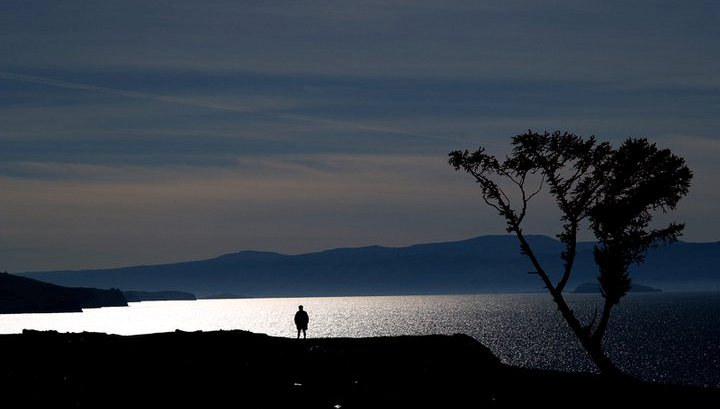
 

Spring by Kim Ki-rim

Translated by Chae-Pyong Song

Photography by Kim Young-ran

Spring by Kim Ki-rim

April has just awakened
Iike a lazy leopard.
His eyes sparkle,
he feels itchy,
his hair rises,
he stretches his back,
and he hesitates.
He has already leapt over winter.
(1946)

봄/ 김기림

사월은 게으른 표범처럼
인제사 잠이 깼다.
눈이 부시다
가려웁다
소름친다
등을 살린다
주춤거린다
성큼 겨울을 뛰어 넘는다.
(1946)

(Anne Rashid read the earlier version of this translation.)

Lake by Jung Ji-yong

Translated by Chae-Pyong Song

Photography by Lee Sang-youp

Lake by Jung Ji-yong

A face
I can surely block
with my two palms,

but my heart of longing,
big like a lake, and
I cannot help but close my eyes.

호수/ 정지용

얼골 하나 야
손바닥 둘 로
푹 가리지 만,

보고 싶은 마음
湖水 만 하니
눈 감을 밖에.


A Flower Blooms by Moon Tae-jun

Translated by Chae-Pyong Song

Photography by Im Chang-jin

A Flower Blooms by Moon Tae-jun

The yard is quiet
while the flower blooms.

The day is like a sunny floor.

The naked sky
enters the flower
for an entire day.
The flower’s lips become wet.

The sky has laid
fragrant eggs inside it.

If only meeting the person I miss is like that.

꽃이 핀다/ 문태준

뜰이 고요하다
꽃이 피는 동안은

하루가 볕바른 마루 같다

맨살의 하늘이
해종일
꽃 속으로 들어간다
꽃의 입시울이 젖는다.

하늘이 향기 나는 알을
꽃 속에 슬어놓는다

그리운 이 만나는 일 저처럼이면 좋다.

(Darcy Brandel and Melanie Steyn read the earlier versions of this translation.)

moontaejunphotoMoon Tae-jun (1970-) has published four collections of poetry: Chattering Backyard(2000), Bare Foot (2004), Flatfish (2006), and Shadow’s Development (2008) as well as other essays and commentary. One of the most popular poets of the younger generation, Moon uses deceptively simple poetic language with profound lyricism, commenting on the struggle of daily life. Grounded in Buddhist philosophy, his poems speak with reverence for all forms of life and emphasize the necessity of emptying oneself. Moon is a recipient of many prestigious awards, including the Dongseo Literature Award (2004), the Midang Literature Award (2005), and the Sowol Poetry Award (2007).

Spring by Yun Dong-ju

Translated by Chae-Pyong Song and Anne Rashid

Spring by Yun Dong-ju

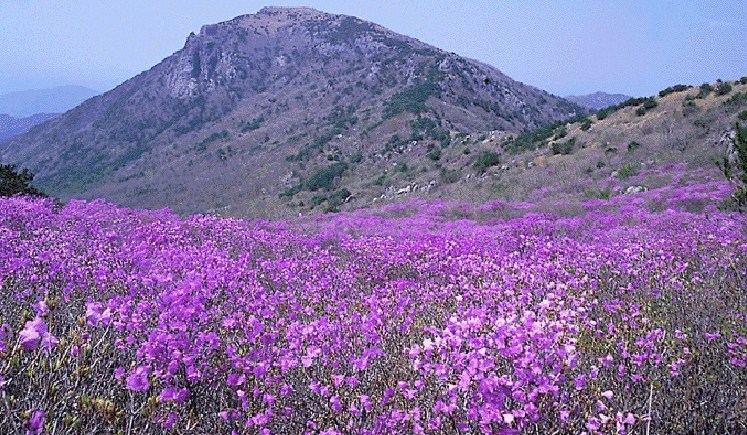
Spring runs within blood vessels like a stream,
and on the bank near a stream
forsythias, azaleas, and yellow cabbage flowers

I, who have endured winter,
sprout like grass

Joyful robin,
fly up from any furrow

The blue sky
glistens high above

/윤동주

봄이 혈관 속에 시내처럼 흘러
돌 , 돌, 시내 가차운 언덕에
개나리, 진달래, 노오란 배추꽃

삼동(三冬)을 참어온 나는
풀포기처럼 피어난다.

즐거운 종달새야
어느 이랑에서나 즐거웁게 솟쳐라.

푸르른 하늘은
아른아른 높기도 한데

(Melanie Steyn read the earlier version of this translation.)

yundongjuphotoYun Dong-ju (1917 – 1945) was born in Longjing, Jiandao, in present-day northeastern China. He was known for lyric poetry as well as resistance poetry against Japanese colonialism.

From Winter Tree to Spring Tree by Hwang Ji-woo

Translated by Chae-Pyong Song and Darcy Brandel


Photography by Chae-Pyong Song

From Winter Tree to Spring Tree by Hwang Ji-woo

A tree is a tree
In its body.
With its whole body the tree becomes a tree.
All the body naked,
At thirteen degrees below zero,
At twenty degrees below zero,
Rooting the whole body into the earth,
Lifting its head,
Standing as a defenseless naked tree,
Standing in a posture of punishment, lifting its two hands,
Ah, in a punished body, in a punished life,
Standing up, but
Saying, this is not it, this is not it,
It suffers in all of its soul,
It burns inside, inside the body,
Resisting, rejecting, from below zero,
To above zero, five degrees above zero,
Thirteen degrees above zero, moving above earth,
It pushes, it pushes up,
Till all its body breaks down–
Breaking down, blisters forming,
Breaking out, with its hot tongue,
It pushes the shoot
Slowly, steadily,
Suddenly the shoot becomes a green leaf,
Bumping into a blue April sky,
The tree becomes a tree in its whole body.
Ah, finally, at last,
The blooming tree is a blooming tree
In its body.

겨울―나무로부터 봄―나무에로 / 황지우

나무는 자기 몸으로
나무이다
자기 온몸으로 나무는 나무가 된다
자기 온몸으로 헐벗고
영하(零下) 십삼도(十三度)
영하(零下) 이십도(二十度) 지상(地上)에
온몸을 뿌리박고 대가리 쳐들고
무방비의 나목(裸木)으로 서서
두 손 올리고 벌 받는 자세로 서서
아 벌 받은 몸으로, 벌 받는 목숨으로
기립(起立)하여, 그러나
이게 아닌데 이게 아닌데
온 혼(魂)으로 애타면서 속으로 몸속으로
불타면서
버티면서 거부하면서 영하(零下)에서
영상(零上)으로 영상(零上) 오도(五度)
영상(零上) 십삼도(十三度) 지상(地上)으로
밀고 간다, 막 밀고 올라간다
온몸이 으스러지도록
으스러지도록 부르터지면서
터지면서 자기의 뜨거운 혀로
싹을 내밀고
천천히, 서서히, 문득, 푸른 잎이 되고
푸르른 사월 하늘 들이받으면서
나무는 자기의 온몸으로 나무가 된다
아아, 마침내, 끝끝내
꽃피는 나무는 자기 몸으로
꽃피는 나무이다

(Melanie Steyn has read the earlier version of this translation.)

Hwang Ji-woo (1952 – ) was born in Haenam, Jeollanam-do. He studied aesthetics and philosophy at college. He began to write poetry in 1980 and has published several books of poetry including Even Birds Leave the World (1983), From Winter Tree to Spring Tree (1985), and I’ll Sit in a Cloudy Tavern Some Day (1990). Among his prestigious literary awards are the Kim Sooyoung Literary Award, the Hyundae Literary Award, the Sowol Poetry Award, and the Daesan Literary Award. He currently teaches at the Korean Academy of Theater.

Spring by Lee Sung-bu

Translated by Chae-Pyong Song and Darcy Brandel

Photography by Chae-Pyong Song

Spring by Lee Sung-bu

You come even though I don’t wait,
even when I have abandoned waiting itself.
You linger around the edges of mud flats
or rotten puddles,
you distract easily, get into fights,
fall on your back, tired,
and when the wind, who rushes to you with urgent news,
wakes you up, shaking, you come slowly, rubbing your eyes.
Slowly, slowly, at last, what should come comes.
You look so dazzling
I cannot get up to face you.
Though I open my mouth to shout,
my voice is hardened,
and I cannot forewarn anyone.
With difficulty, I open my two arms to embrace you,
the one who comes from afar, after winning the fight.

/ 이성부

기다리지 않아도 오고
기다림마저 잃었을 때에도 너는 온다.
어디 뻘밭 구석이거나
썩은 물웅덩이 같은 데를 기웃거리다가
한눈 좀 팔고, 싸움도 한 판 하고,
지쳐 나자빠져 있다가
다급한 사연 듣고 달려간 바람이
흔들어 깨우면
눈 부비며 너는 더디게 온다.
더디게 더디게 마침내 올 것이 온다.
너를 보면 눈부셔
일어나 맞이할 수가 없다.
입을 열어 외치지만 소리는 굳어
나는 아무것도 미리 알릴 수가 없다.
가까스로 두 팔을 벌려 껴안아 보는
너, 먼 데서 이기고 돌아온 사람아.

(Melanie Steyn has read the earlier version of this translation.)

Lee Sung-bu (1942 – 2012) was born in Gwangju. He studied Korean Literature at Kyunghee University. His published books of poetry include Our Bread, Traveling to Baekje, The Eve, Plain, and Leaving behind the Empty Mountain. Among his literary awards are Modern Literature Award and Korean Literature Writers Award.

Prologue by Ra Hee-duk

Translated by Chae-Pyong Song and Anne Rashid

Photography by Choi Il-ryoung

Prologue by Ra Hee-duk

When it hasn’t even warmed
one person’s heart,
there is a fire in my heart
that makes only thick smoke.
Isn’t it time for the flame to go out yet?

서시/ 나희덕

단 한 사람의 가슴도
제대로 지피지 못했으면서
무성한 연기만 내고 있는
내 마음의 군불이여
꺼지려면 아직 멀었느냐

Ra Hee-duk (나희덕) was born in 1966 in Nonsan, Chungcheongnam-do. She received her Ph.D. in Korean literature from Yonsei University in 2006. She has published six books of poetry: To the Root(1991), The Word Dyed the Leaves (1994), The Place is Not Far (1997), That It Gets Dark (2001), A Disappeared Palm (2004), and Wild Apples (2009). She also published one collection of essays, A Half-filled Water Bucket (1999), and a volume of literary criticism, Where Does Purple Come From? (2003). Among her many literary awards are the Kim Suyoung Literature Award (1998), Modern Literature Award (2003) and the Sowol Poetry Award (2007). Growing up at the orphanages, because her father was an administrator at an orphanage, she developed her strong sympathy for the less fortunate others. She currently teaches creative writing at Chosun University in Gwangju.
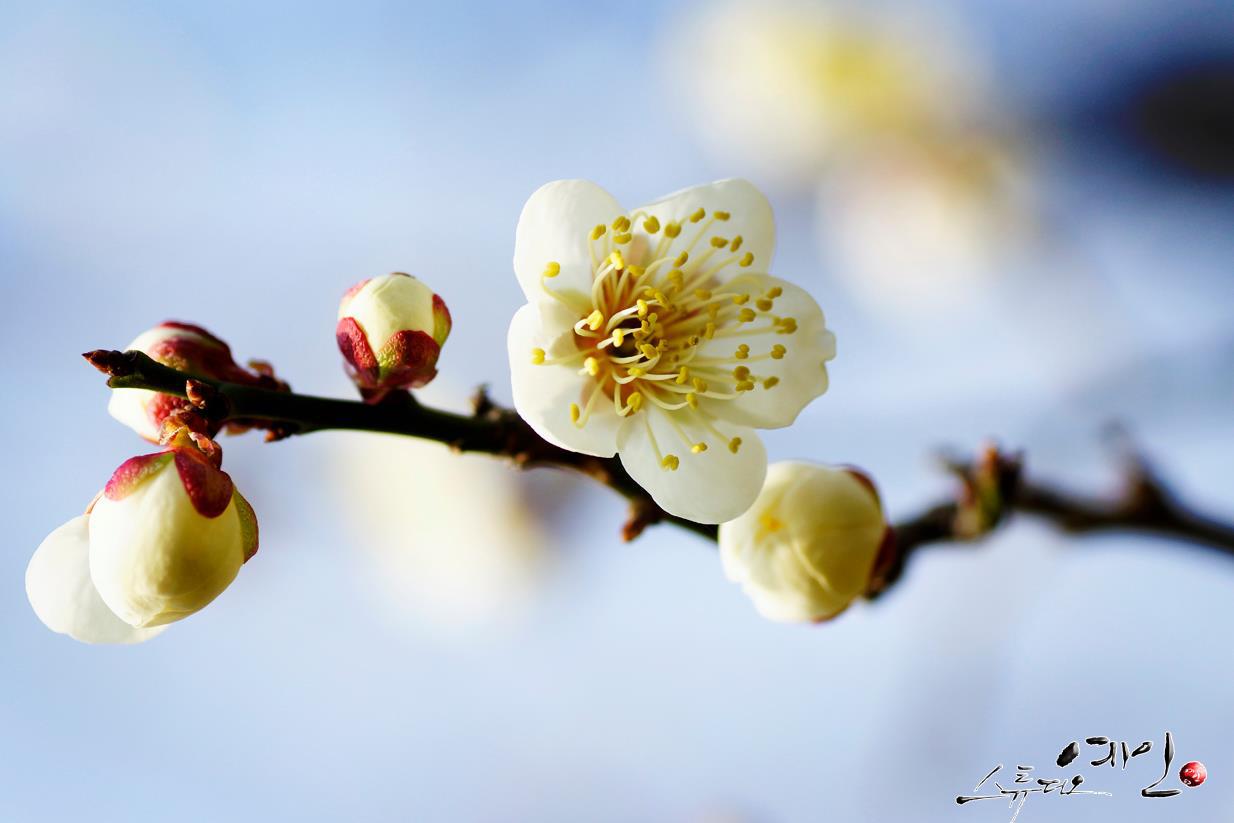
Prologue by Yun Dong-ju

Translated by Chae-Pyong Song and Darcy Brandel

Photography by Choi Il-ryoung

Prologue by Yun Dong-ju

Until the day I die
I long to have no speck of shame
when I gaze up toward heaven,
so I have tormented myself,
even when the wind stirs the leaves.
With a heart that sings the stars,
I will love all dying things.
And I will walk the way
that has been given to me.

Tonight, again, the wind brushes the stars.

서시(序詩)/ 윤동주

죽는 날까지 하늘을 우러러
한 점 부끄럼이 없기를,
잎새에 이는 바람에도
나는 괴로워했다.
별을 노래하는 마음으로
모든 죽어 가는 것을 사랑해야지.
그리고 나한테 주어진 길을
걸어가야겠다.

오늘 밤에도 별이 바람에 스치운다.

“하늘과 바람과 별과 시” (정음사, 1948)

yundongjuphotoYun Dong-ju (1917 – 1945) was born in Longjing, Jiandao, in present-day northeastern China. He was known for lyric poetry as well as resistance poetry against Japanese colonialism.