As Falling Leaves Pile Up by Kim Nam-ju

Translated by Chae-Pyong Song and Anne Rashid

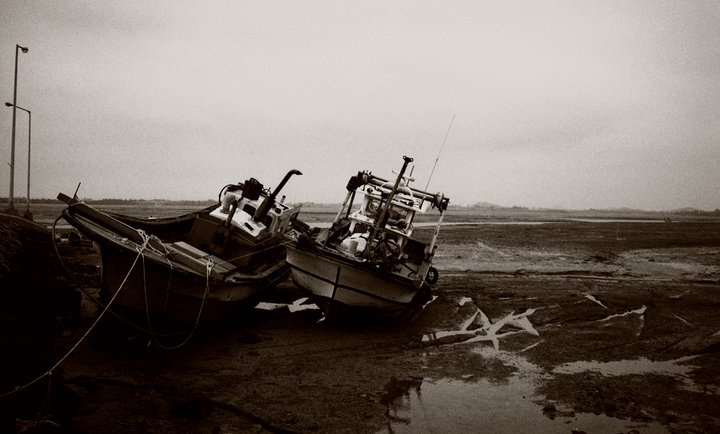
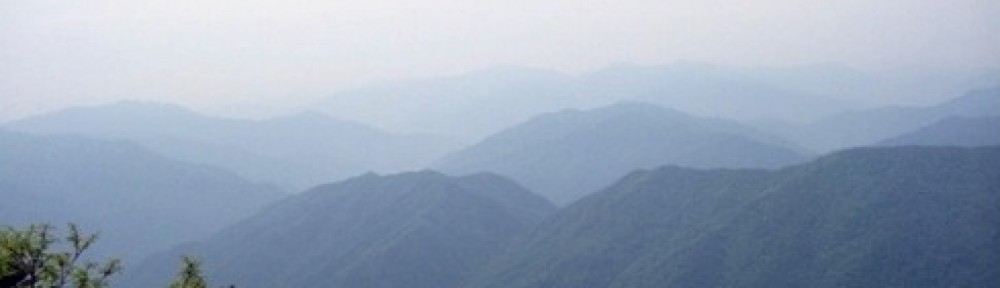
Photographed by Hye Hyon

As Falling Leaves Pile Up by Kim Nam-ju

You are my longing—
come over;
gently push the ferry across the river—
come, driving the short rain.

You are my longing—
when the falling leaves pile up between the pines,
come over, gently step over a dozen piles of them.

Come, you are my light—
before the first snow melts,
come, hurry, carrying a match in your chest.

Come, come, hurry
across the field, when new buds sprout—
come, run, carrying an armful of news
because you are my joy.

지는 잎새 쌓이거든/ 김남주

당신은 나의 기다림
강건너 나룻배 지그시 밀어 타고
오세요
한줄기 소낙비 몰고 오세요

당신은 나의 그리움
솔밭 사이사이로 지는 잎새 쌓이거든
열두 겹 포근히 즈려밟고 오세요

오세요 당신은 나의 화로
눈 내려 첫눈 녹기 전에 서둘러
가슴에 당신 가슴에 불씨 담고 오세요

오세요 어서 오세요
가로질러 들판 그 흙에 새순 나거든
한아름 소식 안고 달려 오세요
당신은 나의 환희이니까요
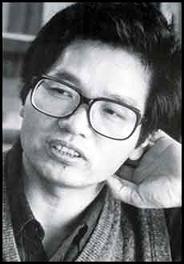
Kim Nam-ju (1946-1994) was born in Haenam, Jeollanam-do and studied English at Chonnam National University. He is known as one of the major resistance poets in South Korea, leading the people’s movement in the 1970s and 80s that ultimately toppled the dictatorship in Korea. Because of his activism, he was imprisoned twice, for more than ten years in total. In prison where paper and pencil were not allowed, he wrote many poems on milk cartons with the nail he made by grinding a toothbrush. These poems were later published in two collected volumes of his prison poetry, The Sunlight on the Prison Bar. His poetry bears witness to the tyranny of dictatorship and the hardships of the oppressed. He published such poetry collections as Requiem, My Sword My Blood, One Fatherland, The Weapon of Love and In This Lovely World. He received the Yun Sang-won Literary Award in 1993 and the National Literary Award in 1994. His poems have also been memorialized by Korean activist, rock singer An Chi-hwan in his album entitled Remember.

Freedom by Kim Nam-ju

Translated by Chae-Pyong Song and Anne Rashid

Photographed by Kim Jae-gon

Freedom by Kim Nam-ju

I am free when I work for all the people.
I can’t sing that I am free
unless I work with everyone sweating.

I am free when I fight for all the people.
I can’t sing that I am free
unless I fight with others bleeding.

I am free when I struggle for all the people.
I can’t sing that I am free
unless I share the blood, sweat, and tears.

Everyday people shout
freedom, democracy, and the people
while inside they work for their own self-interests.
What in the world can we do?

What can one become
when one deceives oneself?

자유/ 김남주

만인을 위해 내가 일할 때 나는 자유
땀 흘려 함께 일하지 않고서야
어찌 나는 자유다라고 노래할 수 있으랴

만인을 위해 내가 싸울 때 나는 자유
피흘려 함께 싸우지 않고서야
어찌 나는 자유다라고 노래할 수 있으랴

만인을 위해 내가 몸부림칠 때 나는 자유
피와 땀과 눈물을 나누어 흘리지 않고서야
어찌 나는 자유다라고 노래할 수 있으랴

사람들은 맨날
겉으로는 자유여 민주주의여 동포여 외쳐대면서도
속으로는 제 잇속만 차리고들 있으니
도대체 무엇을 할 수 있단 말인가

제 자신을 속이고서
도대체 무엇이 될 수 있단 말인가
제 자신을 속이고서

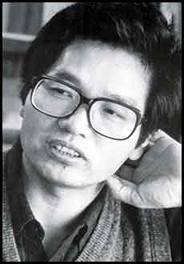
Kim Nam-ju (1946-1994) was born in Haenam, Jeollanam-do and studied English at Chonnam National University. He is known as one of the major resistance poets in South Korea, leading the people’s movement in the 1970s and 80s that ultimately toppled the dictatorship in Korea. Because of his activism, he was imprisoned twice, for more than ten years in total. In prison where paper and pencil were not allowed, he wrote many poems on milk cartons with the nail he made by grinding a toothbrush. These poems were later published in two collected volumes of his prison poetry, The Sunlight on the Prison Bar. His poetry bears witness to the tyranny of dictatorship and the hardships of the oppressed. He published such poetry collections as Requiem, My Sword My Blood, One Fatherland, The Weapon of Love and In This Lovely World. He received the Yun Sang-won Literary Award in 1993 and the National Literary Award in 1994. His poems have also been memorialized by Korean activist, rock singer An Chi-hwan in his album entitled Remember.
The Persimmon Tree by Lee Jae-mu

Translated by Chae-Pyong Song

The Persimmon Tree by Lee Jae-mu

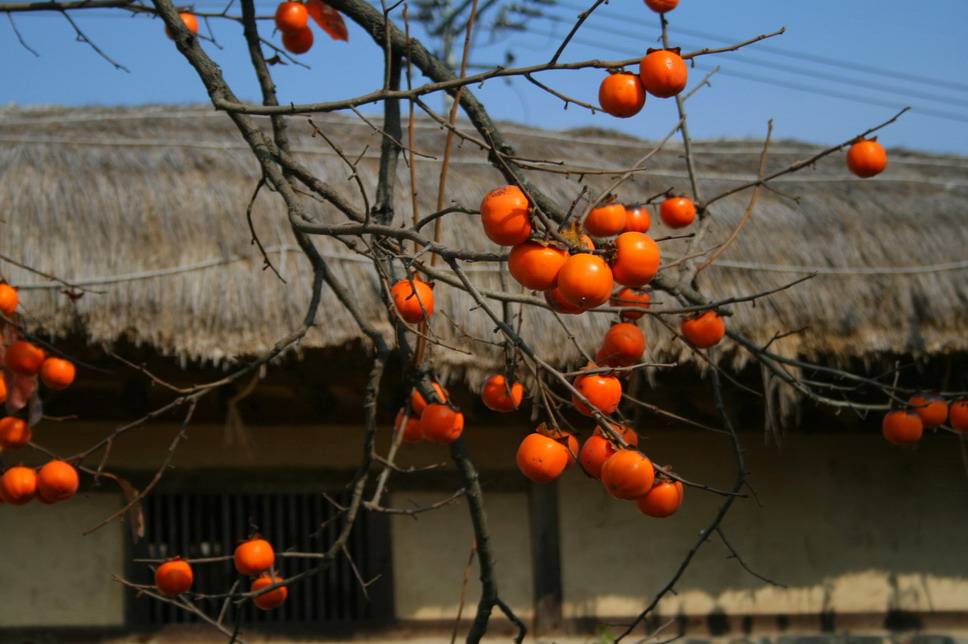
The persimmon tree is anxious to hear the news,
so it reaches out its branches toward the twig gate,
and gently shakes at the wind
shedding red tears
every fall drop by drop.
The farmer planted it there,
and lived for thirty years;
fifteen years have already passed
since he fled on the train.
The persimmon tree longs for him,
so every spring it sprouts new buds
stretching toward the gate.

감나무 /이재무

감나무 저도 소식이 궁금한 것이다
그러기에 사립 쪽으로는 가지도 더 뻗고
가을이면 그렁그렁 매달아놓은
붉은 눈물
바람결에 슬쩍 흔들려도 보는 것이다
저를 이곳에 뿌리박게 해놓고
주인은 삼십년을 살다가
도망 기차를 탄 것이
그새 십오년인데
감나무 저도 안부가 그리운 것이다
그러기에 봄이면 새순도
담장 너머 쪽부터 내밀어 틔워보는 것이다

Darcy Brandel, Laurie Kopack, Anne Rashid, and Melanie Steyn read the earlier versions of this translation.

To the Daffodil by Chung Ho-seung

Translated by Chae-Pyong Song

Photography by Chae-Pyong Song

To the Daffodil by Chung Ho-seung

Don’t cry.
Because you are lonely, you are human.
To live is to endure loneliness.
Don’t wait for the call that’s not coming.
When it snows, walk on the snowy path.
When it rains, walk on the rainy path.
At the reed forest, the black-breasted longbill is watching you.
At times, even God sheds tears, feeling lonely.
Because of loneliness the birds are sitting on the boughs.
Because of loneliness you are sitting by the stream.
Once a day, even the mountain shadow comes down to the village, feeling lonely.
Even the bell rings outward, out of loneliness.

수선화에게/ 정호승

울지 마라.
외로우니까 사람이다.
살아간다는 것은 외로움을 견디는 일이다.
공연히 오지 않는 전화를 기다리지 마라.
눈이 오면 눈길을 걸어가고
비가 오면 빗길을 걸어가라.
갈대 숲에서 가슴검은도요새도 너를 보고 있다.
가끔은 하느님도 외로워서 눈물을 흘리신다.
새들이 나뭇가지에 앉아 있는 것도 외로움 때문이고
네가 물가에 앉아 있는 것도 외로움 때문이다.
산 그림자도 외로워서 하루에 한 번씩 마을로 내려온다.
종소리도 외로워서 울려 퍼진다.

Darcy Brandel and Melanie Steyn read the earlier versions of this translation.

Chung Ho-seung was born in 1950, in Hadong, Gyongsangnam-do. Since his debut in 1972 with a poem featured in the Korea Daily News, Chung has published many poetry collections, such as From Sorrow to Happiness, Jesus of Seoul, and Dawn Letter, which has achieved both critical acclaim and mass appeal. His minimal verse style interweaves the everday and the fantastic, proposing the possibility of lyrical revelation in even the most prosaic encounters.

Seonam Temple by Chung Ho-seung

Translated by Chae-Pyong Song

Seonam Temple in Jeollanam-do, Korea

Seonam Temple by Chung Ho-seung

When your tears flow, catch a train and go to Seonam Temple.
At the Temple’s Place of Catharsis, cry as much as you must.
While you are squatting there crying,
the roots of dead pines will crawl around you,
the wooden fish will fly in the blue sky.
The grass blades will take out their handkerchiefs to wipe your tears
and the birds will fly into your heart to ring a bell.
When your tears flow, go to Seonam Temple, even on foot,
and lean against the back-bent pine tree
in front of the Temple’s Place of Catharsis, and sob away.

(Note: The Temple’s Place of Catharsis is a translation of Hae-woo-so [해우소], which literally means a place where you release your cares. It’s a Korean Buddhist term to refer to a toilet. The bathroom is not just a place to give your body release. It is a place where you should let go of your worldly concerns. The wooden fish is a Buddhist instrument to signify all the living things.)

선암사 / 정호승

눈물이 나면 기차를 타고 선암사로 가라
선암사 해우소로 가서 실컷 울어라.
해우소에 쭈그리고 울고 있으면
죽은 소나무 뿌리가 기어 다니고
목어가 푸른 하늘을 날아다닌다.
풀잎들이 손수건을 꺼내 눈물을 닦아주고
새들이 가슴 속으로 날아와 종소리를 울린다.
눈물이 나면 걸어서라도 선암사로 가라
선암사 해우소 앞
등 굽은 소나무에 기대어 통곡하라.

Darcy Brandel, Anne Rashid, and Melanie Steyn read the earlier versions of this translation.

Chung Ho-seung was born in 1950, in Hadong, Gyongsangnam-do. Since his debut in 1972 with a poem featured in the Korea Daily News, Chung has published many poetry collections, such as From Sorrow to Happiness, Jesus of Seoul, and Dawn Letter, which has achieved both critical acclaim and mass appeal. His minimal verse style interweaves the everday and the fantastic, proposing the possibility of lyrical revelation in even the most prosaic encounters.

The Place of Catharsis at Seonam Temple

Sumjin River: Part One by Kim Yong-taek

Translated by Chae-Pyong Song and Anne Rashid

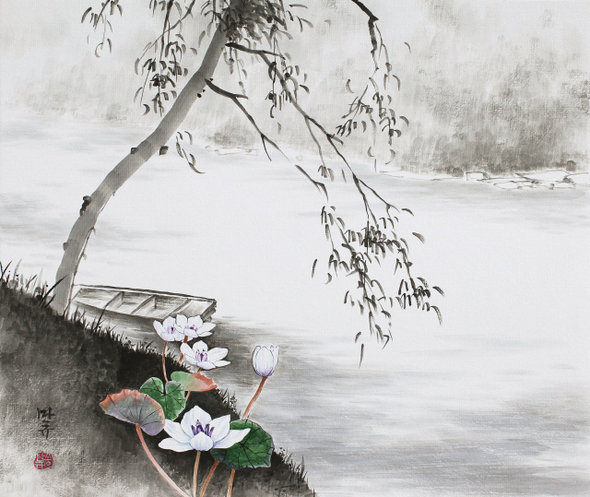
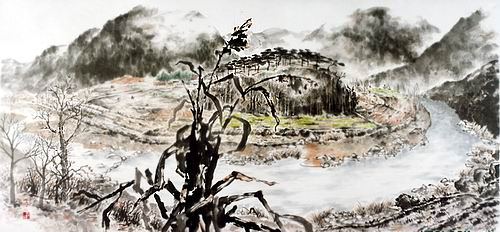
"Sumjin River," painted by Song Man-kyu

Sumjin River: Part One by Kim Yong-taek

Follow the Sumjin River during the drought.
Even though those wretches steal it time and time again,
brooklets of Jeolla-do collect like capillaries and flow
in the dusk, on the darkening  riverbank.
It decorates the clover like white rice, and
the milk-vetch like charcoal fire.
It draws in darkness
to the riversides of villages that don’t appear on maps
and to plants that don’t appear in plant encyclopedias,
and ceases the darkness.
It hangs up a flower-patterned lamp
that enlightens the darkening brows.
As it flows and flows, and gets choked up,
it calls in the branch that flows into the Youngsan River
and, out of joy, embraces it enough to crush its bones.
Follow the Sumjin River
that turns around the plump Jiri mountainside,
and see if its water will dry up
when those wretches rush in and steal it away.
Watch Jiri Mountain wash its face in the dusky river
and rise up with hearty laugh to look at Mudeung Mountain
to ask if it is true, and Mudeung Mountain glowing in the sunset
will nod its bright brow and agree with Jiri Mountain.
Follow the Sumjin River to see if it will dry up
just because some wretches steal it away.

섬진강 1/ 김용택

가문 섬진강을 따라가며 보라

퍼가도 퍼가도 전라도 실핏줄 같은
개울물들이 끊기지 않고 모여 흐르며
해 저물면 저무는 강변에
쌀밥 같은 토끼풀꽃,
숯불 같은 자운영꽃 머리에 이어주며
지도에도 없는 동네 강변
식물도감에도 없는 풀에
어둠을 끌어다 죽이며
그을린 이마 훤하게
꽃등도 달아준다
흐르다 흐르다 목메이면
영산강으로 가는 물줄기를 불러
뼈 으스러지게 그리워 얼싸안고
지리산 뭉툭한 허리를 감고 돌아가는
섬진강을 따라가며 보라
섬진강물이 어디 몇 놈이 달려들어
퍼낸다고 마를 강물이더냐고,
지리산이 저문 강물에 얼굴을 씻고
일어서서 껄껄 웃으며
무등산을 보며
그렇지 않느냐고 물어보면
노을 띤 무등산이
그렇다고 훤한 이마 끄덕이는
고갯짓을 바라보며
저무는 섬진강을 따라가며 보라
어디 몇몇 애비 없는 후레자식들이
퍼간다고 마를 강물인가를.

(Originally published in Gwangju News, December, 2011)

Kim Yong-taek (1948- ) was born in Imsil, Jeollabuk-do. With lyrical (often regional) vernacular, he has written many poems about undamaged agricultural communities and the profound beauty of nature. His poetry collections include The Sumjin River, A Clear Day, Sister, The Day Is Getting Dark, The Flower Letter I Miss, Times Like A River, That Woman’s House, and Your Daring Love. He also published essay collections such as A Small Village, What’s Longed for Exists behind the Mountain, A Story of the Sumjin River, and Follow the Sumjin River and Watch. He was awarded the Kim Soo-young Literary Award (1986) and the Sowol Poetry Award (1997). He currently teaches at Woonam Elementary School.

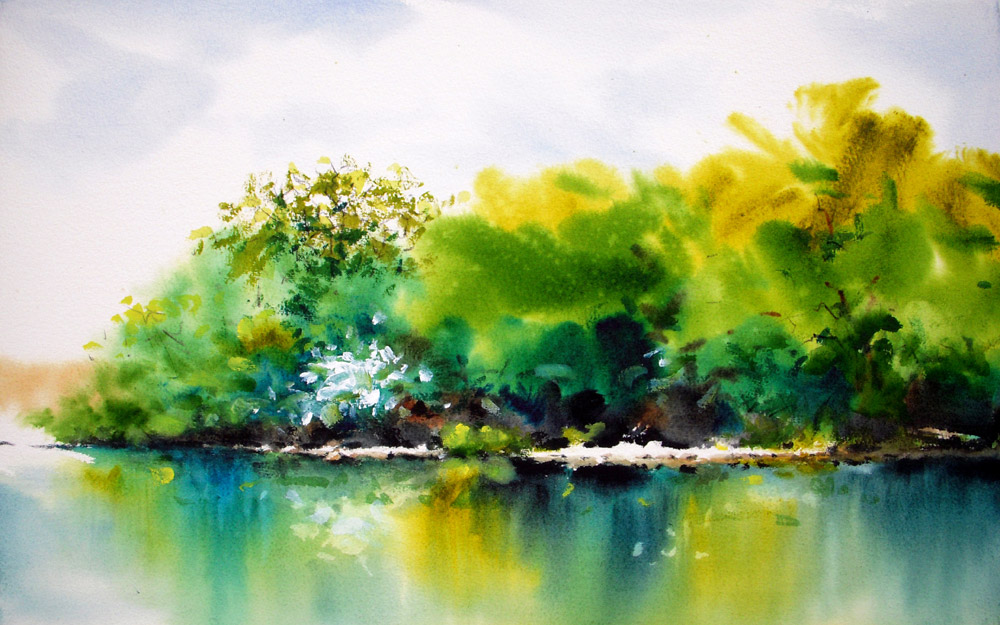
"Sumjin River," painted by Kim Seon-soo

Sumjin River: Part Two by Kim Yong-taek

Translated by Chae-Pyong Song and Anne Rashid

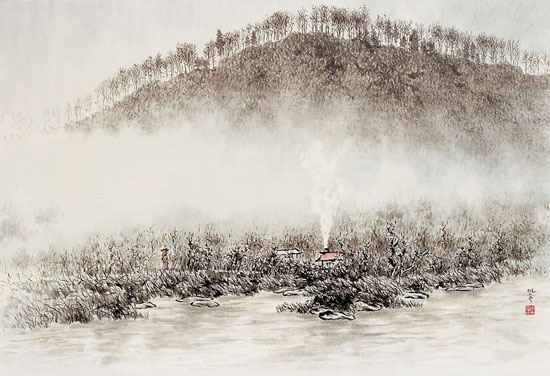
Painted by Song Man-kyu

Sumjin River: Part Two by Kim Yong-taek

Lights come alive like that:
the eyes brimming with tears because of live pine twigs.
At the foot of the mountain like a dark, wide skirt
a few houses disappear into darkness,
lights come alive,
and the mountain opens its eyes.
As it gets darker, only the glaring eyes stay open by rubbing them
and float on the Sumjin River as fire blossoms.

Every night, the mountain diminishes the darkness
and Sister revives the fire, rubbing her burning eyes,
taking the tears she collects in her skirt
to the river to cast them away.
Sister, the sound of cold water
surrounding your waist thickly
till the morning comes makes you colder.

So early in the morning
you break the ice with the water jar
and scoop up the water.
No one knows
the only fire blossom left floats
in your water jar.
You fetch the river water,
stepping on columns of white frost.

When the day comes
when all of us gather together, with every chimney smoking,
you will turn off the light on your wedding night,
keeping, for your beloved,
your chastity, your strength.

섬진강2/ 김용택

저렇게도 불빛들은 살아나는 구나
생솔 연기 눈물 글썽이며
검은 치마폭 같은 산자락에
몇 가옥 집들은 어둠 속으로 사라지고
불빛은 살아나며
산은 눈뜨는구나.
어둘수록 눈 비벼 부릅뜬 눈빛만 남아
섬진강물 위에 불송이로 뜨는구나.

밤마다 산은 어둠을 베어 내리고
누이는 매운 눈 비벼 불빛 살려내며
치마폭에 쌓이는 눈물은
강물에 가져다 버린다.
누이야 시린 물소리는 더욱 시리게
아침이 올 때까지
너의 허리에 두껍게 감기는구나.

이른 아침 어느새
너는 물동이로 얼음을 깨고
물을 퍼오는구나.
아무도 모르게
하나 남은 불송이를
물동이에 띄우고
하얀 서릿발을 밟으며
너는 강물을 길어오는구나.

참으로 그날이 와
우리 다 모여 굴뚝마다 연기나고
첫날밤 불을 끌때까지는
너의 싸움은, 너의 정절은
임을 향해 굳구나.

(Originally published in Gwangju News, December, 2011)

Kim Yong-taek (1948- ) was born in Imsil, Jeollabuk-do. With lyrical (often regional) vernacular, he has written many poems about undamaged agricultural communities and the profound beauty of nature. His poetry collections include The Sumjin River, A Clear Day, Sister, The Day Is Getting Dark, The Flower Letter I Miss, Times Like A River, That Woman’s House, and Your Daring Love. He also published essay collections such as A Small Village, What’s Longed for Exists behind the Mountain, A Story of the Sumjin River, and Follow the Sumjin River and Watch. He was awarded the Kim Soo-young Literary Award (1986) and the Sowol Poetry Award (1997). He currently teaches at Woonam Elementary School.

Sumjin River: Part Three by Kim Yong-taek

Translated by Chae-Pyong Song and Anne Rashid

Sumjin River painted by Song Man-kyu

Sumjin River: Part Three by Kim Yong-taek

You must be attached to this.
Watching the sun set,
the glittering ripples rush in continuously
and seep deeply into you and the water’s edge across the river.
Beloved, without your knowing,
you must be attached to the place where the water is deep.
Flowers bloom–they wither in no time;
even flower seeds wither.
Leaning your heart against the plant leaf
on which white snow fell,
you came this far to stand.
When you arrived, the sun set,
thirsting for water, and you stood in front of the water,
feeling sorrowful, joyful, and happy,
and cried, your two shoulders shaking out of love.
You must have planted your longing deep under the water.
Though you didn’t have anybody you waited for,
you returned from the water’s edge and treaded up the night path.
Because your eyes were familiar with
each stone and each blade of grass on this path,
you must have been attached to this land.
The village where the light becomes alive little by little,
longs for the love that it must cultivate.
Your thin back that I watch quietly from afar
without your knowing
must have borne a pretty love.

섬진강3/ 김용택

그대 정들었으리.
지는 해 바라보며
반짝이는 잔물결이 한없이 밀려와
그대 앞에 또 강 건너 물가에
깊이 깊이 잦아지니
그대, 그대 모르게
물 깊은 곳에 정들었으리,
풀꽃이 피고 어느새 또 지고
풀씨도 지고
그 위에 서리 하얗게 내린
풀잎에 마음 기대며
그대 언제나 여기까지 와 섰으니
그만큼 와서 해는 지고
물 앞에 목말라 물 그리며
서러웠고 기뻤고 행복했고
사랑에 두 어깨 깊이 울먹였으니
그대 이제 물 깊이 그리움 심었으리.
기다리는 이 없어도 물가에서
돌아오는 저녁 길
그대 이 길 돌멩이, 풀잎 하나에도
눈 익어 정들었으니
이 땅에 정들었으리.
더 키워나가야 할
사랑 그리며
하나둘 불빛 살아나는 동네
멀리서 그윽이 바라보는
그대 야윈 등,
어느덧
아름다운 사랑 짊어졌으리.

(Originally published in Gwangju News, December, 2011)

Kim Yong-taek (1948- ) was born in Imsil, Jeollabuk-do. With lyrical (often regional) vernacular, he has written many poems about undamaged agricultural communities and the profound beauty of nature. His poetry collections include The Sumjin River, A Clear Day, Sister, The Day Is Getting Dark, The Flower Letter I Miss, Times Like A River, That Woman’s House, and Your Daring Love. He also published essay collections such as A Small Village, What’s Longed for Exists behind the Mountain, A Story of the Sumjin River, and Follow the Sumjin River and Watch. He was awarded the Kim Soo-young Literary Award (1986) and the Sowol Poetry Award (1997). He currently teaches at Woonam Elementary School.

Sumjin River painted by Song Man-kyu

The Rust Tree by the Road by Jung Kut-byol

Translated by Chae-Pyong Song and Anne Rashid

Photographed by Im Chang-jin

The Rust Tree by the Road by Jung Kut-byol
(길 섶 녹나무) 

1

In front of the window of my house
A road stretches out;
by the road a rust tree
grows up every night.

2

All the pedestrians
who can’t remember the roads they have walked
become rusty. Don’t we, the poor, witness this
down the roads we come and go upon daily?
The houses crumble down
and the roots of the rust tree move
freely,
punching big holes in the young one’s lungs,
collapsing the building’s scaffolding.

At first, the rust tree’s root is
fatigue gathered on the pedestrian’s soul,
dust descending on the bread crumbs of memory,
and paralysis and amnesia—
the whole picture of our love—
on the sky that we all possess
we make an open graveyard and lie crowded. 

Already at the window
rust leaves touch the lips.
When one by one they cover the roof,
children will become hags—
even your lover
will wither.
It’s fatal for the big tree, producing
rust bloom flowers.
Haven’t we seen the houses on the road
and the earth with words
rusted away?
On every road we traverse
rust trees bloom like the dead of night—
even the birds of childhood
and people change.

3

Beside me, about my love and around my house,
blooming in a crowd, ah, the smell of rust.

(Originally published in WSQ: Women’s Studies Quarterly, Volume 39, Numbers 3 & 4, Fall/Winter 2011)

Jung Kut-byol is a professor of Korean literature at Myungji University in Seoul, South Korea. Since 1988, she has worked as both a poet and a critic. She has published four poetry collections, My Life: A Birch Tree (1996), A White Book (2000), An Old Man’s Vitality (2005), and Suddenly (2008) and two collections of critical essays, The Poetics of Parody (1997) and The Language of Poetry Has a Thousand Tongues (2008). She has also edited an anthology titled In Anyone’s Heart, Wouldn’t a Poem Bloom? 100 Favorite Poems Recommended by 100 Korean Poets (2008).

The Rust Tree Inside Me by Jung Kut-byol

Translated by Chae-Pyong Song and Anne Rashid

Photographed by Chae-Pyong Song

The Rust Tree Inside Me by Jung Kut-byol
(내 안 녹나무) 

I’ve been sitting on the windowsill. What has gone wrong?
Alongside a movie theater, a few bars, and a closed supermarket
absurd red insects disappear
I know there’s not any place better than here.
I feared the clock and the train,
wars and horror movies, too. I was young then.
I wondered if maybe a corpse was lying between the walls—
a common fantasy. Where was Father then?
When I saw innocent love, for a moment, my heart would stop.
I’ve been sitting on the windowsill.
I want to be a typist with perfect spelling.
Sometimes I’d like to have a child, a scary thought.
Without wheels and pedals, a bike is of no use.
An unfortunate person walks, following an abandoned railroad track.
There are things I would like to forget silently
like the railroad disappearing, covered by overgrown grass.
When the curtain descends, what kind of dream would fall in this window?
My life like a birch tree that dares to sweep away Heaven—
I once thought I would live like that.
After climbing up high enough when the tree could no longer bear me
I’d like to return to earth, stepping on branch tips.
But I, who hold a mouthful of changing clouds,
am a worn-out third-class singer. Tears are falling.
The rain of tears falling. What sort of fiction is this?

(Originally published in WSQ: Women’s Studies Quarterly, Volume 39, Numbers 3 & 4, Fall/Winter 2011)

Jung Kut-byol is a professor of Korean literature at Myungji University in Seoul, South Korea. Since 1988, she has worked as both a poet and a critic. She has published four poetry collections, My Life: A Birch Tree (1996), A White Book (2000), An Old Man’s Vitality (2005), and Suddenly (2008) and two collections of critical essays, The Poetics of Parody (1997) and The Language of Poetry Has a Thousand Tongues (2008). She has also edited an anthology titled In Anyone’s Heart, Wouldn’t a Poem Bloom? 100 Favorite Poems Recommended by 100 Korean Poets (2008).