On the Day that Shines Again by Seo Jung-ju

Translated by Chae-Pyong Song and Anne Rashid
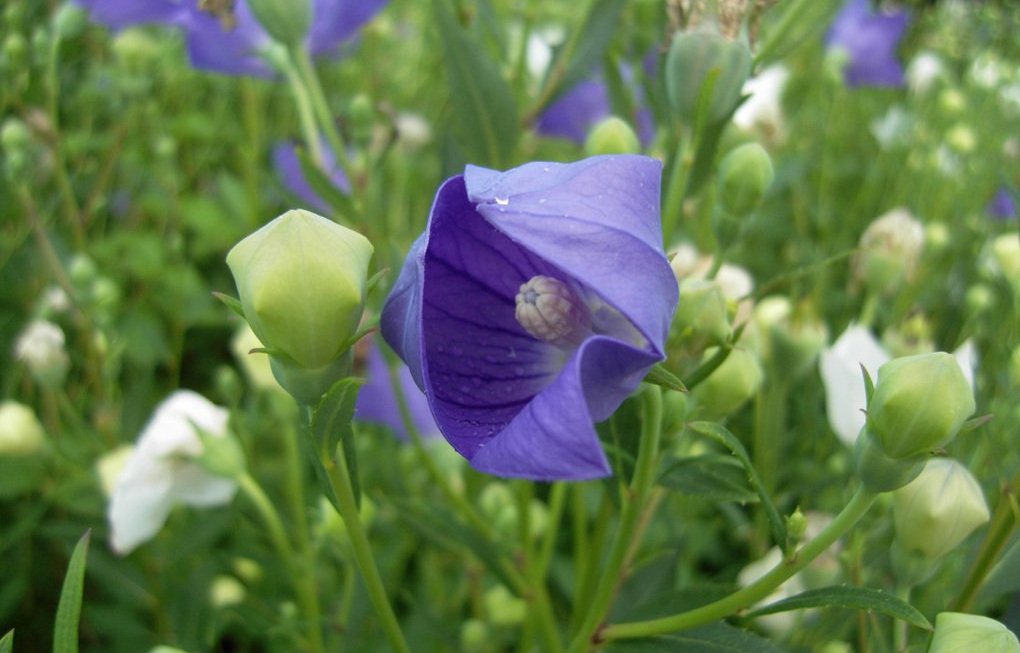
Photography by Hye Hyon

Chunhyang’s Words: Part Two,
On the Day that Shines Again by Seo Jung-ju

Spirit,
at first, my heart was like a wavering haze
on a day when thousands of skylarks sing;
It was like small clouds flying together
in the verdant river
where the fish with glittering scales swim.

Spirit,
but when you came one day in his shape,
I became a mad whirlwind.
I became a torrential rain,
a cascading waterfall from a cliff.

But Spirit,
like the ocean swallows a small creek,
you took him away again,
and left only an evening glow
burning in my empty heart.

Spirit,
another day shines upon me.
Now, the color of my heart,
blooming like bellflowers on the mountain,
is your love.

다시 밝은 날에—춘향의 말 2/서정주

신령님,
처음 내 마음은 수천만 마리
노고지리 우는 날의 아지랭이 같았습니다.
번쩍이는 비늘을 단 고기들이 헤엄치는
초록의 강 물결
어우러져 날으는 아기구름 같았습니다.

신령님,
그러나 그의 모습으로 어느 날 당신이 내게 오셨을 때
나는 미친 회오리바람이 되었습니다.
쏟아져 내리는 벼랑의 폭포,
쏟아져 내리는 소나기비가 되었습니다.

그러나 신령님,
바닷물이 작은 여울을 마시듯
당신이 다시 그를 데려가시고
그 훠-ㄴ한 내 마음에
마지막 타는 저녁 노을을 두셨습니다.

신령님,
그리하여 또 한번 내 위에 밝는 날
이제
산골에 피어나는 도라지꽃 같은
내 마음의 빛깔은 당신의 사랑입니다.

Seo Jeong-ju (1915 – 2000) was born in Gochang, Jeollabuk-do. He is considered the founding father of modern Korean poetry. Under the pen name Midang, he published at least 15 collections of poetry. He taught Korean literature at Chosun University, among others. He was also nominated five times for the Nobel Prize in literature. His grandmother’s stories and his interest in Buddhism had a strong influence upon his writing. His works have been translated into a number of languages, including English, French, Spanish and German.

Conversing while Swinging by Seo Jung-ju

Translated by Chae-Pyong Song and Anne Rashid

Chunhyang’s Words: Part One,
Conversing while Swinging by Seo Jung-ju

Hyangdan, push the swing
toward the faraway sea
like you are pushing out a boat,
Hyangdan

Away from this gently swaying weeping willow
and a patch of wildflowers
that seem to be embroidered on my pillow cover,
away from these small butterflies and nightingales,
like you are pushing away forever,
Hyangdan

Push me up
toward that sky where there is no coral or isle.
Push me up like the colorful clouds.
Push up my heaving heart!
No matter what I do, I cannot travel
to the west like the moon.

Like the wind pushes up the waves,
push me up,
Hyangdan.

추천사(鞦韆詞) – 춘향의 말 1 /서정주

향단(香丹)아, 그넷줄을 밀어라.
머언 바다로
배를 내어 밀듯이,
향단아

이 다소곳이 흔들리는 수양버들 나무와
베갯모에 뇌이듯한 풀꽃더미로부터,
자잘한 나비새끼 꾀꼬리들로부터
아조 내어 밀듯이, 향단아

산호(珊瑚)도 섬도 없는 저 하늘로
나를 밀어올려다오.
채색(彩色)한 구름같이 나를 밀어올려다오
이 울렁이는 가슴을 밀어 올려 다오!
서(西)으로 가는 달 같이는
나는 아무래도 갈 수가 없다.

바람이 파도를 밀어 올리듯이
그렇게 나를 밀어올려다오.
향단아.

<서정주 시선> (정음사, 1956)

Seo Jeong-ju (1915 – 2000) was born in Gochang, Jeollabuk-do. He is considered the founding father of modern Korean poetry. Under the pen name Midang, he published at least 15 collections of poetry. He taught Korean literature at Chosun University, among others. He was also nominated five times for the Nobel Prize in literature. His grandmother’s stories and his interest in Buddhism had a strong influence upon his writing. His works have been translated into a number of languages, including English, French, Spanish and German.

Tears by Kim Hyun-seung

Translated by Chae-Pyong Song and Anne Rashid

Photography by Hye Hyon

Tears by Kim Hyun-seung

Often
I wish to be a small seed
falling to the fertile ground.

These are all I have–
flawless, spotless,
unbroken!

When I am asked to offer
what is most precious,
these are the only ones I have left!

You saw the flowers of a beautiful tree withering
and made it bear fruit,

and, after giving me laughter,
you have renewed my tears.

눈물/김현승

더러는
옥토(沃土)에 떨어지는 작은 생명이고저.

흠도 티도,
금가지 않은
나의 전체는 오직 이뿐!

더욱 값진 것으로
드리라 하올 제,
나의 가장 나아종 지니인 것도 오직 이뿐!

아름다운 나무의 꽃이 시듦을 보시고
열매를 맺게 하신 당신은,

나의 웃음을 만드신 후에
새로이 나의 눈물을 지어 주시다.

시집 ≪김현승 시초≫ (1957)

Kim Hyun-seung (1913-1975) was born and raised in Gwangju. He is known for sublimating his Christian imagination into poetry as in “The Prayer of Autumn.” He is also known for founding a literary journal, New Literature, in 1951. In the 1950s, he taught creative writing at Chosun University and mentored many great poets known around the country.

The Blind Singing Couple by Chung Ho-seung

Translated by Chae-Pyong Song and Anne Rashid

Photography by Hwang Moonsung

The Blind Singing Couple by Chung Ho-seung

With the snowfall, it was getting dark,
and they lost their way.
On this winter night street without even a snowman
nobody made any visit, so they sang.
There were only some others milling around
out in the world, being snowed upon.
They sang, calming the cries
of the child on the mother’s back
with a long way to go,
the snow falling in large flakes;
they sang, to love the unlovable,
to forgive the unforgivable,
waiting for the snowman.
They sang all the songs of waiting in the world.
Their songs became roads and led the people
walking in darkness, shivering in snow.
They forged a path through the snow
that made it impossible to return.
They sang the songs that love indifference,
till beauty rescues the world from drowning,
till joy visits the despairing.
With a long way to go,
snow falling in large flakes,
singing the songs awaiting the snowman,
they became snowmen on this winter night street–
they became snowmen that will not melt even when spring comes.

맹인 부부 가수정호승

눈내려 어두워서 길을 잃었네
갈 길은 멀고 길을 잃었네
눈사람도 없는 겨울밤 이 거리를
찾아오는 사람 없어 노래 부르니
눈 맞으며 세상 밖을 돌아가는 사람들뿐
등에 업은 아기의 울음소리를 달래며
갈 길은 먼데 함박눈은 내리는데
사랑할 수 없는 것을 사랑하기 위하여
용서받을 수 없는 것을 용서하기 위하여
눈사람을 기다리며 노랠 부르네
세상 모든 기다림의 노랠 부르네
눈 맞으며 어둠 속을 떨며 가는 사람들을
노래가 길이 되어 앞질러 가고
돌아올 길 없는 눈길 앞질러 가고
아름다움이 이 세상을 건질 때까지
절망에서 즐거움이 찾아올 때까지
함박눈은 내리는데 갈 길은 먼데
무관심을 사랑하는 노랠 부르며
눈사람을 기다리는 노랠 부르며
이 겨울 밤거리의 눈사람이 되었네
봄이 와도 녹지 않을 눈사람이 되었네

“서울의 예수” (민음사, 1982)

Chung Ho-seung was born in 1950, in Hadong, Gyongsangnam-do. Since his debut in 1972 with a poem featured in the Korea Daily News, Chung has published many poetry collections, such asFrom Sorrow to HappinessJesus of Seoul, and Dawn Letter, which has achieved both critical acclaim and mass appeal. His minimal verse style interweaves the everday and the fantastic, proposing the possibility of lyrical revelation in even the most prosaic encounters.

Sumjin River: Part Five by Kim Yong-taek

Translated by Chae-Pyong Song and Anne Rashid

Sumjin River, photography by Bok Hyo-geun

Sumjin River: Part Five by Kim Yong-taek

In this world,
when we feel
our living is parched,
without any sign of subsiding,
go to the riverside at dusk,
gaze at the darkening river
that brings this world in
and takes it away,
dip one end of the dry heart
in the darkening river,
be quenched, and let it go.
After letting go of everything,
without anything left to let go,
only with our poor eyes,
on the dusky river,
will we become alive, little by little,
with our eyes opening like stars
that, as the night deepens,
shine more, alive with longing;
like the few lamps of the heart
that have driven a short wick
deep into the river—
a wick that has no oil left
no matter how much you squeeze–
and have withstood like the dawn
without letting any sparks fly,
washing our eyes
in the dawn river
that brings this world in
and takes it away,
we should live
with eyes of longing,
and stand as one good life
indebted to this earth.

섬진강 5/ 김용택

이 세상
우리 사는 일이
저물 일 하나 없이
팍팍할 때
저무는 강변으로 가
이 세상을 실어오고 실어가는
저무는 강물을 바라보며
팍팍한 마음 한끝을
저무는 강물에 적셔
풀어 보낼 일이다.
버릴 것 다 버리고
버릴 것 하나 없는
가난한 눈빛 하나로
어둑거리는 강물에
가물가물 살아나
밤 깊어질수록
그리움만 남아 빛나는
별빛같이 눈떠 있고,
짜내도 짜내도
기름기 하나 없는
짧은 심지 하나
강 깊은 데 박고
날릴 불티 하나 없이
새벽같이 버티는
마을 등불 몇 등같이
이 세상을 실어오고 실어가는
새벽 강물에
눈곱을 닦으며,
우리 이렇게
그리운 눈동자로 살아
이 땅에 빚진
착한 목숨 하나로
우리 서 있을 일이다.

Kim Yong-taek (1948- ) was born in Imsil, Jeollabuk-do. With lyrical (often regional) vernacular, he has written many poems about undamaged agricultural communities and the profound beauty of nature. His poetry collections include The Sumjin River, A Clear Day, Sister, The Day Is Getting Dark, The Flower Letter I Miss, Times Like A River, That Woman’s House, and Your Daring Love. He also published essay collections such as A Small Village,What’s Longed for Exists behind the Mountain, A Story of the Sumjin River, and Follow the Sumjin River and Watch. He was awarded the Kim Soo-young Literary Award (1986) and the Sowol Poetry Award (1997). He currently teaches at Woonam Elementary School.

Doodling by Shin Dal-ja

Translated by Chae-Pyong Song and Anne Rashid

Painted by Kang Jang-won

Doodling by Shin Dal-ja

A poor drawing of a train and dizzy writings
occupy an old wall of my parents’ home–
a solitary room of my heart that couldn’t be kept down.
These crippled writings couldn’t stand up yet,
and the train that faded away never moved, even once.
It was so slow that my heart stood up
and hurried to Seoul. The torn wings of the doodles
once in a while flutter in my heart.
Beneath the fluttering faster than the pulse,
the rice seed of imagination burst fully.
Green spirit,
that was the epicenter of my art.

낙서/ 신달자

고향 집 낡은 벽
어지러운 글씨 본 적 없는 어설픈 기차 그림
어디에도 내려놓을 곳 없었던 내 마음의 외딴 방
앉은뱅이 글씨는 아직도 일어서지 못하고
흐릿하게 지워진 기차는 제대로 한번 움직이지 못했다
너무 느려 마음 먼저 일어나
서둘러 서울 와 버린 낙서의 찢긴 날개들
내 심장에서 가끔 퍼덕거린다
맥박 소리보다 더 빠른 퍼덕거림 밑에
상상의 볍씨 하나 오롯하게 터진다
푸른 정신
예술의 진원지가 거기였다

Shin Dal-ja (1943- ) was born in Geochang, Gyeongsangnam-do. She studied Korean literature at Sookmyung Women’s University. She taught creative writing at Pyongtaek University and Myungji College. Her poetry collections include Father’s Light, Passionate Love, The Long Talking Relationship, and Paper.  She also has written several collections of essays including The Poet’s Love, You Remember These Three Things, and At Forty,  I Learned the Baby-Steps of Life. Her literary awards include The Korea Literature Award, the Modern Buddhist Literature Award, and Youngrang Poetry Award.

Blank Paper: Part One by Shin Dal-ja

Translated by Chae-Pyong Song and Anne Rashid

Blank Paper: Part One by Shin Dal-ja

If you want to calm anger like cast iron,
if you want to calm resentment like a rock,
jump down on the blank page.
If you want to open your spirit to the first nature
that is endless however many times you enter
and is wide open without bottoms or walls,
if you want to taste the ecstasy of all of your body becoming a blank page,
soaking slowly into the blank page,
if you want to wash up the dirt of the world
and be clear like spring water in a forest,
if you want to experience the white light, deeply cool, even without bleaching
that accepts everything and lets it go,
if you want to enter into such a path of goodness
where with the first step you step on eternity
and with the second step the past and future worlds merge into one way,
if you want to meet the spirit of the spirits
that has no weight nor smell nor conflict,
lightly jump down on a blank page.

It is such a path
where the origin leads your hand—
the origin in which there is nothing but there is everything,
where you find meaning even though you followed without a purpose,
where pure hearts stand up,
where gallant people with conviction
never get thirsty however long they journey.

백지 1/ 신달자

무쇠 같은 분노를 삭이려면
돌덩이 같은 한을 삭이려면
그곳에 들어가 보세요
들어가도 들어가도 끝이 없는
바닥도 벽도 없이 확 트인
최초의 자연에 정신을 열어보고 싶다면
백지에 스르르 스며들어서
온몸이 백지가 되는 황홀을 맛보고 싶다면
세상의 먼지를 깨끗하게 씻어
산속 샘물같이 맑아지고 싶다면
표백은 없었지만 시리게 깊은 흰빛
다 받아들이고 다 쏟아내는
첫 발자국에 영원이 밟히고
두 발자국에 과거와 내세가 하나의 길로 열리는
그런 선한 길로 접어들고 싶다면
무게도 냄새도 충돌도 없는
정신의 정신을 만나고 싶다면
훌쩍 백지 위로 뛰어내려 보세요

아무것도 없지만 뭐든 있는
그런 근원의 출발이 손을 이끄는
무작정 따라가도 마음 잡히는
청정한 마음이 기립해 서 있는
소신 밝아 늠름한
가도 가도 목이 마르지 않는 그런 길

(Originally published in Gwangju News, July 2012)

Shin Dal-ja (1943- ) was born in Geochang, Gyeongsangnam-do. She studied Korean literature at Sookmyung Women’s University. She taught creative writing at Pyongtaek University and Myungji College. Her poetry collections include Father’s Light, Passionate Love, The Long Talking Relationship, and Paper.  She also has written several collections of essays including The Poet’s Love, You Remember These Three Things, and At Forty,  I Learned the Baby-Steps of Life. Her literary awards include The Korea Literature Award, the Modern Buddhist Literature Award, and Youngrang Poetry Award.

Prologue by Shin Dal-ja

Translated by Chae-Pyong Song and Anne Rashid

Painted by Kang Jang-won

Prologue by Shin Dal-ja

Rumors are spreading.
Is paper disappearing?

I walk out to an empty field.
A desolate page comforts it after a harvest.
I open it carefully.
I walk out to a trail in a forest.
A small concert plays with the words of whispering leaves
and with the songs birds make with their beautiful sentences.
I go, and stand by a small pond in a beautiful yard of a Korean house
waiting for calligraphy many fish write with their bodies.

What replaces paper?

I hold it dear.
Paper is the spirit of humanity;
I worship paper as the pure spirit.
What would the poet write on it?

서시/ 신달자

입소문이 파다하다
종이가 사라진다고?

그래서 빈 들에 나갔지 추수 끝난 뒤에 헛헛한 들을 달래고 있는 적막 한 페이지
조심스레 펴 보았지
그래서 숲 속 작은 골목길로 나갔지 나뭇잎들이 수군거리는 말 새들이 단정히
문장 만들어 자작곡을 붙이는 작은 연주회
그래서 가 보았지 수려한 한옥 마당에 작은 연못 안의 물고기들 온몸으로 일필휘지하는
휘호 하나 기다리며 나 서 있으니

종이를 대신하는 것이 무엇인가

그리워라
종이는 사람의 정신
정한 신이라 우러르니
거기 무엇을 시인은 적을 것인가.

(Originally published in Gwangju News, July 2012)

Shin Dal-ja (1943- ) was born in Geochang, Gyeongsangnam-do. She studied Korean literature at Sookmyung Women’s University. She taught creative writing at Pyongtaek University and Myungji College. Her poetry collections include Father’s Light, Passionate Love, The Long Talking Relationship, and Paper.  She also has written several collections of essays including The Poet’s Love, You Remember These Three Things, and At Forty,  I Learned the Baby-Steps of Life. Her literary awards include The Korea Literature Award, the Modern Buddhist Literature Award, and Youngrang Poetry Award.

Analogue by Shin Dal-ja

Translated by Chae-Pyong Song and Anne Rashid

Analogue by Shin Dal-ja

A door of the latest brand
opens smoothly with a password.
Even this is not urbane enough.
The top of the line door that opens immediately,
saying yes, yes if only you put your fingerprints upon it gently.
Even this is not easy enough.
Now the door opens as if greeting an emperor
even when it detects the voice saying, “it’s me.”
That’s right.
It’s a matter of time before the door clanks open
the moment it smells the owner
standing in front of the door.

But I like the mundane things—
when you press the bell with a tired hand,
the door that rushes to you and greets you with a smile
and a human voice and human hands;
and, if I can’t have that,
the lovely twig gate of my maternal grandparents’ house
that stands only up to my knees, open day and night.

아날로그/신달자

비밀번호를 누르면 스르르 문이 열리는
최신식 문
그것도 촌스럽다며 지문만 슬쩍 대면 네 네 네 하며
자르르 열리는 최고급 문
그것도 번거롭다며 “나야” 목소리만 감지해도
이제는 제왕처럼 문이 열린다
그렇지 이제는 문 앞에 주인이 서면
냄새를 훅 하고 맡는 순간에 철커덕 문이 열리는
날이 바로 내일이지

그러나 나는 우둔한 것이 좋다
피로에 지친 손으로 벨을 누르면
얼른 달려와 미소로 열어 주는
사람의 목소리와 사람의 손으로 반기는 따뜻한 문
그것도 아니라면
아예 정강이 밑까지만 가린, 밤낮 열어 두는
외갓집 정 깊은 사립문이거나.

(Originally published in Gwangju News, July 2012)

Shin Dal-ja (1943- ) was born in Geochang, Gyeongsangnam-do. She studied Korean literature at Sookmyung Women’s University. She taught creative writing at Pyongtaek University and Myungji College. Her poetry collections include Father’s Light, Passionate Love, The Long Talking Relationship, and Paper.  She also has written several collections of essays including The Poet’s Love, You Remember These Three Things, and At Forty,  I Learned the Baby-Steps of Life. Her literary awards include The Korea Literature Award, the Modern Buddhist Literature Award, and Youngrang Poetry Award.

The Gourd Dipper by Shin Dal-ja

Translated by Chae-Pyong Song and Anne Rashid

The Gourd Dipper by Shin Dal-ja

From a temple well deep in the mountain,
I drink water with a gourd dipper.
Living trees, waking stars.
As I drink water
which has flowed for thousands of years since antiquity,
I become awake.
So this is a gourd dipper.
They took down the round moon
floating above the thatched roof,
scooped out the inside like white rice,
and from it made a bowl of nature.
The beggars used it to ask for rice,
and, when it cracked apart,
my maternal grandmother sewed it up
to hold life again.
It looked poor but gentle.

바가지/ 신달자

산속 깊은 절간 우물에서
표주박으로 물 마신다
살아 있는 나무 깨어 있는 별
수천 년 흘러온 태곳적 흐르는
물 마시니
나 깨어난다
그래 이거 바가지다
초가지붕 위에 덩그렇게 뜬 둥근달을 내려
흰쌀밥 같은 속 파내고
그것으로 자연의 그릇을 만들어 사용했다
바가지로 거지들 밥 얻기도 하고
바가지 금 가면
외할머니 바늘로 꿰매어
다시 삶을 담았다
궁핍했으나 순해 보였다

(Originally published in Gwangju News, July 2012)

Shin Dal-ja (1943- ) was born in Geochang, Gyeongsangnam-do. She studied Korean literature at Sookmyung Women’s University. She taught creative writing at Pyongtaek University and Myungji College. Her poetry collections include Father’s Light, Passionate Love, The Long Talking Relationship, and Paper.  She also has written several collections of essays including The Poet’s Love, You Remember These Three Things, and At Forty,  I Learned the Baby-Steps of Life. Her literary awards include The Korea Literature Award, the Modern Buddhist Literature Award, and Youngrang Poetry Award.