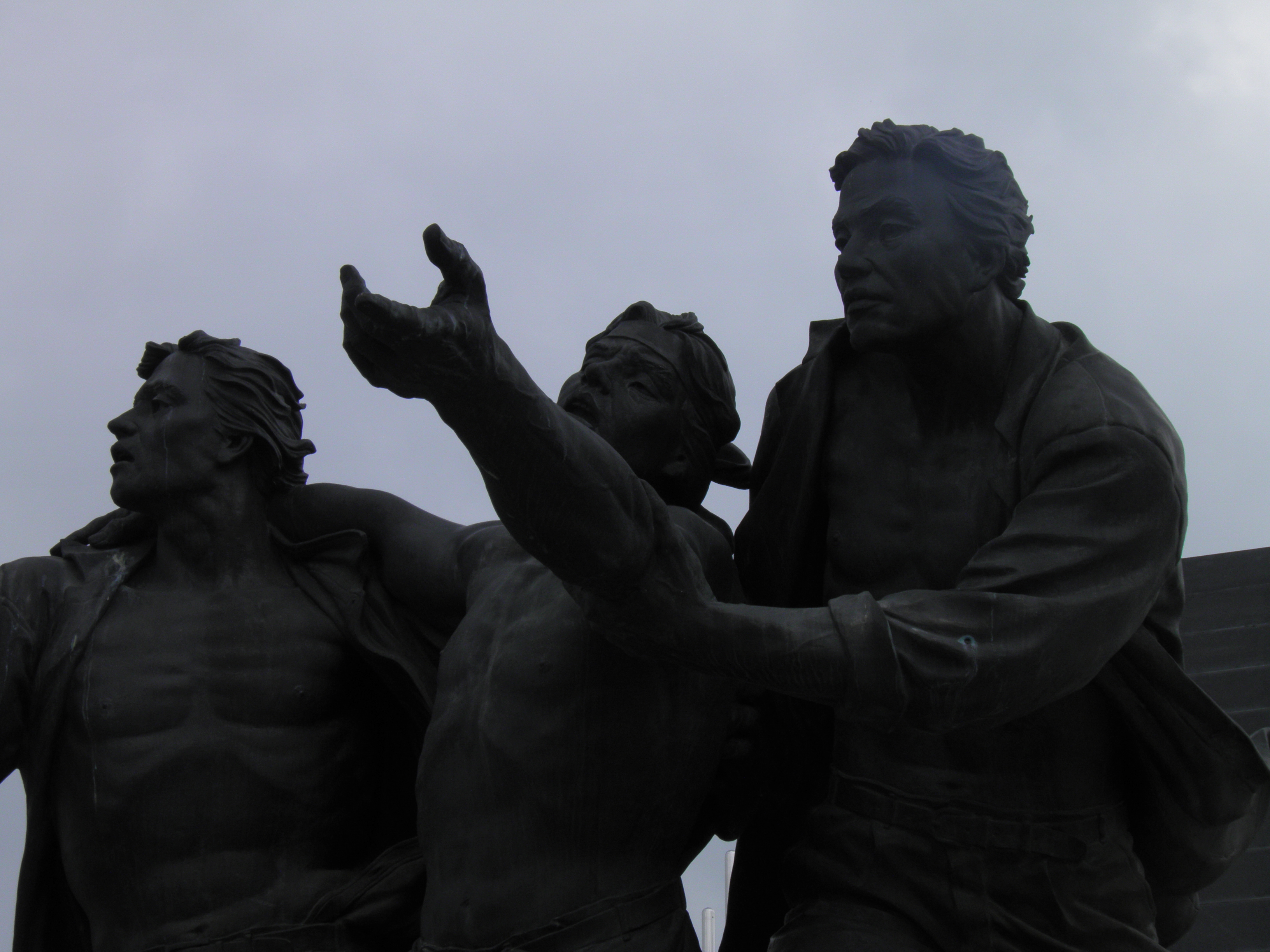
I Reject Your Eulogies and Condolences by Im Dong-hwak

Translated by Chae-Pyong Song and Melanie Steyn
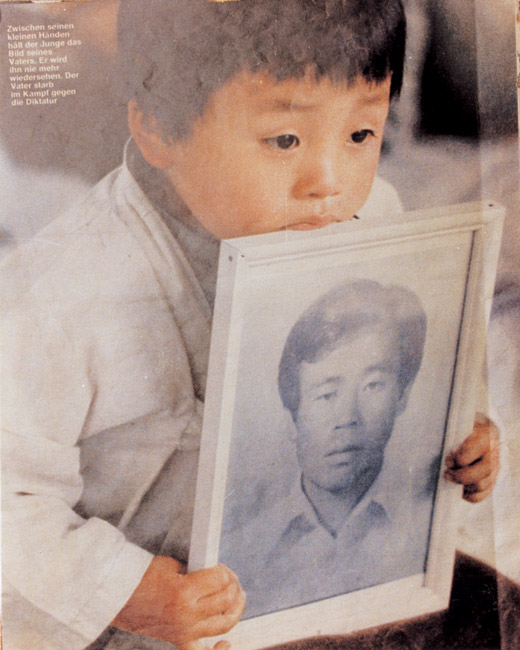
Photography provided by the 5.18 Memorial Foundation

I Reject Your Eulogies and Condolences by Im Dong-hwak

I reject your eulogies and condolences.
Though I did urinate, hiding in an attic closed on every side,
though I did hide myself, escaping from the city and martial law,
though I still feared random questionings and the sound of whistles late at night.

It was a time of animals or only those who roamed then understood.
Till the outrageous conditions of freedom are invalidated,
I reject the prayers of anyone secure with objective distance,
I reject an age that justifies your cunning and metamorphosis,
and the bunch of flowers you offer with white, blood-stained hands.
I reject eulogies written in a skillful, glib language.

Till the questions are clear,
questions about the abundant harvest of that fall,
highways, and the children’s grand park,
bargained for with the cost of precious deaths;
till you and I fully understand
violence cannot push away violence,
no, violence cannot drive away violence.

I reject all the modern histories you write,
the red tongues that justify your prejudices and cunning,
the ease, laziness, and languor
with which you stipulate that time was an age of peace,
the clear failure and cynicism, yours and mine,
and your offering of flowers and praises
that you shout, enforcing another sacrifice.

For my own sake, who won’t betray others and won’t be betrayed by others again,
and for the sake of those who repent honestly and are forgiven,
I reject your offering of flowers and your visit.
I watch your behavior and your violence.

너희들의 조사와 애도를 거부한다/ 임동확

너희들의 조사와 애도를 거부한다
사방이 막힌 다락방에 숨어 오줌을 누고
계엄령 내린 도시를 벗어나 은신했지만
여전히 불심검문과 늦은 밤의 호루라기 소리를
두려워했지만

헤매 본 자만이 아는 짐승의 시간들
그 화난 자유의 조건이 무효화될 때까지
나는 객관의 거리를 확보한 자의 기도나
너의 교활함과 변신을 변호해 줄 세월과
피 묻은 흰 손으로 바치는 꽃 타래를 사절한다
능숙하고 매끄러운 문장의 조사를 거부한다

고귀한 죽음의 대가로 흥정한
그 가을 들판의 풍년과 고속도로
어린이대공원에 대한 의혹이 풀릴 때까지
폭력이 폭력을 밀어낼 수 있거나
폭력이 또한 폭력을 물리칠 수 없다는 것을
너와 내가 충분히 납득할 때까지

너희들이 써 나가는 모든 현대사 위에
너희들의 편견과 간교함을 변호하는 붉은 혓바닥
당대를 평화의 시대라고 규정하는
안일함과 권태와 식곤증에, 그리고
너와 나의 엄연한 패배와 냉소 위에
또다시 희생을 강요하며 목울대를 치는
너희들의 찬사와 헌화를 거부한다

다시금 배신하고 배신받지 않을 나를 위하여
그리고 정직하게 반성하고 용서받는 너를 위하여
내 너희들의 조화와 방문을 거부한다
내 너희들의 행동과 공격을 응시한다

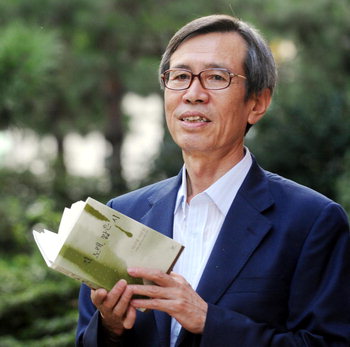
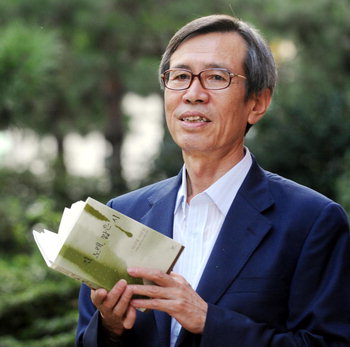
Im Dong-hwak (1959- ) was born in Kwangsan, Jeollanamdo. He studied Korean literature at Chonnam National University and Sogang University. His poetry collections includeBurial PoemsA Notebook of Living DaysThe Road to Woonju TempleI Felt Love for the First Time, and I Was Here a Long Time Ago.

Who Would Say He Doesn’t Know the Day? By Koh Jung-hee

Translated by Chae-Pyong Song and Melanie Steyn

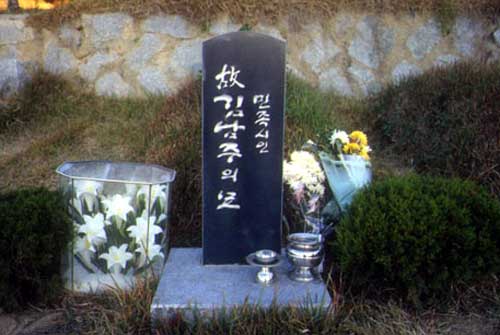
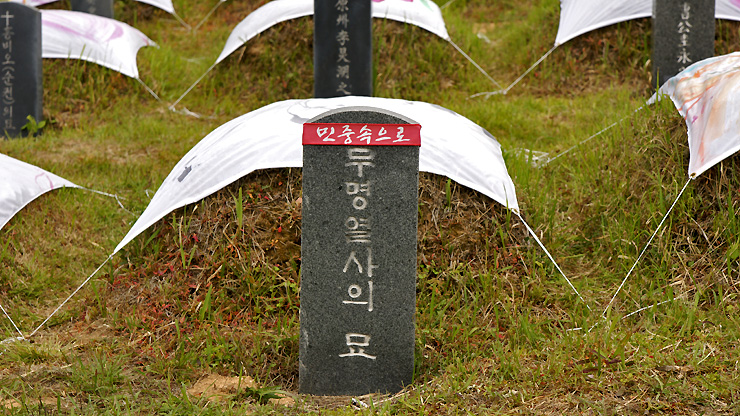
Mangwol Cemetery in Gwangju

Who Would Say He Doesn’t Know the Day? By Koh Jung-hee

The spirit,
the spirit who sleeps at Mangwol cemetery!
My tears flow though the sky is blue;
my tears flow, for the flowers bloom on the mounds and fields.

Who would say he has forgotten the day?
Who would say he doesn’t know the day?
The spirit that revives from heart to heart,
stands high above these times of biting winds.

Azaleas paint all the mountains red,
the blood tears of that day dye the mounds and fields.
A mother, rubbing the flower-tears on her heart,
calls your name and weeps.

Freedom stays alive behind the history of sacrifice.
Though it disappears from this age, the flower of democracy will bloom.
As the wind of reunification blows on the road I left,
tears well up at the spring news of national liberation.

누가 그날을 모른다 말하리/ 고정희

넋이여,
망월동에 잠든 넋이여
하늘이 푸르러 눈물이 나네
산꽃 들꽃 피어나니 눈물이 나네

누가 그날을 잊었다 말하리
누가 그날을 모른다 말하리
가슴과 가슴에서 되살아나는 넋
칼바람 세월 속에 우뚝 솟은 너

진달래 온 산에 붉게 물들어
그날의 피눈물 산천에 물들어
꽃울음 가슴에 문지르는 어머니
그대 이름 호명하며 눈물이 나네

목숨 바친 역사 뒤에 자유는 남는 것
시대는 사라져도 민주꽃 만발하리
나 떠난 길 위에 통일의 바람 부니
겨레해방 봄소식 눈물이 나네

Koh Jung-hee (1948 – 1991) was born in Haenam, Jeollanam-do, and studied at Hanshin University. A passionate feminist, she often offered sharp criticism on modern Korean society, whether it was political oppression or gender inequality. In June, 1991, she died, swept up by a torrential rain, while climbing up the Snake Valley of Jiri Mountain, a mountain she loved a great deal and wrote about often. Known for resistance poetry, particularly based upon the Gwangju Uprising, as well as for lyric poems, she derived many of her poetic inspirations from Gwangju and Jeolla-do (often known as Nam-do). In her lifetime she published at least ten collections of poetry and received the Korean Literature Award in 1983.

That May by Kwak Je-gu

Translated by Chae-Pyong Song and Melanie Steyn

Photography by Jang Jae-wan

That May by Kwak Je-gu

I walk along the riverbank
where milk vetch blooms profusely.
Where have I seen him?
A man in familiar dress
is walking up against the river current—
in dyed, battered military pants
with an out-of-season winter parka.
A few purple milk vetch blooms pinned
to his backpack
flutter in the wind.
He looks around twenty-three years old.
In his gaunt face his eyes are shining,
and we are brothers though I don’t know where we may have met.
Carried on the wind that brushes our clothes,
we greet each other passionately with our eyes.
The wind that carries us keeps asking, did we find our love
that May or did we lose it in the end?
The petals of the milk vetch flowers rise up all together.
The flowers that fell that May,
have they perhaps risen again as small nameless wild grasses
somewhere on this riverside?
Having risen up, are they burning
the spring riverbank with their bodies?
Looking back, I can see the back of the man in the distance,
and only milk vetch flowers shine as if out of breath
along the rolling river current.

그 오월에/ 곽재구

자운영 흐드러진
강둑길 걷고 있으면
어디서 보았을까
낯익은 차림의 사내 하나
강물 줄기를 거슬러 올라간다
염색한 낡은 군복 바지에
철 지난 겨울 파커를 입고
등에 맨 배낭 위에
보랏빛 자운영 몇 송이 꽃혀
바람에 하늘거린다
스물 서넛 되었을까
야윈 얼굴에 눈빛이 빛나는데
어디서 만났는지 알지 못해도 우리는 한 형제
옷깃을 스치는 바람결에
뜨거운 눈인사를 한다
그 오월에 우리는 사랑을 찾았을까
끝내 잊었을까 되뇌이는 바람결에
우수수 자운영 꽃잎들이 일어서는데
그 오월에 진 꽃들은
다시 이 강변 어디에 이름도 모르는 조그만
풀잡맹이들로 피어났을까
피어나서 저렇듯 온몸으로 온몸으로 봄 강둑을
불태우고 있을까
돌아보면 저만치 사내의 뒷모습이 보이고
굽이치는 강물 줄기를 따라
자운영 꽃들만 숨가쁘게 빛나고

Kwak Je-gu (곽재구) was born in Gwangju in 1954. He studied Korean literature at Chonnam National University. He made his literary debut as a poet with “At Sapyung Station,” which won the Spring literary award organized by the Joongang Daily in 1982. From 1981 to 1987, he worked as a member of “May Poetry,” a group of creative writers deeply inspired by the Gwangju Uprising in 1980. His poetry collections include At Sapyung StationJeonjang-po ArirngKorean LoversA Song of Seoul and The Clear Current. He currently teaches creative writing at Suncheon National University. In 1996, he received the Dongseo Literary Award.

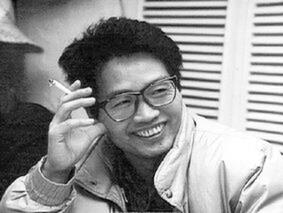
To the Friend by Kim Nam-ju

Translated by Chae-Pyong Song and Melanie Steyn

Photography by Melanie Steyn

To the Friend by Kim Nam-ju

Good friends are not the people of this world any more.
Those alive have either been captured and imprisoned behind the cruel wall
or have become underground water and run silently.
Some went beyond the night and float as ghosts.
Comrade, don’t lose your faith in victory.
Now is the time to stand trials and endure.
Train your heart and body, for the future is beautiful,
and it is ours.

The time to say good-bye has come.
With the courage that you showed to me,
with the weapon that you left, I take off,
mulling over the words you embodied:
true living comprises not possessions
but endless adventures toward being;
only in battle can a human be born anew every moment;
revolution can achieve its goal only in execution.

벗에게/ 김남주

좋은 벗들은 이제 이미 이 세상 사람이 아니라네
살아남은 이들도 잡혀 잔인한 벽 속에 갇혀 있거나
지하의 물이 되어 숨죽여 흐르고 있다네
더러는 국경의 밤을 넘어 유령으로 떠돌고
동지, 잃지 말게 승리에 대한 신념을
지금은 시련을 참고 견디어야 할 때,
심신을 단련하게나 미래는 아름답고
그것은 우리의 것이네.

이별의 때가 왔네
자네가 보여준 용기를 가지고
자네가 두고 간 무기를 들고 나는 떠나네
자네가 몸소 행동으로 가르쳐준 말
–참된 삶은 소유에 있는 것이 아니고 존재로 향한
끊임없는 모험 속에 있다는
투쟁 속에서만이 인간은 순간마다 새롭게 태어난다는
혁명은 실천 속에서만이 제 갈 길을 바로 간다는–말을 되새기며.

Kim Nam-ju (1946-1994) was born in Haenam, Jeollanam-do and studied English at Chonnam National University. He is known as one of the major resistance poets in South Korea, leading the people’s movement in the 1970s and 80s that ultimately toppled the dictatorship in Korea. Because of his activism, he was imprisoned twice, for more than ten years in total. In prison where paper and pencil were not allowed, he wrote many poems on milk cartons with the nail he made by grinding a toothbrush. These poems were later published in two collected volumes of his prison poetry, The Sunlight on the Prison Bar. His poetry bears witness to the tyranny of dictatorship and the hardships of the oppressed. He published such poetry collections as Requiem, My Sword My Blood, One Fatherland, The Weapon of Love and In This Lovely World. He received the Yun Sang-won Literary Award in 1993 and the National Literary Award in 1994. His poems have also been memorialized by Korean activist, rock singer An Chi-hwan in his album entitled Remember.

The Seat by Kim Nam-ju

Translated by Chae-Pyong Song and Melanie Steyn

The Seat by Kim Nam-ju

The ringleader of the massacre now
sits on a royal seat.

The ringleader of people who rose up against the massacre
now sits on a prison seat.
Which seat is more comfortable?
Which seat is more honorable?

옥좌/ 김남주

학살의 수괴가 지금
옥좌(玉座)에 앉아 있다

학살에 반대하여 들고 일어선 민중들의 수괴도 지금
옥좌(獄座)에 앉아 있다
어느 자리가 더 편안한 자리이고
어느 자리가 더 떳떳한 자리이냐.

Kim Nam-ju (1946-1994) was born in Haenam, Jeollanam-do and studied English at Chonnam National University. He is known as one of the major resistance poets in South Korea, leading the people’s movement in the 1970s and 80s that ultimately toppled the dictatorship in Korea. Because of his activism, he was imprisoned twice, for more than ten years in total. In prison where paper and pencil were not allowed, he wrote many poems on milk cartons with the nail he made by grinding a toothbrush. These poems were later published in two collected volumes of his prison poetry, The Sunlight on the Prison Bar. His poetry bears witness to the tyranny of dictatorship and the hardships of the oppressed. He published such poetry collections as Requiem, My Sword My Blood, One Fatherland, The Weapon of Love and In This Lovely World. He received the Yun Sang-won Literary Award in 1993 and the National Literary Award in 1994. His poems have also been memorialized by Korean activist, rock singer An Chi-hwan in his album entitled Remember.

In a Spring Classroom by Im Dong-hwak

Translated by Chae-Pyong Song and Melanie Steyn

Photo provided by the 5.18 Memorial Foundation

In a Spring Classroom by Im Dong-hwak

When the professor calls your name
our classroom echoes only with silence and sorrow.
Perhaps you now hold a megaphone somewhere on the campus
in full bloom with white magnolias
and may be excited at the spring air that comes like a thief and leaves;
or, not to weaken, not to cry after all
even at your friends’ indifference and their stares,
you may be turning your eyes toward the white clouds
floating above in the May sky.
At times you did believe in your fellow students’ passionate applause,
their songs, and the drinking place where kindred spirits met,
but when that indomitableness changed into despair
you thought about the library, your friends, and your conscience
as you watched them retreat in spite of your passionate appeal in the empty plaza.
“Mother, I too want to study.”
“The ajummas selling yogurt reminded me of you, and I cried.”
“Father, please return.
Until the new day comes, I cannot be your daughter only.”
For that which you longed for and pitied
you didn’t kneel down but stood up strongly till the end,
but away from everybody in a dark back alley, in a restroom,
your despair was broken into tens of thousands pieces–
you were a twenty-four-year-old woman
your heart torn, sore with solitude.
Knowing that, I felt ashamed.
Whenever I think of you, smiling all the time,
never showing your fatigue,
I hear the calling of your name with the pain of flesh being cut off,
knowing that you never forgot the classroom, the professors.
You never forgot freedom and the memories of the campus,
though I settled down after returning.
In every raindrop rolling down the window,
I see your face approaching as though in green wormwood.

봄이 오는 강의실에서/ 임동확

네 이름이 불려질 때마다
강의실은 적막과 비애의 메아리만 울려왔다
너는 지금쯤 메가폰을 잡고
백목련 활짝 핀 캠퍼스 어디선가
도둑처럼 왔다 빠져나가는 봄기운에 들떠 있을까
약해지지 않기 위해, 친구들의 무심함과
눈총에도 끝내 울지 않기 위해
오월의 하늘 떠도는 흰구름에 눈길을 던지고 있을까
때론 뜨거운 박수와 노래소리
의기투합한 학우들의 술자리가 미덥기도 하지만
언제고 그 꿋꿋함이 절망으로 변할 때
텅 빈 광장 피어린 호소에도 물러서는
도서관과 벗들과 양심을 생각했다
어머니 저도 공부하고 싶어요
야쿠르트 아줌마를 보면 당신이 생각나 울었어요
아버지 돌아가세요
새 날이 올 때까지 당신의 딸일 수만은 없어요
그립고 아쉬운 것들을 위하여 무릎 꿇지 않고
끝내 당당하게 일어서는 네가
남 몰래 어두운 골목에서 변소에서
천 갈래 만 갈래 찢겨진 절망
고독의 쓰라린 가슴을 쥐어뜯는
스물 넷의 여자인 줄 알고 있으므로 부끄러웠다
한번도 지친 표정을 짓지 않는
늘 웃는 낯의 널 생각할 때마다
난 돌아와 평온할 수 있었지만
넌 결코 강의실과 교수님을 잊지 않고
캠퍼스의 자유와 추억을 잊지 않음을 알았으므로
살을 저미는 아픔으로 네 이름을 듣는다
흘러내리는 유리창의 물방울마다
푸른 쑥잎으로 다가오는 네 얼굴을 본다

Im Dong-hwak (1959- ) was born in Kwangsan, Jeollanamdo. He studied Korean literature at Chonnam National University and Sogang University. His poetry collections include Burial Poems, A Notebook of Living Days, The Road to Woonju Temple, I Felt Love for the First Time, and I Was Here a Long Time Ago.

Ah, May! Gwangju Is Not Over Yet by Na Jong-young

Translated by Chae-Pyong Song and Anne Rashid

Photo of a demonstration in May, 1991 in Gwangju

Ah, May! Gwangju Is Not Over Yet by Na Jong-young (1954- )

May, 1989:
Gwangju is not over yet
Ah, Mudeung Mountain, our eternal mother, and
azaleas blooming all over the land!

Ah, the angels who were dying on that day in their mother’s wombs
running thousands and thousands of steps,
feeling out of breath as though the sky was collapsing!
The hands of avaricious devil
that took away their precious lives!
May 1980:
the city of revolution that lives eternally by dying.
Gwangju! We haven’t laid down our hands yet.

Like beasts who smelled blood,
the dark hands climbed over the wall
and pulled the trigger of indiscriminate massacre
at the brothers who couldn’t shoot at the dawn of the day
with their hands shaking.
May 1980:
Gwangju is not over yet!

By the bank where milk vetch bloomed all over,
you, eleven-year-old child, died
on Kumnam Street, at Yangrimdong, at Wolsandong,
at the Yangdong Market, at Kyerimdong Five-way Crossing,
at the Hwankumdong bar district
Gwangju died once, twice, three times,
and Gwangju revived from the fight, from darkness,
a city of resurrection that factory workers, restaurant workers,
professors, students, doctors, barmaids, office workers,
shoe shiners, and garbage scavengers built as one.

Kumnam Street overflows with love and peace–
streets overflow with rice balls:
the community where people’s faces filled with smiles,
their hearts filled with equality,
the world where people live,
the time of glory and shame that passes like a dream.

May, 1989:
the life that emerges again in dying,
Mudeung Mountain that stands as a majestic mother,
the wildflowers who disappeared
without any name.

Today we march again
From Kumnam Street, to Provincial Hall,
to Shinandong, to Mangwol cemetery–
we march, clenching our bare hands,
not to remember
the day’s roar, the day’s anger, the day’s trembling,
but to cut off
the day’s oppression, the day’s torture, the day’s terror
that still constricts our feet.
To make tomorrow’s good world with our hands,
today we march holding torches.

Though the night sky is dark
and our road is long and treacherous,
till the day of democracy, till the day of national liberation
till the day of our reunification,
ah, May! Gwangju is not over yet.

아 5월! 광주는 끝나지 않았다  /  나종영

1980년 5월
광주는 아직도 끝나지 않았다
아 우리들의 영원한 어머니
무등산이여 산천에 핀 진달래꽃이여

그날 숨을 헐떡이며
하늘이 무너진 듯 천길 만길 뛰면서
어머니 뱃속에서 죽어간 아기 천사여
그 고귀한 생명을 앗아간
탐욕스런 악마의 손이여
1980년 5월
죽어서 영원히 사는 혁명의 도시
광주여! 아직 우리는 손을 놓지 않았다

그날 새벽 손이 떨려
차마 총을 쏘지 못한 형제들에게
피비린내를 맡은 야수처럼
담을 타고 넘어와
무차별 학살의 방아쇠를 당긴 검은 손이여
1980년 5월
광주는 아직도 끝나지 않았다

자운영꽃 흐드러진 방죽가에서
열한 살 철부지 너는 죽었고
금남로에서 화정동에서 역전광장에서
양동시장에서 계림동 오거리에서 황금동 술집거리에서
광주는 죽고 두 번 세 번 죽고
광주는 싸움으로부터 주검으로부터 다시 살아나
공장노동자 식당종업원 운전기사 교수 학생 의사
술집아가씨 회사원 구두닦이 넝마주이까지
한 덩어리가 되어 이루어낸 부활의 도시여

금남로에는 사랑과 평화가 넘치고
거리거리에는 주먹밥이 넘치고
사람들 얼굴에는 웃음이 가슴에는
평등이 넘치는 공동체
사람들이 어우러져 사는 대동세상이여
꿈처럼 가버린 영욕의 세월이여

1980년 5월
죽어서 다시 떠오르는 삶
그런 장엄한 어머니로 서 있는
무등산이여 이름 없이 스러져간
들꽃들이여

오늘 우리는 다시 나아간다
금남로에서 도청 앞으로 신안동에서 망월동으로
맨 주먹 불끈 쥐고 나아간다
그날의 함성 그날의 치떨림을
기억하기 위해서가 아니라
아직도 발목을 죄어오는
그날의 압제 그날의 고문 그날의 공포를
끊어버리기 위하여
내일의 좋은 세상 우리 손으로 만들기 위하여
오늘 우리는 횃불을 들고 나아간다

어둔 밤 하늘은 캄캄하고
우리들 갈 길은 멀고 험하더라도
민주의 그날까지 민중 해방의 그날까지
민족 통일의 그날까지 나아간다
아 5월! 광주는 아직도 끝나지 않았다.

Na Jong-young (1954- ) was born in Gwangju. He made his literary debut in 1981 by publishing poems such as “The Road to Gwangtan” and “Bound for Winter” in Our Longing, a poetry collection by Changbi Publishers. His poetry collections include You Will at Last and I Loved the Wound. He worked as a member of May Poetry, a writers’ organization dedicated to representing the Gwangju Uprising (May, 1980).


By the Grave by Lee Si-young

Translated by Chae-Pyong Song and Anne Rashid

By the Grave by Lee Si-young (1949- )

Spring flowers were brutally snapped,
and the aggressor’s footsteps
by the grave make me giddy.
Friend, don’t sleep yet.
In our blood-shot eyes
your death is vividly alive–
you who threw a knife toward the enemy that dawn.

무덤가에서/ 이시영

봄의 꽃들은 무참히 꺾이고
무덤가엔 침략자들의 발자국이 어지럽다
친구여 아직은 잠들지 말아라
우리들의 핏빛 눈동자에
그날 새벽의 적을 향해 외로이 칼을 꽂던
너의 죽음은 생생히 살아 있다

Lee Si-young (1949- ) was born in Gurye, Jeollanamdo. He studied creative writing at Seorabeol College of Arts. Since his literary debut in 1969, he published poetry collections such as The Full Moon (1976), Into the Wind (1986), Friend, the Road Is Far (1988), The Song Dangled with Dew (1991), The Pattern (1994), The Gap (1996), The Quiet Blue Sky(1997), The Silver Whistle (2003), The Sea Lake (2004), The Fragrance of Cow Dung(2005), and For the Dead of Ours (2007). He received many literary awards, including The Jung Ji-yong Literary Award (1996), The Dongseo Literary Award (1998), Modern Buddhist Literary Award (2004), The Jihoon Award (2004), The Baeksok Literary Award (2004). In a recent interview, he said “I have written poetry, resisting the reality and contradiction of the day.” He currently teaches creative writing at Dankuk University in Seoul.

At the Mangwol Cemetery by Kim Nam-ju

Translated by Chae-Pyong Song and Anne Rashid

At the Mangwol Cemetery by Kim Nam-ju (1946–1994)

May lions, the stars of destructed earth,
you lie here cut into pieces
without faces, without names.
You are buried in dirt and in wind, labeled as rebels.

May heroes
who went against domination and injustice
for the freedom of the world where people live,
for the beauty of the world where people live,
and who rose up trembling in indignation,
you have never gone to the world of death.
You have never gone to the other world of oblivion.
The wide open hearts of May still withstand bullets,
the lifted fighting fists still resist injustice.
Innumerable unyielding lives are born
out of your collapsed bodies.
They are born again,
wet their lips in the river of blood you shed,
and sing the song that you couldn’t finish.
They are born anew,
wet their arms and feet in the stream of tears you shed,
and walk the road that you couldn’t walk entirely,
clenching their fists.
For the freedom of the world where people live,
for the beauty of the world where people live,
your sons and daughters now
are willing to risk even their lives.
Like you, they are marching forward
armed with love and hatred of revenge.

May heroes, the stars of the destructed earth,
the dawn buried in darkness is breaking
and the day of victory approaches,
so rise up and receive the glory of victory.

망월동에 와서/ 김남주

파괴된 대지의 별 오월의 사자들이여
능지처참으로 당신들은 누워 있읍니다
얼굴도 없이 이름도 없이
누명쓴 폭도로 흙속에 바람속에 묻혀 있습니다

사람 사는 세상의 자유를 위하여
사람 사는 세상의 아름다움을 위하여
압제와 불의에 거역하고
치떨림의 분노로 일어섰던 오월의 영웅들이여
당신들은 결코 죽음의 세계로 간 것이 아닙니다
당신들은 결코 망각의 저승으로 간 것이 아닙니다
풀어헤친 오월의 가슴팍은 아직도 총알에 맞서고 있나니
치켜든 싸움의 주먹은 아직도 불의에 항거하고 있나니
쓰러진 당신들의 육체로부터 수없이 많은
수없이 많은 불굴의 생명이 태어나고 있습니다
그들은 다시 태어나
당신들이 흘린 피의 강물에 입술을 적시고
당신들이 미처 다 부르지 못한 노래를 부르고 있습니다
그들이 새로 태어나
당신들이 흘린 눈물의 여울에 팔과 다리를 적시고
주먹을 불끈 쥐고
당신들이 미처 다 걷지 못한 길을 걷고 있습니다
사람 사는 세상의 자유를 위하여
사람 사는 세상의 아름다움을 위하여
이제 당신들의 자식들은 딸들은
죽음까지도 불사하고 있습니다
사랑과 원수갚음의 증오로 무장하고
그들은 당신들처럼 전진하고 있습니다

파괴된 대지의 별 오월의 영웅들이여
어둠에 묻혀 있던 새벽은 열리고
승리의 그날은 다가오고 있나니
일어나 받아다오 승리의 영예를 그때 가서는.

Kim Nam-ju (1946-1994) was born in Haenam, Jeollanam-do and studied English at Chonnam National University. He is known as one of the major resistance poets in South Korea, leading the people’s movement in the 1970s and 80s that ultimately toppled the dictatorship in Korea. Because of his activism, he was imprisoned twice, for more than ten years in total. In prison where paper and pencil were not allowed, he wrote many poems on milk cartons with the nail he made by grinding a toothbrush. These poems were later published in two collected volumes of his prison poetry, The Sunlight on the Prison Bar. His poetry bears witness to the tyranny of dictatorship and the hardships of the oppressed. He published such poetry collections as Requiem, My Sword My Blood, One Fatherland, The Weapon of Love and In This Lovely World. He received the Yun Sang-won Literary Award in 1993 and the National Literary Award in 1994. His poems have also been memorialized by Korean activist, rock singer An Chi-hwan in his album entitled Remember.

By an Unnamed Warrior’s Grave by Lee Si-young

Translated by Chae-Pyong Song and Anne Rashid

By an Unnamed Warrior’s Grave by Lee Si-young (1949- )

Leaving you here,
we shouted “the time of reconciliation!”
Lifting up high our gunshot-wounded arms,
clinking the glasses,
we had already forgotten our wounds.
After dancing at the plaza
where democracy was to come
we had forgotten our wounds and all we had sacrificed
to forget you,
finally shaking our heads,
to forget you who were lying down, painted, within the grave.
But the spring sun
that hadn’t removed the paint from your whole body
is not our spring any more.
It’s a lie; it’s hypocrisy.
The warrior, the youth who disappeared as a cold flower
on the dawn of May 27, 1980,
was pushed back by the closing-in forest of guns and bayonets.
Any history that shouts, leaving you here,
is not a history.

무명용사의 무덤 곁에서/ 이시영

너를 여기 두고
화해의 시대를 외쳤구나 우리는
총창으로 그어진 팔을 높이 들어
술잔을 부딪치며
우리는 어느새 우리의 상처를 잊었구나
민주주의가 온다는 광장에서 한바탕 춤을 춘 뒤
우리는 우리의 목발을 잊었구나
너를 잊기 위해
고개 저어 마침내
무덤 속 페인트칠한 채 누운 너를 잊기 위해
그러나 햇빛 아래 네 온몸의 페인트를 벗겨내지 못한
봄은
더이상 우리의 봄이 아니다
거짓이다 위선이다
1980년 5월 27일 새벽
좁혀드는 총칼의 숲에 밀리다가
차가운 꽃 한 송이로 스러진 용사여 젊음이여
너를 여기 둔 채 외치는 그 어떤 역사도
역사 아니다

Lee Si-young (1949- ) was born in Gurye, Jeollanamdo. He studied creative writing at Seorabeol College of Arts. Since his literary debut in 1969, he published poetry collections such as The Full Moon (1976), Into the Wind (1986), Friend, the Road Is Far (1988), The Song Dangled with Dew (1991), The Pattern (1994), The Gap (1996), The Quiet Blue Sky (1997), The Silver Whistle (2003), The Sea Lake (2004), The Fragrance of Cow Dung (2005), and For the Dead of Ours (2007). He received many literary awards, including The Jung Ji-yong Literary Award (1996), The Dongseo Literary Award (1998), Modern Buddhist Literary Award (2004), The Jihoon Award (2004), The Baeksok Literary Award (2004). In a recent interview, he said “I have written poetry, resisting the reality and contradiction of the day.” He currently teaches creative writing at Dankuk University in Seoul.