Underneath the Rust Tree, Part Two by Jung Kut-byol

Translated by Chae-Pyong Song and Anne Rashid

Underneath the Rust Tree, Part Two by Jung Kut-byol
(녹나무 아래 2) 

Love that comes like a picnic
in the place of excrement with blowflies,
enjoy
the remaining spring.
You, with the ruddy face, don’t reject me.
Hallucinated ears and hallucinated eyes
close up when rain patters in
the exiled wound—
I, dark like smoke.
The universe and I
will fall like flowers,
just boards walking, standing without nails hammered in.

(Originally published in WSQ: Women’s Studies Quarterly, Volume 39, Numbers 3 & 4, Fall/Winter 2011)

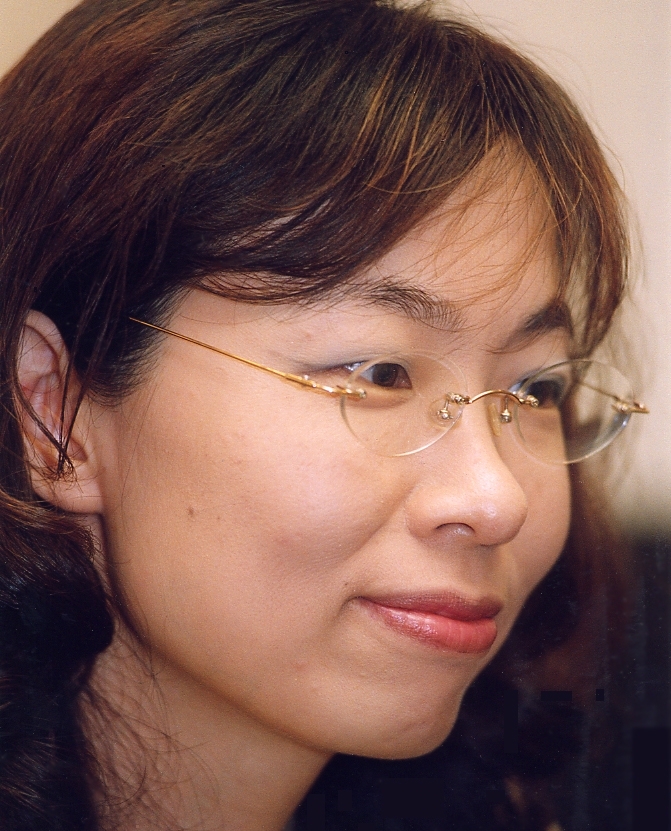
Jung Kut-byol is a professor of Korean literature at Myungji University in Seoul, South Korea. Since 1988, she has worked as both a poet and a critic. She has published four poetry collections, My Life: A Birch Tree (1996), A White Book (2000), An Old Man’s Vitality (2005), and Suddenly (2008) and two collections of critical essays, The Poetics of Parody (1997) and The Language of Poetry Has a Thousand Tongues (2008). She has also edited an anthology titled In Anyone’s Heart, Wouldn’t a Poem Bloom? 100 Favorite Poems Recommended by 100 Korean Poets (2008).
Trees Standing on the Edge by Jung Kut-byol


Translated by Chae-Pyong Song and Anne Rashid

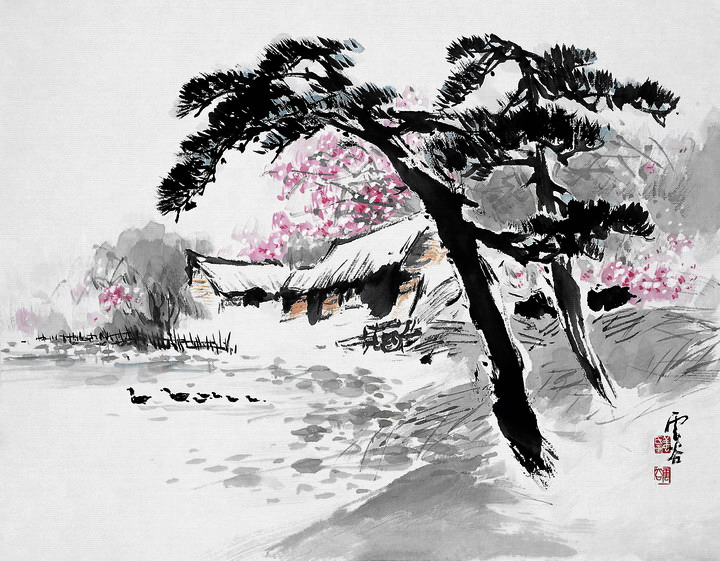
Painted by Kang Jang-won

Trees Standing on the Edge by Jung Kut-byol

I once saw nameless trees
twining their bodies around the barbed wire, growing,
allowing the chains to penetrate their bodies, growing,
embracing the shrapnel driven into their bodies, growing,
absorbing into their bodies railings or fences, growing.

It’s as if they embraced
what restrains them,
without strength to extract these restrictions;
it’s as if they drew in
what impedes them,
without any way to gain their footing,
even though it could cause burning scars.

So, in this twenty-first century,
let us not love too intensely.

끝에 선 나무들/ 정끝별

철조망과 제 몸을 섞어가며 자라는
체인을 제 몸에 밀어넣고 자라는
제 몸에 박힌 수류탄 껍질을 품고 자라는
난간이나 울타리를 제 몸에 삼킨 채 자라는
이름 모를 나무들을 본 적 있다

조여오는 것들,
밀어내는 힘이 없을 때
품어안았던 것도 같다
가로막는 것들,
뛰어넘을 수 있는 발판이 없을 때
차라리 빨아들였던 것도 같다
뜨거운 흉터가 될 줄 알면서도

그러니 21세기여
우리 너무 깊이 사랑하지 말자

Painted by Kang Jang-won

Jung Kut-byol (1964-) was born in Naju, Jeollanam-do. She is a professor of Korean literature at Myungji University in Seoul.  Working as both a poet and a critic, she has published four poetry collections: My Life: a Birch Tree (1996), A White Book (2000), An Old Man’s Vitality (2005) and Suddenly (2008), along with two collections of critical essays: The Poetics of Parody (1997) and The Language of Poetry Has a Thousand Tongues (2008).  She has also edited an anthology entitled In Anyone’s Heart, Wouldn’t a Poem Bloom?: 100 Favorite Poems Recommended by 100 Korean Poets (2008).

YouTube version: http://www.youtube.com/watch?v=MmsACF3DRjg&feature=relmfu

Magnolias Bloom and Wither by Hong Hae-ri

Translated by Chae-Pyong Song

Painted by Kang Jang-won

Magnolias Bloom and Wither by Hong Hae-ri

The ephemeral lamps kindled by tears
that overflow with sorrow,

like the most innocent
saintly girls,

now clamorous
as they rush to disrobe,

soon after, sloppy,
the corpses of the fallen angels.

목련꽃 피고지고/ 洪 海 里

슬픔이 절절 흐르는
눈물로 켠 저 찰나의 등

가장 순수한
성녀 같더니

다투어 옷을 찢느라
왁자지껄

금세 질척하니
추락한 천사의 시체.

Annie Rashid and Darcy Brandel read the earlier versions of this translation.

Around Chuseok by Kim Nam-ju

Translated by Chae-Pyong Song and Anne Rashid

Painted by Jung Jeong-im

Around Chuseok by Kim Nam-ju

In the early evening when the sky began to open its eyes, sparkle, sparkle,
I walked along with my son on the country path of Hometown.

“Daddy, daddy, we pee with a chili pepper, so why do women pee with their bottoms?”

Dumbfounded by my four-year-old’s question,
I looked around to see what I strangely sensed. In the pepper field in the distance,
three girls squatted to do their business naturally.

For some reason
the crescent hanging over the ridge was grinning a large grin.

추석 무렵/김남주

반짝반짝 하늘이 눈을 뜨기 시작하는 초저녁
나는 자식놈을 데불고 고향의 들길을 걷고 있었다.

아빠 아빠 우리는 고추로 쉬하는데 여자들은 엉뎅이로 하지?

이제 갓 네 살 먹은 아이가 하는 말을 어이없이 듣고 나서
나는 야릇한 예감이 들어 주위를 한 번 쓰윽 훑어 보았다 저만큼 고추밭에서
아낙 셋이 하얗게 엉덩이를 까놓고 천연스럽게 뒤를 보고 있었다.

무슨 생각이 들어서 그랬는지 산마루에 걸린 초승달이 입이
귀밑까지 째지도록 웃고 있었다.

Kim Nam-ju (1946-1994) was born in Haenam, Jeollanam-do and studied English at Chonnam National University. He is known as one of the major resistance poets in South Korea, leading the people’s movement in the 1970s and 80s that ultimately toppled the dictatorship in Korea. Because of his activism, he was imprisoned twice, for more than ten years in total. In prison where paper and pencil were not allowed, he wrote many poems on milk cartons with the nail he made by grinding a toothbrush. These poems were later published in two collected volumes of his prison poetry, The Sunlight on the Prison Bar. His poetry bears witness to the tyranny of dictatorship and the hardships of the oppressed. He published such poetry collections as Requiem, My Sword My Blood, One Fatherland, The Weapon of Love and In This Lovely World. He received the Yun Sang-won Literary Award in 1993 and the National Literary Award in 1994. His poems have also been memorialized by Korean activist, rock singer An Chi-hwan in his album entitled “Remember.”

Poverty by Moon Byung-ran

Translated by Chae-Pyong Song and Anne Rashid

Photographed by Kim Young-ran

“Poverty” by Moon Byung-ran

We all know how tiring it is
for a farmer with five patches of rice fields
to raise four kids and send them to school.
We know a poor citizen without a house
risks his whole life
to get his own house.
Those who have raised kids all know
it is like cutting off your own bone
to raise four kids,
to send them to school like others do,
and to help them find their mates.
To marry one daughter, a pillar of the house disappears
and to send a child to college, you lose a rice patch.
Working even eight hours a day is not enough,
and some work inside and outside to save
yet not enough is made despite all the considerations.
We all know how demanding children’s mouths are–
yet is poverty mere rags?
Should we lie buried alone in the pit like a gem?
Can you quiet today’s hunger,
drinking dull drinks of water, saying it’s all right, it’s all right,
deliberately folding your arms, pretending to turn away?
We can’t raise our kids
the way the green mountain tends to orchids under her feet.
She blooms and withers alone; four seasons come and go.
But children don’t grow by themselves; they can’t eat for themselves.
Husbands should provide for wives,
wives should hold up their husbands.
Humans are born into work, live in work, and die in work
no matter how much the natural heart is like the green mountain.
The intestines are only satisfied with pickled fish.
They go hungry without food
and they defecate with food.
Who can live like an idealist
living alone, drinking only dew and wind?
Those who have only a bowl of barley with bean stew
think of rice as Heaven–
they bow down in front of rice.
While you sing, the whole universe is working together
to bring one chrysanthemum to bloom.
Do you know that in a shadowed corner of this land
a hungry mouth lives asking for a spoonful of rice?
Poverty is not by any means merely tattered rags.
It’s not just the old dress that one puts on and takes off.
When life gets swept up in the rough waves,
it isn’t a pleasure to lazily watch the green mountain in the afternoon.
Poverty is the enemy, the poisonous worm that gobbles us up
and feasts upon even our natural character,
the toxin that rots not just clothes but the flesh, too.
It’s our human enemy, the devil to drive away,
the seeker of pleasure in poverty
who hopelessly nurtures worms in the growling belly.
You say it’s all right, it’s all right,
borrowing Tao Yuan-min’s drinking cup,
imitating Li Bai’s drunken rowdiness.
Don’t deceive yourself.
Don’t defile the hungry mouth
who wants a bowl of rice and bean soup,
trading poverty for a piece of poem.
Oh, the hypocrite poet, the poet
of lullabies who puts people to sleep.

가난/ 문병란

논 닷마지기 짓는 농부가
자식 넷을 키우고 학교 보내는 일이
얼마나 고달픈가 우리는 다 안다
집 한칸 없는 소시민이
자기 집을 마련하는 데
평생을 건다는 것을 우리는 안다
네 명의 새끼를 키우고
남 보내는 학교도 보내고
또 짝을 찾아 맞추어 준다는 것이
얼마나 뼈를 깍는 아픔인가를
새끼를 키워 본 사람이면 다 안다
딸 하나 여우는 데 기둥 뿌리가 날라가고
새끼 하나 대학 보내는 데 개똥논이 날라간다
하루 여덟 시간 하고도 모자라
안팎으로 뛰고 저축하고
온갖 궁리 다하여도 모자란 생활비
새끼들의 주둥이가 얼마나 무서운가 다 안다
그래도 가난은 한갖 남루에 지나지 않는가?
쑥구렁에 옥돌처럼 호젓이 묻혀 있을 일인가?
그대 짐짓 팔짱 끼고 한 눈 파는 능청으로
맹물을 마시며 괜찮다 괜찮다
오늘의 굶주림을 달랠 수 있는가?
청산이 그 발 아래 지란을 기르듯
우리는 우리 새끼들을 키울 수 없다
저절로 피고 저절로 지고 저절로 오가는 4계절
새끼는 저절로 크지 않고 저절로 먹지 못한다
지애비는 지어미를 먹여 살려야 하고
지어미는 지애비를 부추겨 줘야 하고
사람은 일 속에 나서 일 속에 살다 일 속에서 죽는다
타고난 마음씨가 아무리 청산 같다고 해도
썩은 젖갈이 들어가야 입맛이 나는 창자
창자는 주리면 배가 고프고
또 먹으면 똥을 싼다
이슬이나 바람이나 마시며
절로절로 사는 무슨 신선이 있는가?
보리밥에 된장찌개라도 먹어야 하는
사람은 밥을 하늘로 삼는다
사람은 밥 앞에 절을 한다
그대 한 송이 국화꽃을 피우기 위해
전 우주가 동원된다고 노래하는 동안
이 땅의 어느 그늘진 구석에
한 술 밥을 구하는 주린 입술이 있다는 것을 아는가?
결코 가난은 한낱 남루가 아니다
입었다 벗어 버리는 그런 헌옷이 아니다
목숨이 농울쳐 휘어드는 오후의 때
물끄러미 청산이나 바라보는 풍류가 아니다
가난은 적, 우리를 삼켜 버리고
우리의 천성까지 먹어 버리는 독충
옷이 아니라 살갗까지 썩어 버리는 독소
우리 인간의 적이다 물리쳐야 할 악마다
쪼르륵 소리가 나는 뱃속에다
덧없이 회충을 기르는 청빈낙도
도연명의 술잔을 흉내내며
괜찮다 괜찮다 그대 능청 떨지 말라
가난을 한 편의 시와 바꾸어
한 그릇 밥과 된장국물을 마시려는
저 주린 입을 모독하지 말라
오 위선의 시인이여, 민중을 잠재우는
자장가의 시인이여 .

Moon Byung-ran (1935 – ) was born in Hwasun, Jeollanam-do. He taught creative writing at Chosun University as well as in Suncheon High School and Gwangju Jeil High School. He has published such collections as Legitimacy, On the Field of Bamboo Shoots, Ode to the Land, Ode to May, Mudeung Mountain, To the Weaver, and Tchaikovsky of the Dawn. Famous for being a poet of the people, he has made it his mission to represent the under-represented and to resist any form of oppression, especially the military dictatorship in Korea in the 1970s and 1980s.

NB: Read Seo Jung-ju’s “Gazing at Mudeung Mountain” as a pair: https://jaypsong.wordpress.com/category/seo-jung-ju/

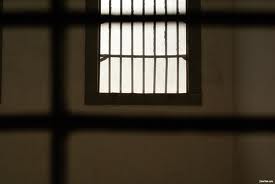
The Sunlight on the Prison Bars by Kim Nam-ju

Translated by Chae-Pyong Song and Anne Rashid

The Sunlight on the Prison Bars by Kim Nam-ju

When I reach out a hand,
the sunlight lands upon it and looks lovely.
When I angle my cheek towards it,
it settles in and warms it.
As fall comes,
it becomes longer and longer—
as long as the squirrel’s tail.
When it wraps around my neck,
it becomes the scarf my sister knitted.
When it touches my lips,
it becomes a memory of old love
that we once exchanged.

창살에 햇살이/김남주

내가 손을 내밀면
내 손에 와서 고와지는 햇살
내가 볼을 내밀면
내 볼에 와서 다스워지는 햇살
깊어가는 가을과 함께
자꾸자꾸 자라나
다람쥐 꼬리만큼은 자라나
내 목에 와서 감기면
누이가 짜준 목도리가 되고
내 입술에 와서 닿으면
그녀와 주고 받고는 했던
옛 추억의 사랑이 되기도 한다.

Kim Nam-ju (1946-1994) was born in Haenam, Jeollanam-do and studied English at Chonnam National University. He is known as one of the major resistance poets in South Korea, leading the people’s movement in the 1970s and 80s that ultimately toppled the dictatorship in Korea. Because of his activism, he was imprisoned twice, for more than ten years in total. In prison where paper and pencil were not allowed, he wrote many poems on milk cartons with the nail he made by grinding a toothbrush. These poems were later published in two collected volumes of his prison poetry, The Sunlight on the Prison Bar. His poetry bears witness to the tyranny of dictatorship and the hardships of the oppressed. He published such poetry collections as Requiem, My Sword My Blood, One Fatherland, The Weapon of Love and In This Lovely World. He received the Yun Sang-won Literary Award in 1993 and the National Literary Award in 1994. His poems have also been memorialized by Korean activist, rock singer An Chi-hwan in his album entitled Remember.

Word 1 by Noh Hyang-rim

Translated by Chae-Pyong Song and Anne Rashid

Word 1 by Noh Hyang-rim

Without explanation,
Word would sometimes
lean alone on the apartment’s veranda rail
to watch the sun set
and disappear suddenly somewhere
into darkness.

Word appears to have
bone and flesh. For awhile
it is out of touch, and then
one day it stands outside
the window in a dark place
or unexpectedly runs from the first
floor to the fifth, thumping.

Often I see it wandering
around the village in the day
and in the night. But I have never
seen the face of Word.
I can’t touch it either.

Perhaps
Word now is wind
or a person who lives in the air.

.1/ 노향림

어떤 말(言語)인지 말은 가끔
아파트 베란다에 걸터앉아
저녁해가 지는 것을 혼자
바라다 보기도 하고 훌쩍
어둠 속 어디엔가 사라져
버립니다.

말에게도 뼈가 있고 살이
있는가 봅니다. 한동안
소식이 끊겼다가 어느날은
어둑하게 창밖에 서 있거나
느닷없이 1층에서 5층까지
쿵쿵쿵 소리를 냅니다.

어느 때는 매일 밤 매일 낮
온 동네를 소리없이 헤매다니는 것을
봅니다. 그러나 말의 얼굴은
단 한번도 본 적이 없읍니다.
만져볼 수도 없읍니다.

–말은 이제 바람이거나
허공에 사는 사람인지도
모릅니다.

The Floor by Noh Hyang-rim

Translated by Chae-Pyong Song and Anne Rashid

Photographed by Lee Sang-youp

The Floor by Noh Hyang-rim

Cleaning the living room with a scrub rag
rubbing off the languor and time
that covered it thinly
cleaning the small space
of concerns and worries
covered with birch wood imported from America–
I also silently rub my niece’s slumber
who sleeps at midnight on the other side of the globe.
Who is it
that scrubs the back of my soul
that has been worn out?
Who is it
that owns such a scrub rag?

마루/ 노향림

마른 걸레로 거실을 닦으며
얇게 묻은 권태와 시간을
박박 문질러 닦으며
미국산 수입 자작나무를 깐
세 평의 근심 걱정을 닦으며
지구 저쪽의 한밤중 누워 잠든
조카딸의 잠도 소리 없이 닦아준다
다 해진 내 영혼의 뒤켠을
소리 없이 닦아주는 이는
누구일까
그런 걸레 하나쯤
갖고 있는 이는 누구일까

Noh Hyang-rim (1942- ) is from Haenam, Jeollanam-do and studied English at Jung-ang University in Seoul. She has published poetry collections such as Travel to K Town, A Country Where Snow Doesn’t Fall, A Person Without Longing Can’t See Aphae Isle, A Broken Bell Sound Comes from the Sun. In 1987 she received the Korea Literary Award for A Country Where Snow Doesn’t Fall.

Falling Persimmons by Chŏn Byŏng-gu

Translated by Chae-Pyong Song

Photographed by Hye Hyon

Falling Persimmons by Chŏn Byŏng-gu

On the hill of Kwansan port, overgrown with weeds,
Where the dividing line crosses,
Hoo-doo-dook, Hoo-doo-dook,
Falling Persimmons.

Where only the house remains, its owner gone,
A persimmon tree already for many years
Has been solely ripening persimmons,
And dropping them without sympathy.

If I reach out a hand, I could quickly pick
one red, juicy persimmon,
But the barbed wire that pierces the heart
Blocks even one step.

The piteous persimmon tree,
You too suffer the pain of division.
When will you summon the owner?
When will the day come when he, riding on your branches, will
Pick out persimmons with pleasure?

With the wedding celebration table
Neatly piled with those appealing persimmons
This village’s lasses, they say,
Went to Paju, across the Imjin River, to their grooms;
Their faces, red like persimmons,
Must be deeply wrinkled by now.

Where are the brides of those days?
Though I search beyond the river, I can’t see them.
The red persimmons that I could embrace only in dreams,
Hoo-doo-dook, Hoo-doo-dook.

They strike this heart;
They strike this peninsula,
Crying for the owner, crying for unification.
Hoo-doo-dook, Hoo-doo-dook. Ah, the falling persimmons.

떨어지는 감알/ 전병구

잡초 무성한 관산나루언덕
분계선이 가로 건너간곳에
후두둑 후두둑
떨어지는 감알

주인은 없고 집터만 남은 자리
벌써 몇몇해 한그루 감나무
저 혼자서 감을 익히우고
무정히도 떨쿠고있느냐

손을 내밀면 빨갛게 익은 감 한알
얼른 집어들수도 있으련만
가슴을 찌르는 분계선 철조망이
한걸음도 옮길수 없게 하누나

안타까워라 감나무야
분렬의 고통을 너도 당하니
언제면 주인을 다시 불러오라
네 푸른 아지를 타고
즐거이 감을 딸 그날이 오랴

저렇게도 탐스러운 감알을 고여놓은
잔치상 받고
림진강 건너 파주로 시집 갔다는
이 마을 처녀들
감알처럼 빨갛던 그 얼굴들에
지금은 주름살이 퍼그나 깊어졌으리

그 시절의 그 각시들 어느곳에 있느냐
저 강건너 찾아봐도 볼수 없는 그들
꿈결에나 안아볼 빨간감알
후두둑 후두둑 

이 가슴을 친다
이 땅을 친다
주인을 부르며 통일을 부르며
후두둑 후두둑 아, 떨어지는 감알

(This translation of North Korean poem was originally published in Azalea, Volume 2, 2008)

Chŏn Byŏng-gu has written poems that attempt to capture ordinary lives in North Korea. “A Birthday Table” exemplifies this attempt.

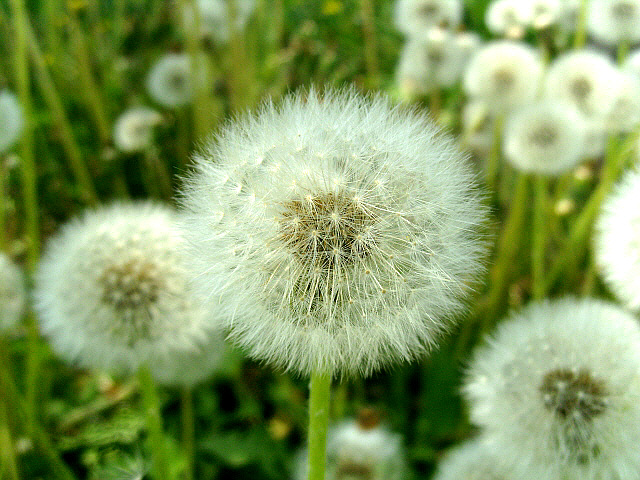
Dandelions by Li Chong-dŏk

Translated by Chae-Pyong Song

Dandelions by Li Chong-dŏk

On a green rice field footpath
As if strewn about
Dandelions bloom in yellow
How lovely they are!

I plucked one blossom and took it to my mouth
It reminds me
Of the spring aroma of
the lunch Mother carried out when I was young

On an evening walk back home from school
When I blew them hoooo on the palm
Your seeds scattered like parachutes
In the end, they rooted in the hometown fields.

Ah, dandelions, dandelions
Also bloom in my heart of love and destiny;
The lovely flowers of my hometown
Rooted in this soil!

리종덕의 〈민들레〉

풀빛 파란 두렁길에
휘뿌려놓은 듯
노랗게 피여난 민들레
어쩌면 이리도 정겨울가

한송이 따서 입에 대니
내 어릴 때
어머니 점심밥 싸들고 나오던
그 봄날의 향기도 상기 있는듯

학교에서 돌아오는 저녁
손바닥에 놓고 후– 불면
락하산처럼 날아가던 네 씨앗
끝내는 고향의 들에 뿌리를 내렸구나

아, 민들레 민들레
사랑과 운명의 내 넋에도 피여
이 땅에 뿌리를 묻은
내 고향의 정겨운 꽃이여

(This translation of North Korean poem was originally published in Azalea, Volume 2, 2008)