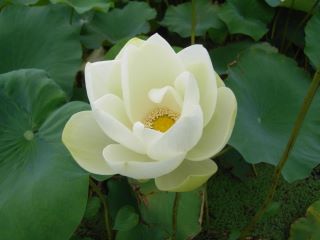
In the temple yard peonies bloom luxuriously
Who opens the flowers’ doors?
With a silent word, the flowers open their petals
The moment I attempt to say,
“opening petals swept by rain all morning,” my tongue is cut off by
the rain
(Originally published in Azalea: Journal of Korean Literature and Culture 4)
Moon Tae-jun (1970-) has published four collections of poetry: Chattering Backyard(2000), Bare Foot (2004), Flatfish (2006), and Shadow’s Development (2008) as well as other essays and commentary. One of the most popular poets of the younger generation, Moon uses deceptively simple poetic language with profound lyricism, commenting on the struggle of daily life. Grounded in Buddhist philosophy, his poems speak with reverence for all forms of life and emphasize the necessity of emptying oneself. Moon is a recipient of many prestigious awards, including the Dongseo Literature Award (2004), the Midang Literature Award (2005), and the Sowol Poetry Award (2007).
I planted young radishes
but being lazy I missed the roots and stems emerging
I barely caught the flowers
white radish flowers were everywhere in the space
Did you plant the flower garden in the vegetable garden?
neighbors asked and I hesitated to answer
After this conversation, one butterfly
and another butterfly along with the first
a flock of butterflies like white radish flowers
landed on white radish flowers
setting down their fragile feet
briefly for three or five seconds or
perhaps an even longer time to them
folding their wings, calming the wind
sitting comfortably
they seemed to sleep a light sleep
This place I gave away so they could set their feet
this knee I gave away so they could sleep a light sleep
I did not have such a place while living
Though my radish garden is a flower garden
at last, I lost even the flowers to the butterflies
극빈/ 문태준
열무를 심어놓고 게을러
뿌리를 놓치고 줄기를 놓치고
가까스로 꽃을 얻었다 공중에
흰 열무꽃이 파다하다
채소밭에 꽃밭을 가꾸었느냐
사람들은 묻고 나는 망설이는데
그 문답 끝에 나비 하나가
나비가 데려온 또 하나의 나비가
흰 열무꽃잎 같은 나비 떼가
흰 열무꽃에 내려앉는 것이었다
가녀린 발을 딛고
3초씩 5초씩 짧게짧게 혹은
그네들에겐 보다 느슨한 시간 동안
날개를 접고 바람을 잠재우고
편편하게 앉아 있는 것이었다
설핏설핏 선잠이 드는 것만 같았다
발 딛고 쉬라고 내줄 곳이
선잠 들라고 내준 무릎이
살아오는 동안 나에겐 없었다
내 열무밭은 꽃밭이지만
나는 비로소 나비에게 꽃마저 잃었다
(Originally published in Azalea: Journal of Korean Literature and Culture 4)
Moon Tae-jun (1970-) has published four collections of poetry: Chattering Backyard (2000), Bare Foot (2004), Flatfish (2006), and Shadow’s Development (2008) as well as other essays and commentary. One of the most popular poets of the younger generation, Moon uses deceptively simple poetic language with profound lyricism, commenting on the struggle of daily life. Grounded in Buddhist philosophy, his poems speak with reverence for all forms of life and emphasize the necessity of emptying oneself. Moon is a recipient of many prestigious awards, including the Dongseo Literature Award (2004), the Midang Literature Award (2005), and the Sowol Poetry Award (2007).
The space between flowers blooming and falling
We might call it a breath
The tree’s cry makes flowers bloom
With another cry flowers fall
The space between blooming and falling
We might call it a breath
Even trees have lungs spread like flatlands
One breath and an ebb tide flows in and out
One breath and trees shake once in the wind
Father completes one sixty-year cycle, a life like the measles
We might call it a breath
한 호흡/ 문태준
꽃이 피고 지는 그 사이를
한 호흡이라 부르자
제 몸을 울려 꽃을 피워내고
피어난 꽃은 한번 더 울려
꽃잎을 떨어뜨려버리는 그 사이를
한 호흡이라 부르자
꽃나무에게도 뻘처럼 펼쳐진 허파가 있어
썰물이 왔다가 가버리는 한 호흡
바람에 차르르 키를 한번 흔들어 보이는 한 호흡
예순 갑자를 돌아나온 아버지처럼
그 홍역 같은 삶을 한 호흡이라 부르자
(Originally published in Azalea: Journal of Korean Literature and Culture 4)
Moon Tae-jun (1970-) has published four collections of poetry: Chattering Backyard (2000), Bare Foot (2004), Flatfish (2006), and Shadow’s Development (2008) as well as other essays and commentary. One of the most popular poets of the younger generation, Moon uses deceptively simple poetic language with profound lyricism, commenting on the struggle of daily life. Grounded in Buddhist philosophy, his poems speak with reverence for all forms of life and emphasize the necessity of emptying oneself. Moon is a recipient of many prestigious awards, including the Dongseo Literature Award (2004), the Midang Literature Award (2005), and the Sowol Poetry Award (2007).
Under the sky even the bruised reed
shakes freely for one season—
if a tree is deeply rooted
even if the trunk is sawed off, new buds sprout.
The bruised souls, let us shake fully,
let us suffer, shaking fully.
Even the floating weed that moves without root,
it will bloom, where water collects around it.
Like everywhere in the world a brook will run,
like everywhere in the world a lamp will get lit.
Let us go, suffering ones, putting our skin side by side.
If we decide to be lonely, won’t we be able to go anywhere?
If we risk our life to go, would the setting sun be a problem?
Passing over the land of suffering and sorrow,
let us stand on the field deeply rooted.
Even if we block it with two arms, the wind will blow.
There are no eternal tears,
there is no eternal lamentation.
Under the sky even in the pitch dark night
a hand comes along that we can get hold of.
상한영혼을위하여/ 고정희
상한 갈대라도 하늘 아래선
한 계절 넉넉히 흔들리거니
뿌리 깊으면야
밑둥 잘리어도 새 순은 돋거니
충분히 흔들리자 상한 영혼이여
충분히 흔들리며 고통에게로 가자
뿌리 없이 흔들리는 부평초잎이라도
물 고이면 꽃은 피거니
이 세상 어디서나 개울은 흐르고
이 세상 어디서나 등불은 켜지듯
가자 고통이여 살 맞대고 가자
외롭기로 작정하면 어딘들 못 가랴
가기로 목숨 걸면 지는 해가 문제랴
고통과 설움의 땅 훨훨 지나서
뿌리 깊은 벌판에 서자
두 팔로 막아도 바람은 불듯
영원한 눈물이란 없느니라
영원한 비탄이란 없느니라
캄캄한 밤이라도 하늘 아래선
마주잡을 손 하나 오고 있거니
(Originally published in The Gwangju News, August, 2011)
Koh Jung-hee (1948 – 1991) was born in Haenam, Jeollanam-do, and studied at Hanshin University. A passionate feminist, she often offered sharp criticism on modern Korean society, whether it was political oppression or gender inequality. In June, 1991, she died, swept up by a torrential rain, while climbing up the Snake Valley of Jiri Mountain, a mountain she loved a great deal and wrote about often. Known for resistance poetry, particularly based upon the Gwangju Uprising, as well as for lyric poems, she derived many of her poetic inspirations from Gwangju and Jeolla-do (often known as Nam-do). In her lifetime she published at least ten collections of poetry and received the Korean Literature Award in 1983.
Erasing Myself
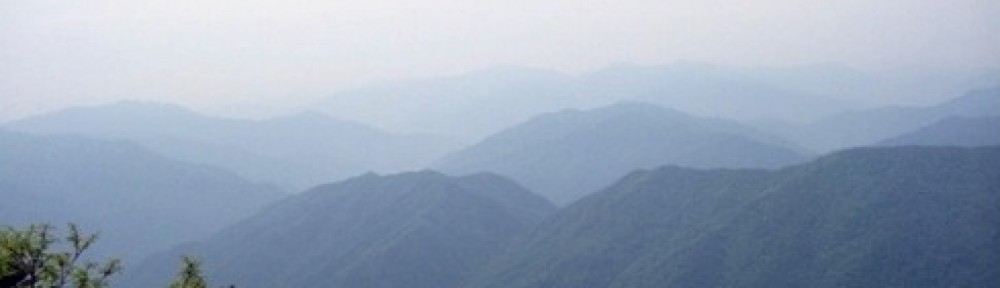
On the mountain,
to live along with the mountain
is to become the mountain
If a tree erases itself,
it becomes a forest;
if a forest erases itself,
it becomes a mountain.
On the mountain,
to live befriending the mountain
is to erase myself.
To erase myself
is also to erase you,
like a bellflower that blooms
by burning up longing
all night long.
When dew erases itself
it becomes fog;
when fog erases itself
it becomes a blue sky.
Likewise, on the mountain,
to live along with the mountain
is to erase myself.
나를 지우고/ 오세영
산에서
산과 더불어 산다는 것은
산이 된다는 것이다.
나무가 나무를 지우면
숲이 되고,
숲이 숲을 지우면
산이 되고,
산에서
산과 벗하여 산다는 것은
나를 지우는 일이다.
나를 지운다는 것은 곧
너를 지운다는 것,
밤새
그리움을 살라 먹고 피는
초롱꽃처럼
이슬이 이슬을 지우면
안개가 되고,
안개가 안개를 지우면
푸른 하늘이 되듯
산에서
산과 더불어 산다는 것은
나를 지우는 일이다.
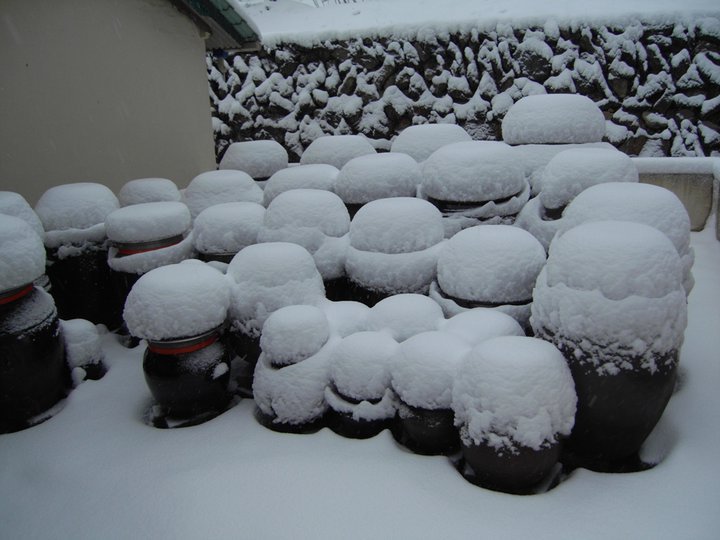
By the back wall of Mukum temple,
in a sunny spot,
tens of pots, large and small
cuddled in clusters
warm themselves up for the winter season
standing neatly on the pot terrace.
Soy sauce brimming in the sauce pot
bean paste filling up the paste pot
sitting out their fermentation
turning the frozen fall into a gong
turning the cutting wind into a chant
the ceaseless meditation
silently pursuing even in the bitter cold
冬安居동안거 / 오세영
무금선원(無今禪院) 뒷담
양지 바른 곳
크고 작은 항아리들 수십 개가
올망졸망
장독대에 정좌하여겨울 한철을
빛바래기가 한 창이다.
간장독엔 간장이 출렁
된장독엔 된장이 가득
그 발효의 날을 기다려
빙폭(氷瀑)을 목탁 삼아
칼바람 염불 삼아
강추위에도 묵묵히 정진하는 그
부단한 참선수행(參禪修行)
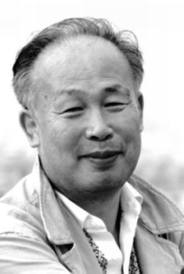
Oh Se-young (1942~ )was born in Yeongkwang, Jeollanam-do. He is both a prolific poet and critic. He has published eighteencollections of poetry. His lyrical poetry is known for its simplicity; it is often imbued with Buddhist imagination of the emptiness of self and nonattachment to materialism. After years of shuttling between academia and creative writing, he has recently retired from teaching at Seoul National University. Oh is a recipient of many prestigious awards including the Sowol Poetry Award, the Jung Ji-yong Literary Award, and the Manhae Literary Award.
Just by observing the snow flower
that blooms on winter’s dry boughs,
I know flowers are not the only ones that bloom.
Across a lifetime, anyone can become a flower
if he purifies his hot blood.
Throwing away greed,
hatred,
and pity,
standing alone as a dry bare tree
at the peak of a harsh winter cold
when I cannot step even one step further,
the rank flesh of my youth becomes petals,
the stiff bone stamens
the turbid blood perfume.
I can embrace the deep blue sky alone.
Just by observing the snow flower
that blooms on winter’s dry boughs
I know flowers are not the only ones that bloom.
설 화/ 오세영 꽃나무만 꽃을 피우지 않는다는 것은
겨울의 마른 나뭇가지에 핀 雪花를 보면
안다.
누구나 한 생애를 건너
뜨거운 피를 맑게 승화시키면 마침내
꽃이 되는 법,
욕심과
미움과
애련을 버려
한 발 재겨 디딜 수 없는
혹독한 겨울의 추위, 그 절정에
홀로 한 그루 메마른 裸木으로 서면
내 청춘의 비린 살은 꽃잎이 되고,
굳은 뼈는 꽃술이 되고,
탁한 피는 향기가 되어
새파란 하늘을 호올로 안느니
꽃나무만 꽃을 피우지 않는다는 것은
겨울의 마른 나뭇가지에 핀 雪花를 보면
안다.
Oh Se-young (1942~ )was born in Yeongkwang, Jeollanam-do. He is both a prolific poet and critic. He has published eighteencollections of poetry. His lyrical poetry is known for its simplicity; it is often imbued with Buddhist imagination of the emptiness of self and nonattachment to materialism. After years of shuttling between academia and creative writing, he has recently retired from teaching at Seoul National University. Oh is a recipient of many prestigious awards including the Sowol Poetry Award, the Jung Ji-yong Literary Award, and the Manhae Literary Award.
As trees get along with trees,
so we should live,
as boughs holding each other’s hands
endure a long cold season.
As trees look upwards to a clear sky,
so we should live,
as leaves open up their hearts
to take in lovely sunlight.
As trees grow amid rain and wind,
so we should grow,
as their deep roots
tenaciously withstand a ferocious storm.
As trees by themselves can discern each season,
so we should live.
They know when a flower emerges and a leaf falls,
and know simply when to step back.
나무처럼/ 오세영
나무가 나무끼리 어울려 살듯
우리도 그렇게
살 일이다.
가지와 가지가 손목을 잡고
긴 추위를 견디어 내듯
나무가 맑은 하늘을 우러러 살듯
우리도 그렇게
살 일이다.
잎과 잎들이 가슴을 열고
고운 햇살을 받아 안듯
나무가 비바람 속에서 크듯
우리도 그렇게
클 일이다.
대지에 깊숙이 내린 뿌리로
사나운 태풍 앞에 당당히 서듯
나무가 스스로 철을 분별할 줄을 알듯
우리도 그렇게
살 일이다.
꽃과 잎이 피고 질 때를
그 스스로 물러설 때를 알 듯
Oh Sae-young (1942~ ) was born in Yeongkwang, Jeollanam-do. He is both a prolific poet and critic. He has published eighteen collections of poetry. His lyrical poetry is known for its simplicity; it is often imbued with Buddhist imagination of the emptiness of self and nonattachment to materialism. After years of shuttling between academia and creative writing, he has recently retired from teaching at Seoul National University. Oh is a recipient of many prestigious awards including the Sowol Poetry Award, the Jung Ji-yong Literary Award, and the Manhae Literary Award.
Standing on the Mountain–Dedicated to Gwangju
by Kim Hyun-seung
Climbing on the Mountain, I look over it–
my city that always blooms like flowers,
the city that fought for freedom
like a knife blade driven through the air,
the place where even the green grass of graves
became warm with the names of brothers.
It now encroaches upon the fertile field
and expands into the vast suburb, following chimney smoke.
Now new roofs have risen high upon hills and forests,
and ivory sounds drift down from the high, illusory towers
that intellect, poetry, and night laboratories have built.
Climbing on the Mountain, I look over it,
my hometown that always blooms like flowers.
Roads lie untied like chima strings;
familiar bars, bookshops, barbershops,
still streams and trees greening the streets
bring neighbors near to hold hands.
And the whistle sounds we all hear
in the morning and in the afternoon
carry away my dream and my innate sorrow to a far, faraway place.
Ah, the mountain which I would climb
to sing out upon whenever heavy with cares
and my beloved city I will return to when old
to look vastly through the glasses of recollection–
my hometown where poets grow!
산줄기에 올라 -K도시에 바치는-/ 김현승
산줄기에 올라 바라보면
언제나 꽃처럼 피어 있는 나의 도시
지난 날 자유를 위하여
공중에 꽂힌 칼날처럼 강하게 싸우던,
그곳에선 무덤들의 푸른 잔디도
형제의 이름으로 다스웠던‧‧‧‧‧‧
그리고 지금은 기름진 평야를 잠식하며
연기를 따라 확장하여 가는 그 넓은 주변들‧‧‧‧‧‧
지금은 언덕과 수풀 위에 새로운 지붕들이 솟아 올라,
학문과 시와 밤중의 실험관들이
무형의 드높은 탑을 쌓아 올리는 그 상아의 음향들‧‧‧‧‧‧
산줄기에 올라 바라보면
언제나 꽃처럼 피어 있는 나의 고향-
길들은 치마끈인양 풀어져,
낯익은 주점과 책사와 이발소와
잔잔한 시냇물과 푸른 가로수들을
가까운 이웃을 손잡게 하여 주는‧‧‧‧‧‧
그리고 아침과 저녁에
공동으로 듣는 기적소리는
멀고 먼 곳을 나의 꿈과 타고난 슬픔을 끌고 가는‧‧‧‧‧‧
아아, 시름에 잠길 땐 이 산줄기에 올라 노래를 부르고,
늙으면 돌아와 기억의 안경으로 멀리 바라다볼
사랑하는 나의 도시 – 시인들이 자라던 나의 고향이여!
Kim Hyun-seung (1913-1975) was born and raised in Gwangju. He is known for sublimating his Christian imagination into poetry as in “The Prayer of Autumn.” He is also known for founding a literary journal, New Literature, in 1951. In the 1950s, he taught creative writing at Chosun University and mentored many great poets known around the country.
What will we do if May passes by forgotten?
What will we do if May passes by forgotten?
One midnight in May martial law descended upon us.
We were beaten up like dogs and dragged in.
What will we do if May passes by forgotten?
One day in May we rose up,
clenching a thousand-year-old anger, clutching empty hands, we rose up.
We ran to the fresh green street, our street,
to Kumnam-no, the street of liberation, to rise up.
We drove away the pitch dark night,
firing our hearts with democracy, people, and nation
against the division of treason
against the treason of forty years of fascism,
against the tank of martial law we rose.
Sing! Fight! Bury these ghastly bodies!
On this fresh green street, our street,
soon we fell down from bullets,
shedding blood.
We fell, spilling red blood–
collapsed corpses, we were dragged on and on,
covered by gray dust, covered by ash,
we were taken somewhere like dead dogs,
carried on the military trucks that rushed by.
Oh, Mangwol Cemetery is not the only place, the only place.
Seven hundred, eight hundred, or two thousand patriots
are still buried in unknown territory.
What will we do if May passes by forgotten?
One day in May we fought to the end,
at Province Hall, in deserted back alleys,
we fought, stepping on the bloodstains of our dead comrades.
We fought proudly in the name of the Civilian Army of the Gwangju Uprising,
against foreign forces,
against compradors,
against the legacies of the Yushin dictatorial reform,
defending the lives of our land who could not be desecrated,
we died with punctured chests.
What will we do if May passes by forgotten?
At dusk, in the street outside Province Hall, a high school student tore his clothes
and his cry echoed through the streets:
“my sister was murdered brutally and ferociously–
give me a gun. I can fight.”
Soon after, he too, was shot and killed.
“Your beautiful breasts chopped like tofu.”
Oh, young girls and pregnant women
were stabbed to death.
In the streets, back alleys, and dead ends
young men were killed and dragged away.
One day in May, on the street of democracy, people, and nation,
suddenly the savages descended:
the 20th Division of Yangpyong,
the Special Troop,
the 31st Division.
The martial law troops of the 7th Airborne, the 3rd Airborne, and the 11th Airborne broke in, randomly shooting M16 rifles,
crushing with their gun handles,
stabbing again and again with their fixed bayonets;
reeking of liquor, they shot to death even those who surrendered.
Oh, the screams of this Inferno ran over the streets, like waves.
What will we do if May passes by forgotten?
What will we do if May passes by forgotten?
Afterwards, the silence of the tremendous terror, like the steel grave,
extended over the living and the dead.
What will we do if May passes by forgotten?
From death we had to start all over again.
Those who survived, even those who forgot their grief had to return
and start all over again in the street of death.
We have died and have no words.
We have lived and have no words.
We were jailed, gagged, without even the sky to look towards,
gnashing our teeth,
every heart filled with a thousand years of bitter resentment,
swallowing this time of shame.
Down the violated street military boots of the 5th Republic marched heavily.
After that May, we carried death on our backs.
One snowy day,
we first came out to Kumnam street and Chungjang street,
and shook one another’s hands once again:
“You are alive.” “You are, too.”
Then we ran to Mangwol cemetery and wept.
Since then we came together every year and rose up.
Over and over we identified the enemies hiding on the dark side,
blowing our hot breath and defrosting the windows.
The star spangled banner flies high over this land–
this land swarms with Japs.
Now Gwangju is not Gwangju—Gwangju is not only a place.
It is the heart of the history of this land.
So many people rose up in every street–
every town, people met whispering:
lives of workers have become lumps of coal,
cows are worth nothing, and farmers have swallowed pesticides and perished.
A taxi driver burned himself up.
Families have been asphyxiated by coal fumes.
What will we do if May passes by forgotten?
College students set themselves on fire, falling like flowers,
and tens of others are ready to follow.
What will we do if May passes by forgotten?
Billions of Won were spent on teargas, apple bombs, and other god-damn bombs,
which blew up in our eyes and made us blind,
or shocked our chests and we collapsed.
Those who threw a stone were dragged out and beaten up till they vomited blood.
What will we do if May passes by forgotten?
What will we do if May passes by forgotten?
The struggle for justice has not ended in the factories or the schools.
Even in prisons the struggle goes on for victory.
But in the cities of deception the flag of blood-ties waves strong,
Japan’s ruling party gleefully enters in and out,
like eunuchs who visit their in-laws.
Even the trash of the Yushin dictatorship has returned to take its part.
What will we do if May passes by forgotten?
To break these foreign forces, these compradors, this betrayal,
to sweep up this division and this fascism,
to achieve our independence,
our equality, and our reunification,
to dance a dance of history,
let our bodies terribly rot,
buried deep in this history.
We will fight, dead.
We will fight, feverishly living.
So we live, out of breath.
Oh, May!
Oh, May!
Oh, May of the splendid, green, dazzling days!
What will we do if May passes by forgotten?
On a day dense with teargas
we shed tears and cough.
The cuckoo sings; at night it sings mournfully.
What will we do if May passes by forgotten?
Oh, dead fighters, friends,
a hundred years of struggle is not over yet.
We have to fight a hundred years more, friends.
We must fight on from generation to generation.
What will we do if May passes by forgotten?
What will we do if May passes by forgotten?
No matter what, we will always unite again.
The scattered will meet again.
Blood-boiling May,
the month of struggle that shakes the whole body,
May, you are us.
United, we move on, breaking the waves of the ocean.
Although May has passed,
May is always alive in us.
We ourselves are May.
We are May.
We are May.
Shouts bursting from seven million of our people!
The masses of joy and embracing that will burst
from every corner of this land on that morning!
Oh, that’s our May. Liberation achieved from death.
that day, come quick!
Ko Un was born in Kunsan, Jeollabuk-do in 1933. As a recipient of numerous literary awards, Ko Un is one of the most famous contemporary poets in Korea. Since his debut in Hyondae Munhak in 1958, he has since produced over 120 literary works, including novels and critical writings. In 2010 he completed Maninbo, a now 30-volume poetry collection that had been published in installments over a period of twenty three years.

 Moon Tae-jun (1970-) has published four collections of poetry: Chattering Backyard(2000), Bare Foot (2004), Flatfish (2006), and Shadow’s Development (2008) as well as other essays and commentary. One of the most popular poets of the younger generation, Moon uses deceptively simple poetic language with profound lyricism, commenting on the struggle of daily life. Grounded in Buddhist philosophy, his poems speak with reverence for all forms of life and emphasize the necessity of emptying oneself. Moon is a recipient of many prestigious awards, including the Dongseo Literature Award (2004), the Midang Literature Award (2005), and the Sowol Poetry Award (2007).






 Korean Poetry in Translation