Leaning against the Temple Gate by Song Su-kwon

Translated by Chae-Pyong Song and Anne Rashid

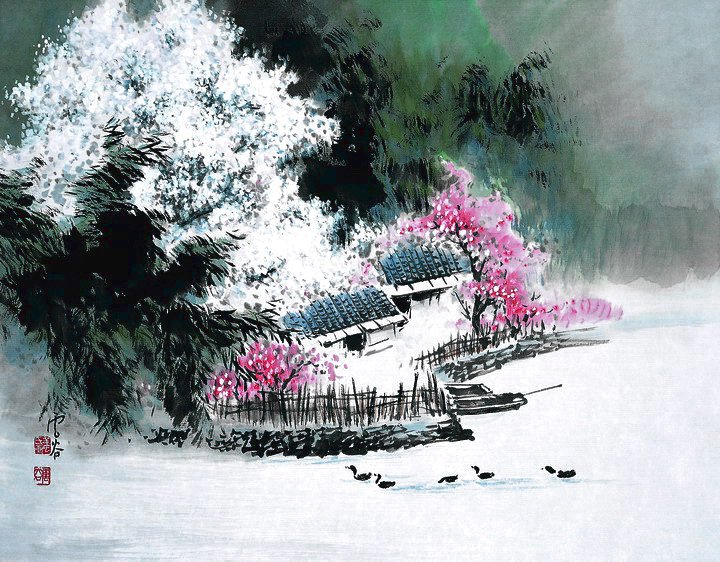
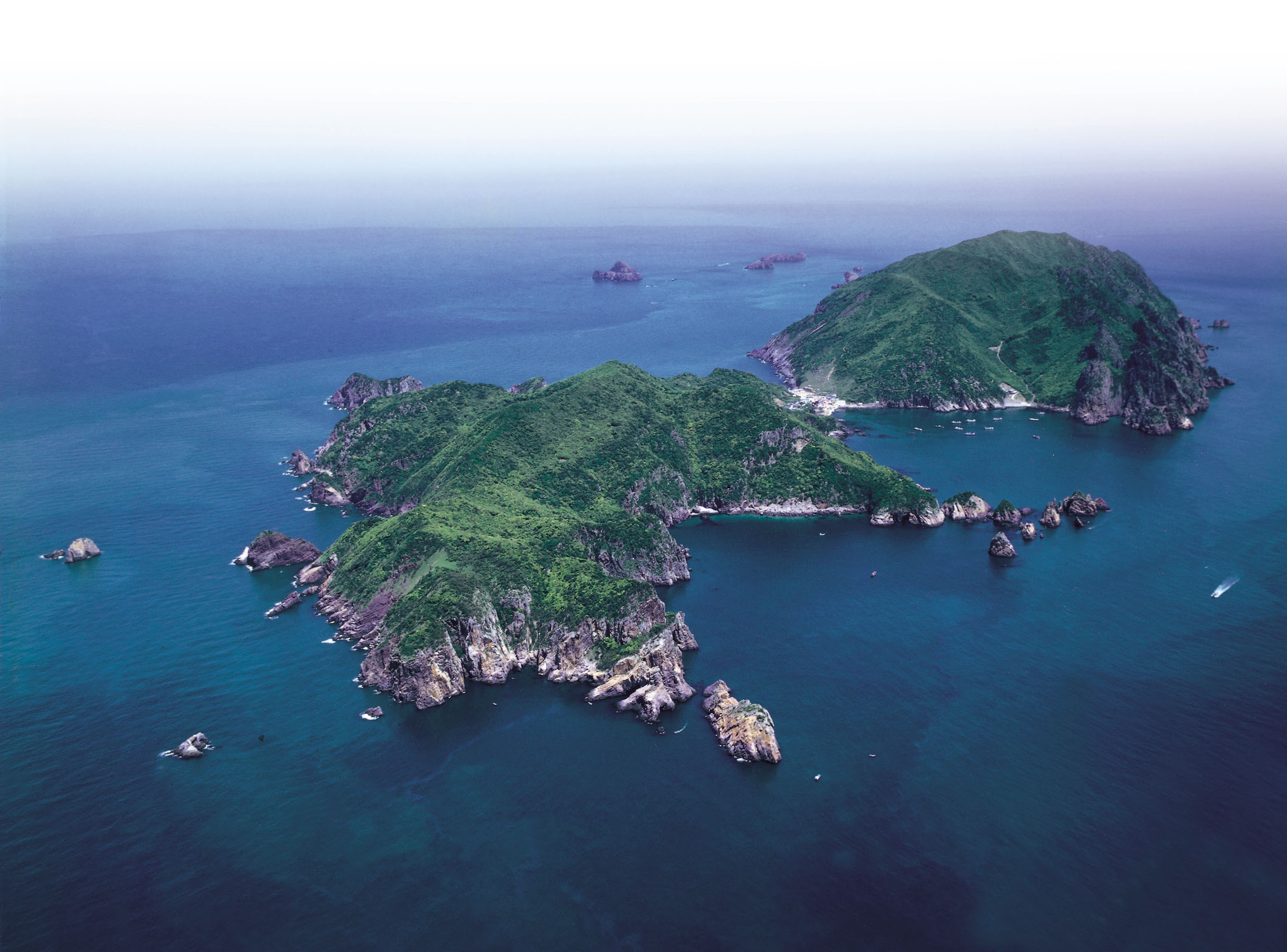
The Hwaeom Temple Gate in Gurye, Jeollanam-do, Korea

Leaning against the Temple Gate

Sister,
are you still alive to see
your two eyebrows drowned in the shadow of the fall mountain?—
the river rises in the dark night
as I follow the end of my tears,
stopping clear tears by pressing them down with stones;
words of agony plunge deep down into the river,
coming back alive glittering like stones;
some come alive
like a fish jumping in the water;
or a branch of camellia broken off
and you freely gave to me

Sister, are you still alive to see
a wild goose dropping your two eyebrows
floating around, drowned in the shadow of the fall mountain?—
drinking one cup myself, leaving the other empty;
some meet like waterdrops leaping together on leaves

Sister, do you know
your two eyebrows float, drowned in the shadow of the fall mountain
now return, reflected in this pond water?

     어/ 송수권

누이야
가을산 그리메에 빠진 눈썹 두어날을
지금도 살아서 보는가
淨淨한 눈물 돌로 눌러 죽이고
그 눈물 끝을 따라가면
즈믄 밤의 강이 일어서던 것을
그 강물 깊이깊이 가라앉은 고뇌의 말씀들
돌로 살아서 반짝여 오던 것을
더러는 물 속에 튀는 물고기 같이
살아오던 것을
그리고 산다화 한 가지 꺽어 스스럼없이
건네이던 것을

누이야 지금도 살아서 보는가
가을산 그리메에 빠져 떠돌던, 그 눈썹 두어날을 기러기가
강물에 부리고 가는 것을
내 한 잔은 마시고 한 잔은 비워 두고
더러는 잎새에 살아서 튀는 물방울같이
그렇게 만나는 것을

누이야 아는가
가을산 그리메에 빠져 떠돌던
눈썹 두어날이
지금 이 못물 속에 비쳐 옴을

The Cuckoo of Jiri Mountain by Song Su-kwon

Translated by Chae-Pyong Song and Anne Rashid

Azalea painted by Kang Jang-won

The Cuckoo of Jiri Mountain

From across many summits
many cuckoos
called out their cries,
weeping as a group–
only after nine years of spring,
after being accustomed to untamed sorrow,
I knew that they were from a single cuckoo

Below Jiri Mountain,
when a cuckoo hides
on a summit,
its cry reverberates–
another summit behind takes it over
and yet another takes it over again–
I knew it cried as many cuckoos

Within Jiri Mountain
after the chain of summits cried out,
after coping for so long,
I saw the river finally open
without Han,
without lament

The strong current
of the Sumjin river
rushed toward Hadong
into the South Sea–
I saw it push up
against many small isles
of the South Sea archipelago,

One spring day
below Jiri Mountain,
one cuckoo cried out
till all her tears dried up,
remaining
as the last sorrowful color
of this world–
I saw it burn up
a field of azaleas
by the Refined Rocks

지리산 뻐꾹새/ 송수권
여러 산 봉우리에
여러 마리의 뻐꾸기가
울음 울어, 떼로 울음 울어
석석 삼년도 봄을 더 넘겨서야
나는 길뜬 설움에 맛이 들고
그것이 실상은 한 마리의
뻐꾹새임을 알아냈다.지리산하
한 봉우리에 숨은
실제의 뻐꾹새가
한 울음을 토해 내면뒷산 봉우리 받아 넘기고
또 뒷산 봉우리 받아 넘기고
그래서 여러 마리의 뻐국새로
울음 우는 것을 알았다.

지리산중
저 연연한 산봉우리들이
다 울고 나서
오래 남은 추스름 끝에
비로소 한 소리 없는
강이 열리는 것을 보았다.

섬진강 그 힘센 물소리가
하동쪽 남해를 흘러들어
남해군도의 여러 작은 섬을
밀어올리는 것을 보았다.

봄 하룻날
그 눈물 다 슬리어서
지리산하에서 울던
한 마리 뻐꾹새 울음이
이승의 서러운
맨 마지막 빛깔로 남아
이 세석 철쭉 꽃밭을
다 태우는 것을 보았다.

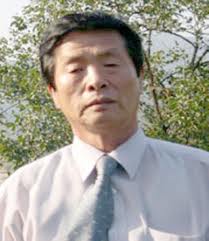
Song Su-kwon (1940- ) was born in Koheung, Jeollanam-do. He made his literary debut in 1975 by publishing in Munhak Sasang “Leaning against the Temple Gate” and four other poems. So far he has published more than ten collections of poetry. Many of his poems and themes are significantly influenced by his formative experience of Jeolla-do and its dialect; his poems are known for their sympathetic representations of farmers and fishermen in the region. Among his awards are the Cultural Ministry Arts Award, the Sowol Poetry Award, the Jung Ji-yong Literary Award, the Youngrang Poetry Award, and the Kim Dong-ri Literary Award. Recently he retired from teaching creative writing at Suncheon National University.


A Bowl 1 by Oh Sae-young

Translated by Chae-Pyong Song and Darcy Brandel

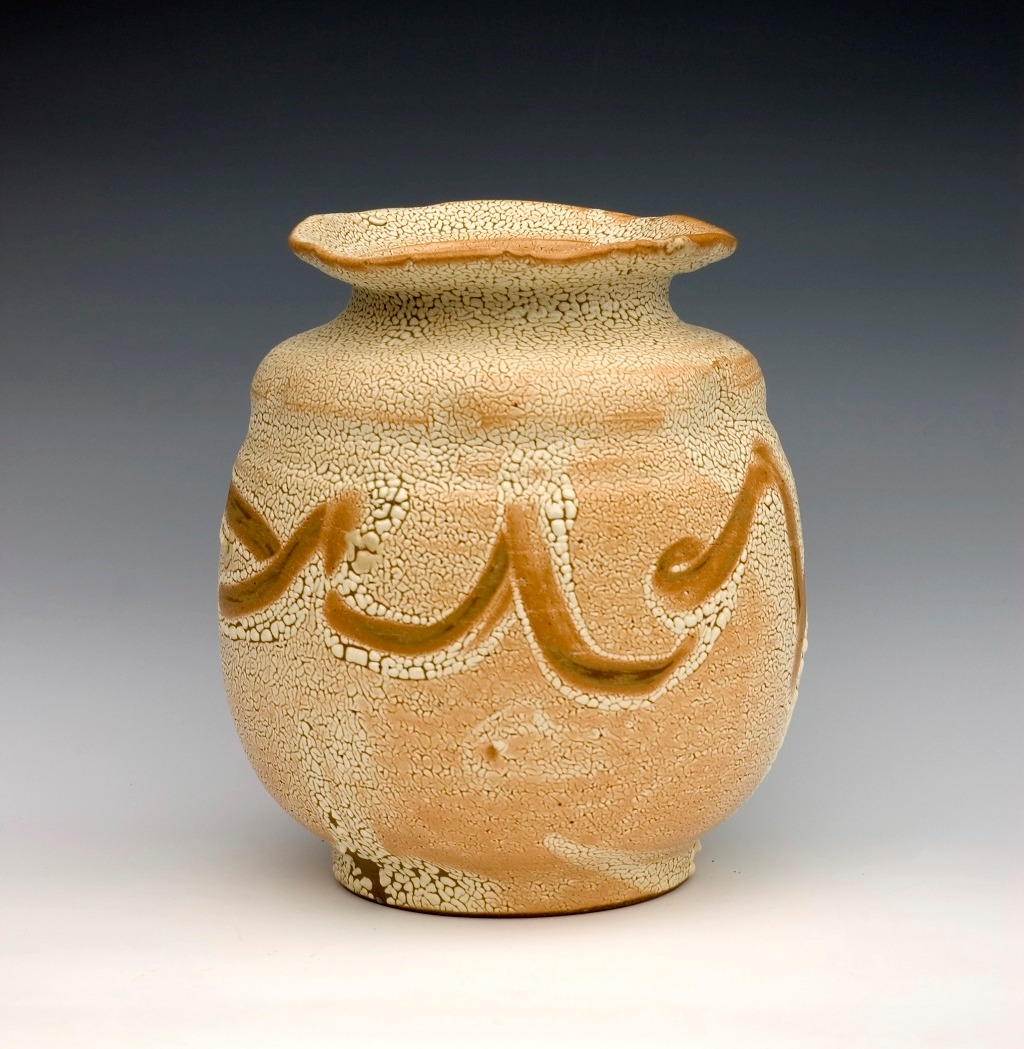
Pottery by Cho Yong-kyu

A Bowl 1 by Oh Sae-young

A broken bowl
becomes a knife blade.

Energy moving out
of control and balance–
the broken circle
with its sharp edges
opens the cold eyes of reason.

You, broken pieces,
that take aim at blind love,
I am now barefoot—
flesh waiting
to be cut.
A soul maturing deep inside a wound

A broken bowl
becomes a knife blade.
Anything broken
becomes a knife blade.

그릇 1/ 오세영

깨진 그릇은
칼날이 된다.

절제와 균형의 중심에서
빗나간 힘
부서진 원은 모를 세우고
이성의 차가운
눈을 뜨게 한다.

맹목의 사랑을 노리는
사금파리여,
지금 나는 맨발이다.
베어지기를 기다리는
살이다.
상처 깊숙이서 성숙하는 혼

깨진 그릇은
칼날이 된다.
무엇이나 깨진 것은
칼이 된다.

Legs Running by Jung Kut-byol

Translated by Chae-Pyong Song and Anne Rashid

Photographed by Jorige

Legs Running by Jung Kut-byol 

Since the grade school field day
I’ve been running
past you
past houses and walls
past dark night roads
my whole body spreading like a bow
two eyes closed and beating the chest
beyond the crosswalk that hinders me
beyond the forest of buildings that encloses me
as much as I run.
I run past my age
biting my lips.
Being left behind is more horrifying than falling down.
Dark smoke fills the lungs.
The past is in rags, to steal the future
I run faster than arrows
At the center of my desire
till the moment I dazzlingly break down–
The soles, chest, head getting thump, thump, thump,
hardened like concrete.
If life runs fast, so does death, like a cat in heat
leaping from an unexpected alley.

다리는 달리고 있다/ 정끝별

운동회날부터 나는 달리고 있다
너를 지나
집과 담벼락을 지나
어둔 밤길을 지나
전신을 활처럼 제끼고
두 눈을 감고 가슴을 치며
가로막는 횡단보도를 넘어
달릴수록 에워싸는 빌딩숲을 넘어
내 나이를 넘어 달리고 있다
입술을 깨물며 재앙의,
넘어지는 것보다 처지는 일이 더 무서웠다
허파꽈리에 가득 차는 검은 연기
과거는 넝마 미래를 훔치며
화살보다 빠르게
달린다 내 열망의 한가운데를
눈부시게 난파할 그 순간까지
발바당이 점점 가슴이 머리가
텅.텅.텅. 콘크리트처럼 굳어가며
삶이 빠르면 죽음도 발정난 고양이
예기치 못한 골목에서 튕겨 달려드는

A Gentle Cow by Oh Sae-young

Translated by Chaepyong Song and Darcy Brandel

An Old Farmer and His Cow

A Gentle Cow by Oh Sae-young

As I finish the last line of a poem,
my ballpoint pen, whose ink ran out,
collapses, completely exhausted, on the blank page.
Have a good rest.
I will mark the period with my tear.
In recollection, the overworked life.
The cow was not the only one who ploughs.
All these days you have ploughed many fields.
Unsparingly pouring out
all sweat and tears
even the last drop of blood collected at your heart,
without regrets, you now leave the world.
If only my poetry can accompany you . . . .
A gentle cow
who collapsed with a frothy mouth
on the field well plowed and sown.

착한 소/ 오세영
시행의 마지막 구절을 막 끝내자
잉크가 다한 볼펜
기진맥진 원고지의 여백에
펄썩 쓰러져 버린다.
편히 쉬어라.
피어리어드는 내 눈물로 찍겠다.
돌아보면 너무도 혹사당한 일생.
경지는 다만 소만이 가는 것이 아니었다.
그동안 참 많은 밭을 갈았구나.
땀과 눈물과
심장에 고인 마지막 한 방울의 피까지
아낌없이 쏟아내고 너는 지금
후회 없이 이승을 떠나는구나
내 시가 너를 따를 수만 있다면…
잘 갈아 씨 뿌린 밭두렁에
거품을 문 채 쓰러진
착한 소 한 마리.

The Cow by Kim Gi-taek

Translated by Chae-Pyong Song and Anne Rashid

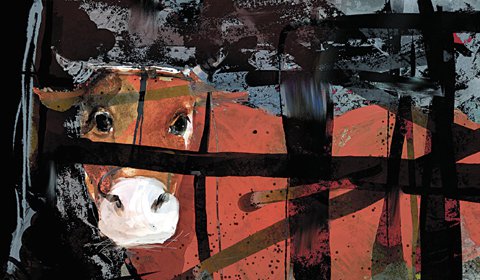
Illustrated by Jam San

The Cow by Kim Gi-taek

The cow’s big eyes want to tell me something,
but I don’t have ears to hear.
All of her words are inside her eyes.

Though words well up, nearly falling like tears
I know she cannot express them outwardly.
She cries, wrenching out her heart, handful by handful,
but in her eyes the words do not budge.

For thousands of years she has locked the words inside
and she just blinks her eyes.
Ah, such an innocent, round prison!

Not knowing what else to do
the cow brings back the grass from her stomach that she chewed many times,
and chews the cud over to grind, swallow, retrieve, and grind again.

소 / 김기택

소의 커다란 눈은 무언가 말하고 있는 듯한데
나에겐 알아들을 수 있는 귀가 없다.
소가 가진 말은 다 눈에 들어 있는 것 같다.

말은 눈물처럼 떨어질 듯 그렁그렁 달려 있는데
몸 밖으로 나오는 길은 어디에도 없다.
마음이 한 움큼씩 뽑혀나오도록 울어보지만
말은 눈 속에서 꿈쩍도 하지 않는다.

수천만 년 말을 가두어 두고
그저 끔벅거리고만 있는
오, 저렇게도 순하고 동그란 감옥이여.

어찌해볼 도리가 없어서
소는 여러 번 씹었던 풀줄기를 배에서 꺼내어
다시 씹어 짓이기고 삼켰다간 또 꺼내어 짓이긴다.

Nostalgia by Jung Ji-yong

Translated by Chae-Pyong Song and Anne Rashid

Painted by Kang Jang-won

Nostalgia by Jung Ji-yong (1902-1950)

This is the place
where, toward the eastern end of that vast field,
the small brook that babbles old stories turns around,
and the brindled cow
cries sadly and slowly in golden glow

How could you forget this place even in a dream?

This is the place
where, when ashes in the clay stove get cold,
the sound of the night wind on the empty field runs like a horse,
and the old Father overcome with shallow sleepiness
lays himself down, propped up by a straw pillow

How could you forget this place even in a dream?

This is the place
where, longing for the blue light of the sky,
my heart has grown in this soil–
it would drench itself in the grassy dew
in search of the arrows I shot at random

How could you forget this place even in a dream?

This is the place
where the young sister would run, her hair flying behind her ears,
like the night waves that dance upon the legendary sea,
and the ordinary-looking wife,
with her feet bare in the field for all four seasons,
would glean through what remains with the hot sunlight on her back

How could you forget this place even in a dream?

This is the place
where the stars sparsely dot the sky
and shuffle their footsteps toward the unknown sand castle,
the frosty crows pass by the poor rooftop, howling,
and family sits around the faint light to talk together softly

How could you forget this place even in a dream?

향수(鄕愁)/ 정지용

넓은 벌 동쪽 끝으로
옛이야기 지줄대는 실개천이 휘돌아 나가고,
얼룩백이 황소가
해설피 금빛 게으른 울음을 우는 곳.

――그 곳이 차마 꿈엔들 잊힐 리야.

질화로에 재가 식어지면,
비인 밭에 밤바람 소리 말을 달리고,
엷은 졸음에 겨운 늙으신 아버지가
짚베개를 돋워 고이시는 곳.

――그 곳이 차마 꿈엔들 잊힐 리야.

흙에서 자란 내 마음
파아란 하늘 빛이 그리워
함부로 쏜 화살을 찾으러
풀섶 이슬에 함초롬 휘적시던 곳.

――그 곳이 차마 꿈엔들 잊힐 리야.

전설(傳說) 바다에 춤추는 밤 물결 같은
검은 귀밑머리 날리는 어린 누이와
아무렇지도 않고 예쁠 것도 없는,
사철 발 벗은 아내가
따가운 햇살을 등에 지고 이삭 줍던 곳.

――그 곳이 차마 꿈엔들 잊힐 리야.

하늘에는 성근 별
알 수도 없는 모래성으로 발을 옮기고,
서리 까마귀 우지짖고 지나가는 초라한 지붕,
흐릿한 불빛에 돌아앉아 도란도란거리는 곳.

――그 곳이 차마 꿈엔들 잊힐 리야.

The Dead Sea by Noh Hyang-rim

Translated by Chae-Pyong Song and Anne Rashid

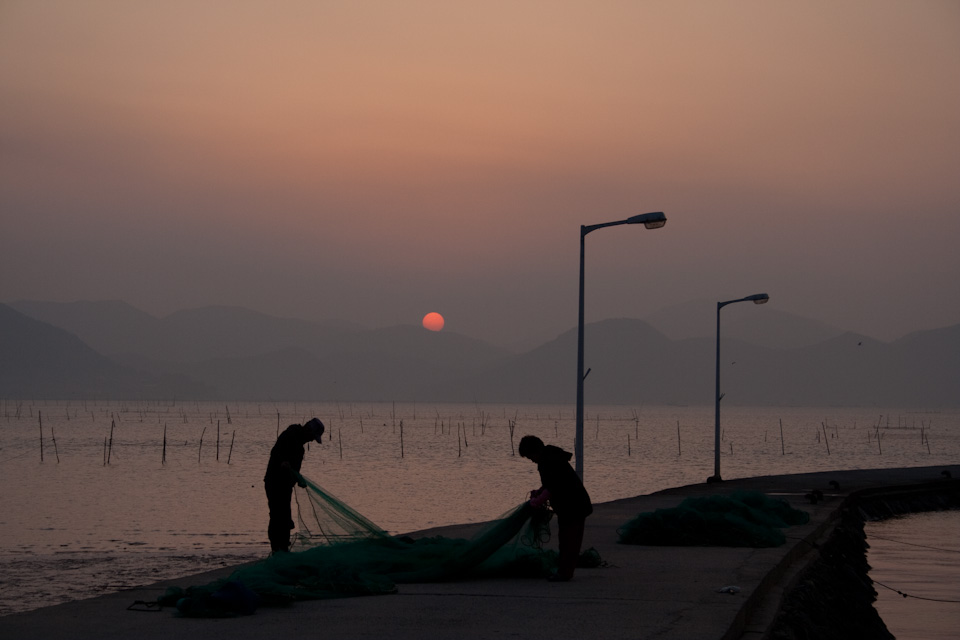
Photographed by Kim Hee-jong (Harvesting Cockles in Hwayang-myeon, Yeosu)

The Dead Sea

There was another sea
before the sea

near which a polio-stricken boy stood
like a speck of a petal.

Pickled fish
lay on the street stall.

Mother’s body
always emitted
a salty sea smell.

To float on the dead sea,
our family made our bodies and hearts
light

and knelt down on the cold floor
and prayed

until the bell tower on the hill
rang at dawn.

Mother was
a pickled sea
that rested in the world.

死 海/ 노향림

한 점 꽃잎처럼
소아마비 소년이 서 있는

바다 앞은
또 바다였다

소금절인
생선들이 좌판에 누워 있고

어머니의 몸에선
늘 짜디 짠 바다냄새가
풍겼다

사해바다에 뜨기 위해
식구들은
몸과 마음이 가벼워져서

언덕배기 뾰족탑의
새벽종이 울릴 때까지

찬 바닥에 엎드려
기도했다

어머니는
세상에 누워 있는
절인 바다였다

Aphae Isle 8 by Noh Hyang-rim

Translated by Chae-Pyong Song and Anne Rashid

Hongdo Island in Shinan County, Jeollanam-do, Korea


Aphae Isle 8 by Noh Hyang-rim

People in Aphae Isle
cannot see the island.
Shading the sun,
I lift up my eyes,
the isle startles more than people—
this isle without ears.
It is as though they have gone to Van Gogh’s village–
the whistling sound
that children with horn-rimmed glasses make.
In the village of low-built houses
where the grasses standing in one line
dart around on their tiptoes,
every house’s ears are cut off,
and during all four seasons
the grasses open only one ear.
A person without longing
cannot see Aphae Isle;
she cannot listen to Aphae Isle.

압해도 8/ 노향림

압해도 사람들은
압해도를 보지 못하네.
이마받이을 하고
문득 눈을 들면
사람보다 더 놀란 압해도
귀가 없는 압해도
반 고호의 마을로 가는지
뿔테 안경의 아이들이 부는
휘파람 소리
일렬로 늘어선 풀들이
깨금발로 돌아다니고
집집의 지붕마다 귀가 잘려
사시사철 한쪽 귀로만 풀들이 피는
나지막한 마을
그리움이 없는 사람은
압해도를 보지 못하네.
압해도를 듣지 못하네.


Flowers beyond Borders by Noh Hyam-rim

Translated by Chae-Pyong Song and Anne Rashid

Photographed by Hye Hyon

Flowers Beyond Borders

When flowers wither, where do they go?
The world begins with little things—
wildflowers that bloom without sound
under the bright sunlight.
Strung together, the size of a mung bean,
they stand squarely while beads of their lives shake,
making a slant in the sky.
In my heart they tell me as if a hallucination
that they have vulnerable insides
and that they have sorrow, cold and clear.
When it gets cloudy and the sleet falls,
with the sound of a blue tendon breaking and murmuring,
soon petals rustle down.
Like tears, like smoke,
they lie fallen down on the ground like people.
In the place the flowers fell, time has already come
and swarms like a school of larva.
When flowers fall, where do they go?
What border do they go beyond?
Under what name do they get buried?

꽃들은 경계를 넘어간다/ 노향림

꽃들이 지면 모두 어디로 가나요.
세상은 아주 작은 것들로 시작한다고
부신 햇빛 아래 소리 없이 핀
작디작은 풀꽃들,
녹두알만한 제 생명들을 불꽃처럼 꿰어 달고
하늘에 빗금 그으며 당당히 서서 흔들리네요.
여린 내면이 있다고 차고 맑은 슬픔이 있다고
마음에 환청처럼 들려주어요.
날이 흐리고 눈비 내리면 졸졸졸
그 푸른 심줄 터져 흐르는 소리
꽃잎들이 그만 우수수 떨어져요.
눈물같이 연기같이
사람들처럼 땅에 떨어져 누워요.
꽃 진 자리엔 벌써 시간이 와서
애벌레떼처럼 와글거려요.
꽃들이 지면 모두 어디로 가나요.
무슨 경계를 넘어가나요.
무슨 이름으로 묻히나요.

Noh Hyang-rim (1942- ) is from Haenam, Jeollanam-do and studied English at Jung-ang University in Seoul. She has published poetry collections such as Travel to K Town, A Country Where Snow Doesn’t Fall, A Person Without Longing Can’t See Aphae Isle, A Broken Bell Sound Comes from the Sun. In 1987 she received the Korea Literary Award for A Country Where Snow Doesn’t Fall.